New NOAA Indicators Anticipate Rising Challenges for California Chinook Salmon: Commercial Fishing Resumed This Year After a Three-Year Closure
NOAA Fisheries released new research on Nov. 13 linking the stressors affecting juvenile California Chinook salmon, including warm freshwater temperatures and low streamflows, to reduced adult salmon returns. Low returns closed commercial California salmon fishing for three years, and fishing resumed this year. The study was published in the Canadian Journal of Fisheries and Aquatic Sciences.
The research grew out of annual Ecosystem Status Reports from NOAA Fisheries' two West Coast laboratories. Scientists set out to identify the biological and physical indicators that best predict the success of three California salmon stocks: Sacramento River fall Chinook, Central Valley spring Chinook and Klamath River fall Chinook. The two fall Chinook stocks form the backbone of California and Oregon ocean Chinook salmon fisheries.
The indicators with the strongest connections include the number of naturally spawning Central Valley spring and Sacramento River fall Chinook; water temperatures during egg incubation of Central Valley spring Chinook and during migration to the ocean for juveniles of all three stocks; suitable river flows as juvenile salmon in the Sacramento River migrate downriver; the abundance of alternative prey such as juvenile rockfish that buffer Sacramento River fall Chinook from ocean predators; and the phase of the North Pacific Gyre Oscillation, a climate pattern that drives upwelling of nutrient-rich ocean waters.
Over the last two decades, declining natural spawners, increasing river temperatures, droughts, a long negative phase of the North Pacific Gyre Oscillation and increased predation pressure in the ocean have coincided with lower salmon recruitment, meaning fewer young salmon survived to join the adult population, the research found. Cool river conditions have become especially important as cold water has grown scarce.
Klamath River fall Chinook were considered overfished for return years 2017-2024. They were no longer overfished as of 2025 but continue to rebuild, while Central Valley spring Chinook are listed as threatened under the Endangered Species Act.
The toll on fishing communities is concrete: in 1984, more than 2,500 vessels fished for salmon off California, while just 470 participated in the most recent full year of fishing in 2022. The California salmon fleet received more than $20 million in federal emergency relief following each of two disaster determinations for the Sacramento River and Klamath River fall Chinook fisheries in 2023 and 2024.
"There are still dials we can turn to get more fish out there and improve fishing opportunities," said Regional Administrator Jennifer Quan. Stuart Munsch, a fisheries biologist at NOAA Fisheries' Northwest Fisheries Science Center and lead author of the study, said almost two centuries of human modifications to habitat and salmon genetics act as force multipliers for the negative effects of those stressors. Researchers stressed the value of continuing to track the indicators to improve forecasts of salmon survival and returns.
(Source: National Oceanic and Atmospheric Administration)
Source: National Oceanic and Atmospheric Administration
Published by GSM · USA (original Chinese edition)
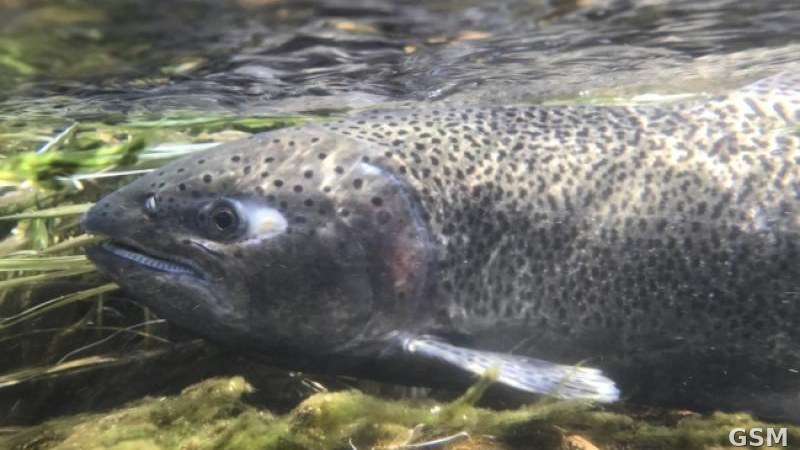
Photo: 加州 San Joaquin River 特别孵化场放流的春季 Chinook 三文鱼(Austin Demarest 摄,美国鱼类及野生动物管理局 USFWS,NOAA Fisheries 官方发布)