
A Dual Neural Network Core PRNG on FPGA Reaches 139.714 Mbps: All 16 NIST Sub-Tests Passed and a Maximal Lyapunov Exponent of 4.4662 in Scientific Reports, Published November 13
A study published in Scientific Reports on November 13, 2026, introduces a hardware-implemented pseudo-random number generator driven by a constructed novel four-dimensional hyperchaotic system with hidden attractors. The dynamical properties of the oscillator were investigated through Lyapunov exponent spectra, bifurcation diagrams, basins of attraction, and the 0-1 test for chaos, revealing a maximal Lyapunov exponent of 4.4662 alongside robust multistability. The authors are Tuna, Vaidyanathan, Alçın and colleagues, and the paper carries digital object identifier 10.1038/s41598-026-79716-3, was received on August 2, 2026, accepted on November 3, 2026, and published on November 13, 2026. To resolve the challenge of digitizing delicate equilibrium-free attractors, the authors propose a dual artificial neural network core architecture consisting of a predictor layer activated by a log-sigmoid function and a refiner layer activated by a hyperbolic tangent sigmoid function. The generator is implemented on a Xilinx Virtex-6 FPGA using the 32-bit IEEE-754 floating-point standard, and by harvesting 18-bit least significant bit slices per clock cycle, the system achieves a real-time throughput of 139.714 Mbps at a 139.714 MHz operating frequency. The journal abstract reported that statistical verification shows the generated bitstreams pass all 16 sub-tests of the NIST SP 800-22 test suite with P-values exceeding 0.01, which the authors said shows the dual-core neural architecture preserves hyperchaotic complexity to deliver an entropy source for secure communications and image encryption.
(Source: Scientific)
Source: Scientific
Published by GSM · USA (original Chinese edition)
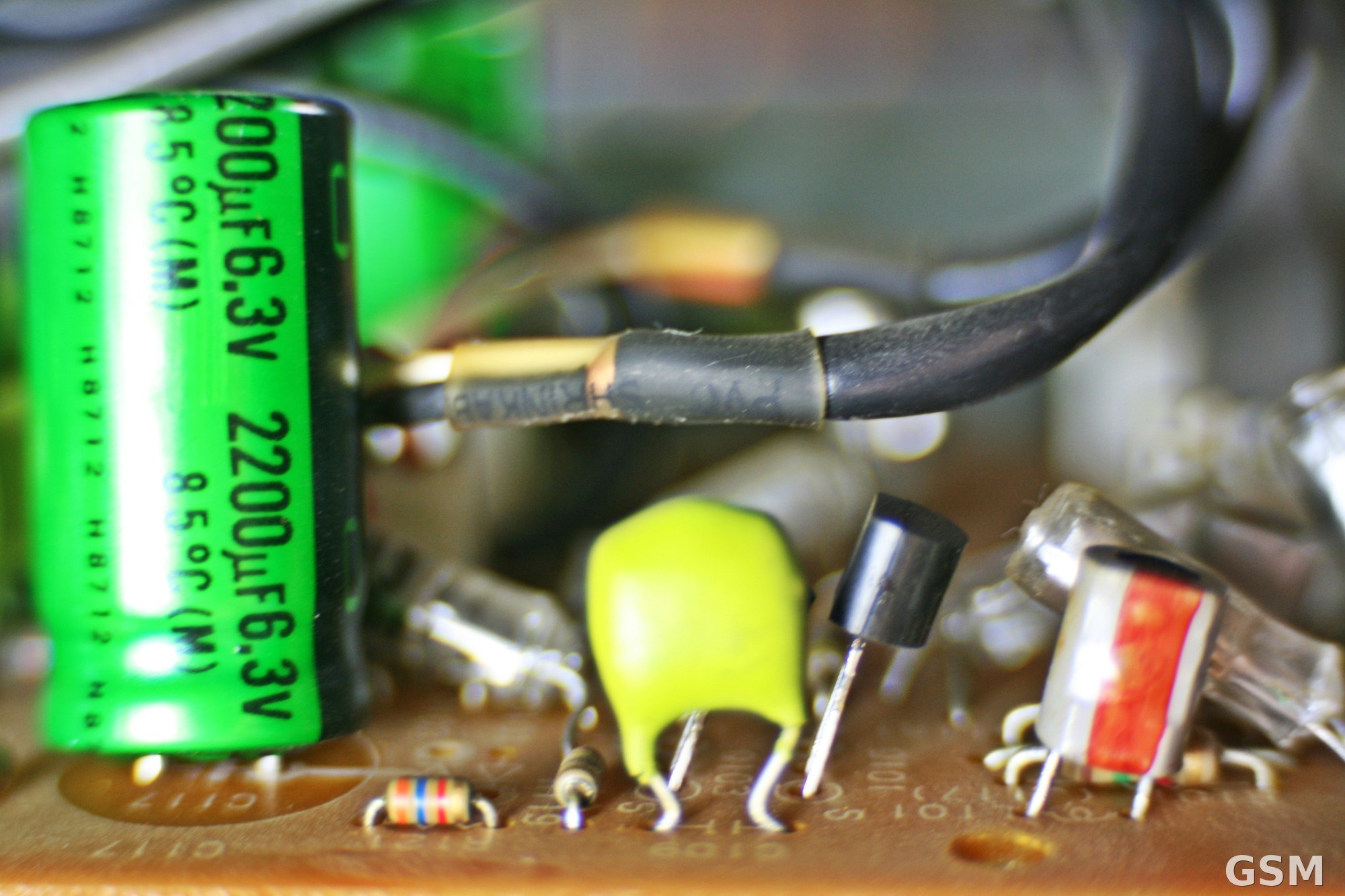
Photo: 图:一块电路板的微距特写。Ingo Dierking,CC BY-SA 4.0,经 Wikimedia Commons。 / Photo: Ingo Dierking, CC BY-SA 4.0, via Wikimedia Commons.
 Silicon Carbide Nanomaterials in Disc Brake Pads: 0.5% Loading Raised Average Brake Force by Up to 19%, With Fade Resistance Up to 130°C2026-11-14
 PEBA-PEMA Blend Membrane Separates 1-Butanol With Flux of 0.19 kg/m2/h and Separation Factor of 15.5 at 5 Percent PEMA, Published in Scientific Reports on November 132026-11-14