Euclid Releases First Major Data Batch: More Than 900 Million Galaxies Catalogued for a 3D Map of the Universe
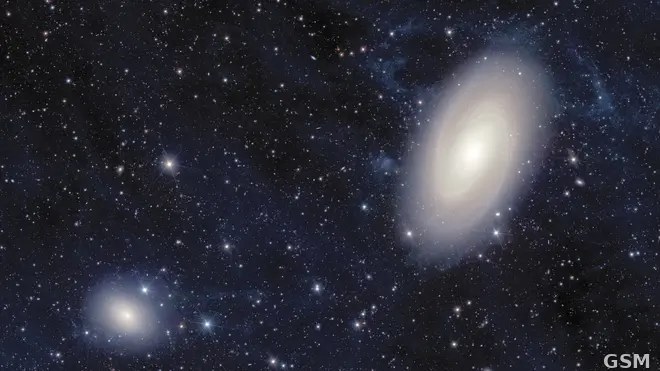
The European Space Agency (ESA) released the first major batch of data from its Euclid space telescope on November 12. Named DR1-Foundation, the release captures the light of more than a billion objects across an area of sky as large as 9,500 full Moons, and is the first major release of mission data since the telescope's launch in mid-2023.
The release rests on about 13 months of observations. The Wide Survey covers 1,900 square degrees of sky and the dataset totals about 1.7 million gigabytes. It includes more than 900 million galaxies, around 60 million quasar candidates, and the spectra of more than 160 million sources. Spectra are how Euclid measures galaxy distances and places galaxies into the three-dimensional structure of the Universe.
A headline item is the roughly 15,000 strong gravitational lens candidates. A strong lens forms when a foreground galaxy bends and magnifies the light of a more distant galaxy, letting scientists weigh galaxies including their invisible dark matter. ESA says this is the largest strong-lens catalogue ever assembled, bigger than all previous catalogues combined, found with machine learning and the help of thousands of citizen-science volunteers.
Euclid's job is to build a detailed 3D map of the cosmos to study dark matter, dark energy and the cosmic web of galaxies. The telescope launched in July 2023 and began routine science observations on February 14, 2024. Over its six-year survey it is to observe more than a third of the sky, reaching galaxies up to 10 billion light-years away.
Even at this scale, the release covers only about 14 percent of the sky area Euclid will survey. The full Data Release 1, due in mid-2027, will add weak-lensing observations and calculations of how galaxies and galaxy clusters fit into the cosmic web. ESA Director of Science Carole Mundell called the release a scientific milestone, and the data are publicly available through the Euclid Data Space platform.
(Source: European Space Agency)
Source: European Space Agency
Published by GSM · USA (original Chinese edition)
Photo: 图片来源:ESA/Euclid/Euclid Consortium/NASA「Messier 81星系群核心」(CC BY-SA 3.0 IGO),欧洲空间局2026-11-12随DR1-Foundation发布 Image: ESA/Euclid/Euclid Consortium/NASA, "Core of the Messier 81 galaxy group" (CC BY-SA 3.0 IGO), released by ESA on November 12, 2026, with DR1-Foundation