Study Finds Adults and Children Shaped Southwest Asia's Earliest Clay Figurines: Child Fingerprints on 154 Natufian Pieces, Published November 11
A study published on November 11 in PLOS One found that the earliest known clay figurative tradition in Southwest Asia was shaped by both adults and young children. The research was led by Laurent Davin of the Hebrew University of Jerusalem and colleagues.
The material came from three Natufian sites in the Southern Levant: Eynan-Mallaha in the Upper Jordan Valley, el-Wad Terrace on Mount Carmel, and Hayonim Terrace in the Galilee. Excavations at the sites produced tens of thousands of small heated lumps of clay and sediment, about 40 kilograms in all.
From that material, the researchers identified more than 1,000 worked artifacts, including 15 identifiable figurines and 139 clay cylinders that most probably come from bodies and limbs, for a total of 154 figurative pieces.
One clay bird from Eynan-Mallaha, just under 14 millimeters tall, carries a fingerprint. Based on the narrow ridges of the print, the researchers concluded the maker was probably younger than 10. The figurines date to between about 15,000 and 13,000 years ago.
The Natufians lived in the Levant between about 15,000 and 11,650 years ago. According to the study, they were the first hunter-fisher-gatherers in Southwest Asia to adopt a sedentary lifestyle, thousands of years before anyone in the region planted a field.
Whether the pieces were fired on purpose, burned by accident, or left near a hearth has yet to be tested, and the authors describe the study as preliminary. The paper is titled 'Modelling symbols among the first-sedentary communities: Emergence of clay figurines in Epipaleolithic Southwest Asia.'
Source: PLOS One
Published by GSM · USA (original Chinese edition)
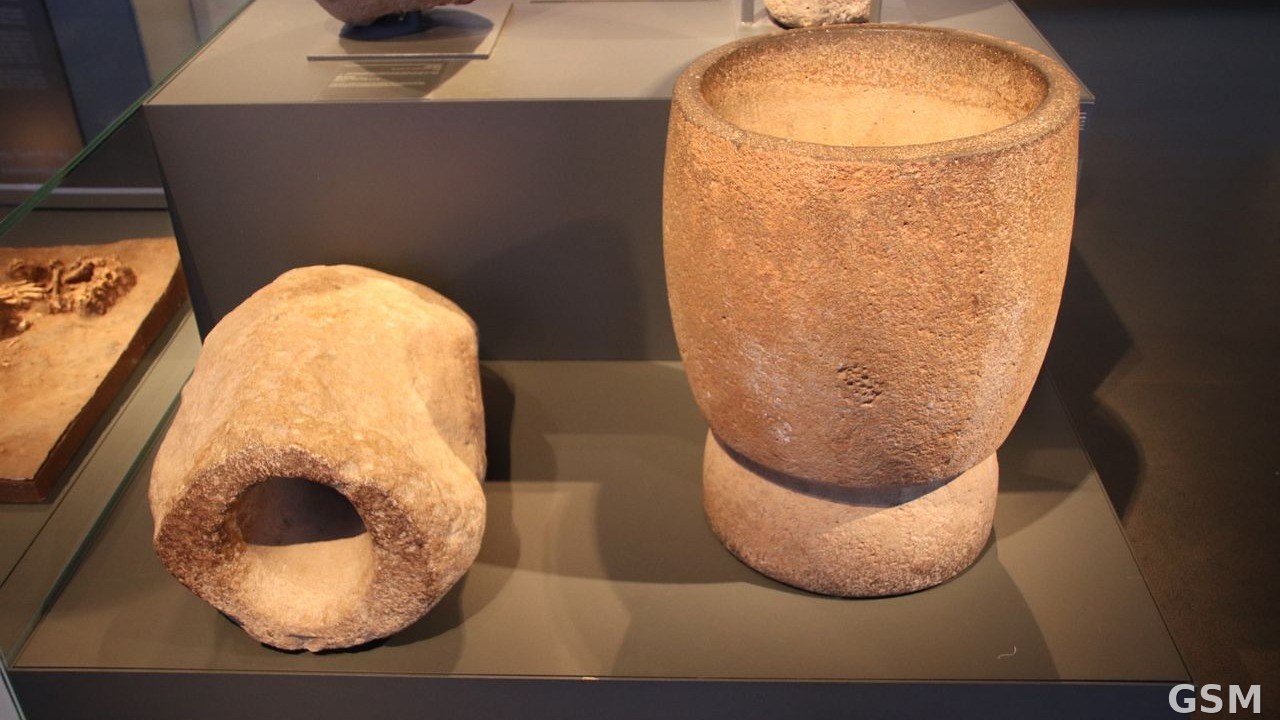
Photo: 图:藏于以色列博物馆的旧石器时代晚期石臼,出土遗址包括 Eynan,与本次研究涉及的纳图夫人遗址相同。来源:Gary Todd, CC0,维基共享资源。 / Photo: Late Epipaleolithic stone mortars at the Israel Museum, from sites including Eynan, one of the Natufian sites in this study. Credit: Gary Todd, CC0, via Wikimedia Commons.