
LECA Replacement of 20 to 25 Percent Gives Best Balance in Concrete Study With Control Strength of 31.45 MPa at 28 Days, Published in Scientific Reports on November 13
Scientific Reports published on November 13 a concrete materials study examining unsoaked Light Expanded Clay Aggregate, or LECA, as a substitute for conventional coarse aggregate. The research used M25 grade concrete with replacement levels from 0 percent to 50 percent. The paper was received on May 5, 2026, accepted on September 9, 2026 and published on November 13, with digital object identifier 10.1038/s41598-026-71504-3. Authors include S. M. Nair, N. Anand and D. Andrushia.
Fresh concrete was evaluated by slump test. Hardened concrete was tested at 28 days for density, compressive strength, split tensile strength and flexural strength. Durability was assessed through acid and sulphate mass loss, water absorption and Rapid Chloride Penetration Testing. Microstructure was examined using scanning electron microscopy with energy dispersive X-ray analysis, and sustainability was evaluated using embodied energy and carbon dioxide emissions.
The results showed a strong linear relationship between compressive strength and density, with an R-squared value of approximately 0.98. The control mix reached a compressive strength of 31.45 MPa. At replacement levels of 20 to 25 percent, compressive strengths were 17 to 19 MPa while concrete density fell by 15 to 20 percent, which the authors identified as the most favourable trade-off between strength retention and density reduction.
On durability, water absorption, chloride penetration and mass loss increased as LECA content rose, but the authors said these levels remained within acceptable performance under the American Concrete Institute guide ACI 213R-14. Microscopic analysis showed a more refined interfacial transition zone, with less accumulation of calcium hydroxide, helping create stronger mechanical bonding between aggregate and paste.
On sustainability, the study said using LECA increases the embodied energy of concrete but reduces its density, thereby lowering the dead load on the structure and possibly contributing to long-term benefits such as reduced operational and structural demand. The findings come from laboratory mix testing, and the paper reported no data from real construction projects.
Source: Scientific
Published by GSM · USA (original Chinese edition)
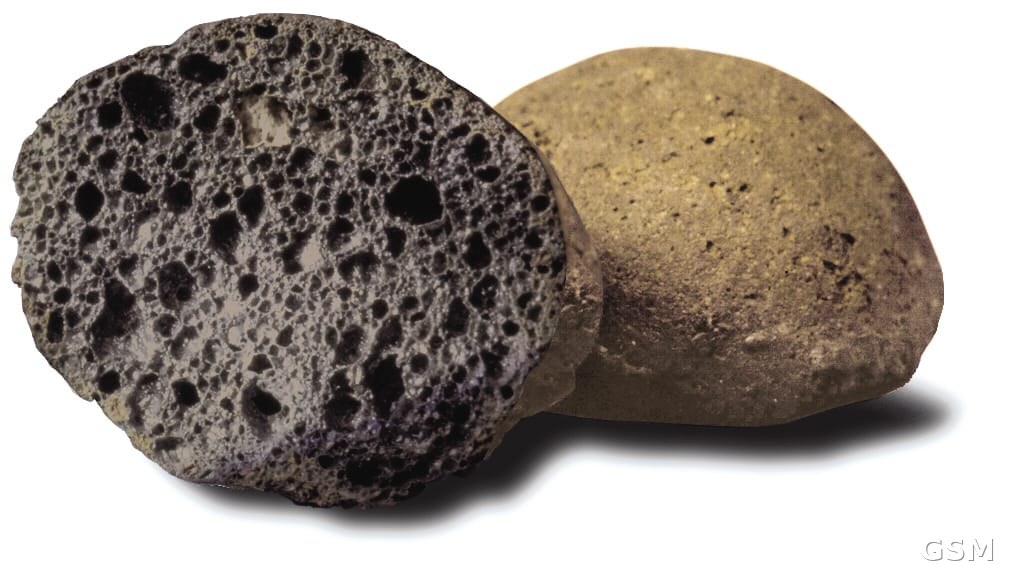
Photo: 图:轻质膨胀黏土骨料颗粒。作者:Leca67,公共领域,维基共享资源。 / Photo: Lightweight expanded clay aggregate pellets. Credit: Leca67, public domain, via Wikimedia Commons.
 Silicon Carbide Nanomaterials in Disc Brake Pads: 0.5% Loading Raised Average Brake Force by Up to 19%, With Fade Resistance Up to 130°C2026-11-14
 PEBA-PEMA Blend Membrane Separates 1-Butanol With Flux of 0.19 kg/m2/h and Separation Factor of 15.5 at 5 Percent PEMA, Published in Scientific Reports on November 132026-11-14