Pastor Boli Zhang on Tang Yuanjun: The Probation Sentence Is Reasonable, but Betraying Fellow Activists Demands Accountability
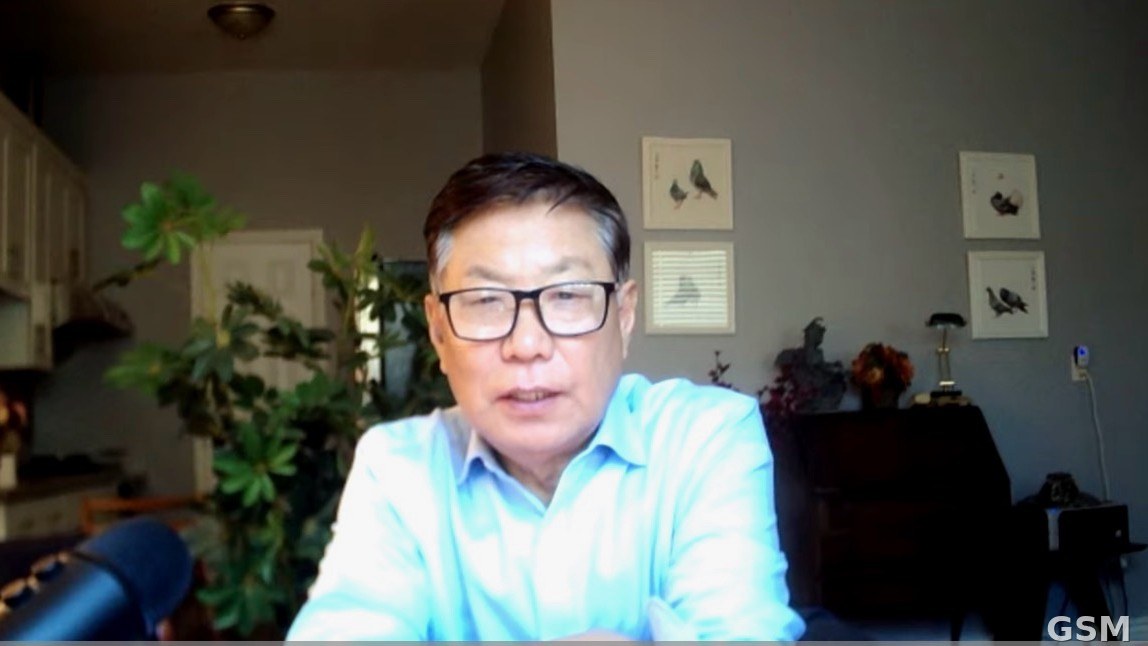
Boli Zhang, senior pastor of Harvest Chinese Christian Church, said on his program on November 14 that he personally considers it reasonable that a Manhattan federal court sentenced Tang Yuanjun to three years' probation with no prison time, but that Tang's work monitoring fellow activists for China's Ministry of State Security was wrong and must carry responsibility. "I am not defending him," Zhang said. "I can understand his weakness."
Tang, 69, lives in Flushing, Queens, and pleaded guilty in September 2025 to conspiring to act as an agent of China without notifying the Attorney General. Prosecutors said that from 2018 to 2023, acting on instructions from Ministry of State Security officers, he collected and passed on the identities, activity photos, videos and organizational details of Chinese pro-democracy activists. Prosecutors had sought five years in prison; Judge John G. Koeltl sentenced him to three years' probation on November 12. Zhang said he and Tang are both from northeastern China and have been friends and fellow activists for many years; he once preached the gospel to Tang, and when his church set up a New York branch, Tang lent his office to the congregation.
Zhang said Tang was sentenced to 20 years and served 12 years in prison for his part in the 1989 movement, is now nearly 70, received very little money from the Chinese side, and has already paid a heavy price. He stressed that probation is not an acquittal and does not endorse what Tang did; the judge ruled on the established facts, the statutory sentencing range and the mitigating factors. The public may criticize the sentence as too light and debate criminal policy in transnational repression cases, Zhang said, but a verdict that falls short of one's moral expectations is not thereby judicial injustice.
He also presented voices unhappy with the sentence. One commentator said that a man once heavily sentenced by the Chinese Communist Party, who served 12 years and then took American asylum and a U.S. passport, turned around and watched his own comrades for the Ministry of State Security for five years, yet received only probation and no prison: "Asylum is for the persecuted, not for those who work for the persecutors." Zhang also cited Hu Ping, founder of Beijing Spring, who wrote that informants inside the overseas democracy movement are an old problem, not a new one: some are planted agents, others are coerced or exploited, and Hu expressed sympathy for men like Tang and Wang Shujun, seeing their capitulation as largely helpless.
Zhang said homesickness is a vulnerability every exile has, and the Chinese government knows it well. His own parents both died in their nineties while he was unable to return for their funerals; his mother's last words were, "Son, Mother misses you." Tang's mother, Zhang said, is bedridden and paralyzed, his brother has a mental disability, the family is poor, and Tang longed to go home to see them. A person trapped by family love deserves understanding, Zhang said; that is human frailty, and honoring one's parents is a biblical commandment. But relieving one's own plight by handing other people's safety and freedom to the government that persecutes them crosses a line: that is a matter of choice and responsibility. A man may quit the movement, and may go home to see his parents, but he must not betray people. Tang should apologize to every person he betrayed, Zhang said, and he should apologize to the public.
Zhang said an ordinary person who cannot hold on is understandable, but Tang was a leading figure in the Chinese Democracy Party, and Wang Shujun was secretary-general of the Hu Yaobang and Zhao Ziyang Memorial Foundation; when leaders defect, the trust of the whole movement is damaged. The verdict, he said, is not only a test of one exile's character and responsibility, but a severe test of the political culture, organizational governance and trust structure of the overseas Chinese democracy movement. Such organizations mostly run on personal morality and trust; Zhang argued they need democratic institutions, security safeguards, supervision and accountability, noting that the Bible asks of leaders not a legendary past but faithfulness, divided responsibilities, accountability and transparency.
Some viewers criticized Zhang as a "democracy-movement pastor" who has not cut ties with the movement. Zhang replied that the shamed and the persecuted are exactly the people Christians are called to care for and love; he will not cut ties with those who persevere, and Christians must not kick a man when he is down. He said he will pray for Tang Yuanjun and Wang Shujun, hoping they repent, and he urged friends in the overseas movement not to mock Tang but to learn from those who have held on to the end.
Source: Boli Zhang's Talk Program
Published by GSM · USA (original Chinese edition)
Photo: 图:张伯笠牧师。GSM供图。 / Photo: Pastor Boli Zhang. Photo courtesy of GSM.