Archaeologists Find Sword and 17th-Century Printing Type at Tartu Siuru Site in Estonia, November 2 to 6: Type About 25mm, a First for Estonia
Archaeological excavations at the construction site of the future Siuru Cultural Centre in Tartu, Estonia, carried out from November 2 to 6, 2026, uncovered artefacts spanning several centuries, including a corroded sword, a medieval knife still retaining its wooden handle, and a glazed ceramic fragment bearing the face of a Swedish queen. The city has been posting the results in a public excavation diary, with a roundup published on November 15.
The digging was carried out by the archaeology firm OÜ Arheox with support from the Tartu City Museum. The site, in Keskpark (Central Park) on the left bank of the Emajõgi River near the Old Town, has an archaeological layer beginning about 2.5 metres down and 1.6 to 2.5 metres thick, excavated by hand to depths of up to 5 metres. The finished centre will bring together institutions including the Tartu Art Museum and the Central Library.
The standout find is a lead-based printing type, about 25 millimetres long and 6 millimetres high: a lowercase italic letter h, cast in reverse, with grooves that helped typesetters orient the letters. Arvi Haak, head of archaeology at the Tartu City Museum, said early modern letter printing types had not previously been found in Estonia to his knowledge; the only comparable finds are three oblong reglets from Tallinn, while more than 2,700 such types are known from Wittenberg in Germany.
The letter's most likely home is the first printing press of the University of Tartu, which opened with the university in 1632; the earliest known Tartu imprint is Jacob Becker's Postordnung, dated September 28, 1632. University book historian Meelis Friedenthal notes that the italic h resembles letters in Swedish-era prints, pointing to a 17th-century origin.
The most decorative find is a fragment of a green-glazed ceramic stove tile with a relief portrait of Queen Maria Eleonora, wife of King Gustav II Adolf of Sweden, dating to the first half of the 17th century. A second green-glazed tile fragment from the same dig shows Duke Johann Albrecht II of Mecklenburg-Güstrow. The precise date of the sword has not yet been established.
Published by GSM · USA (original Chinese edition)
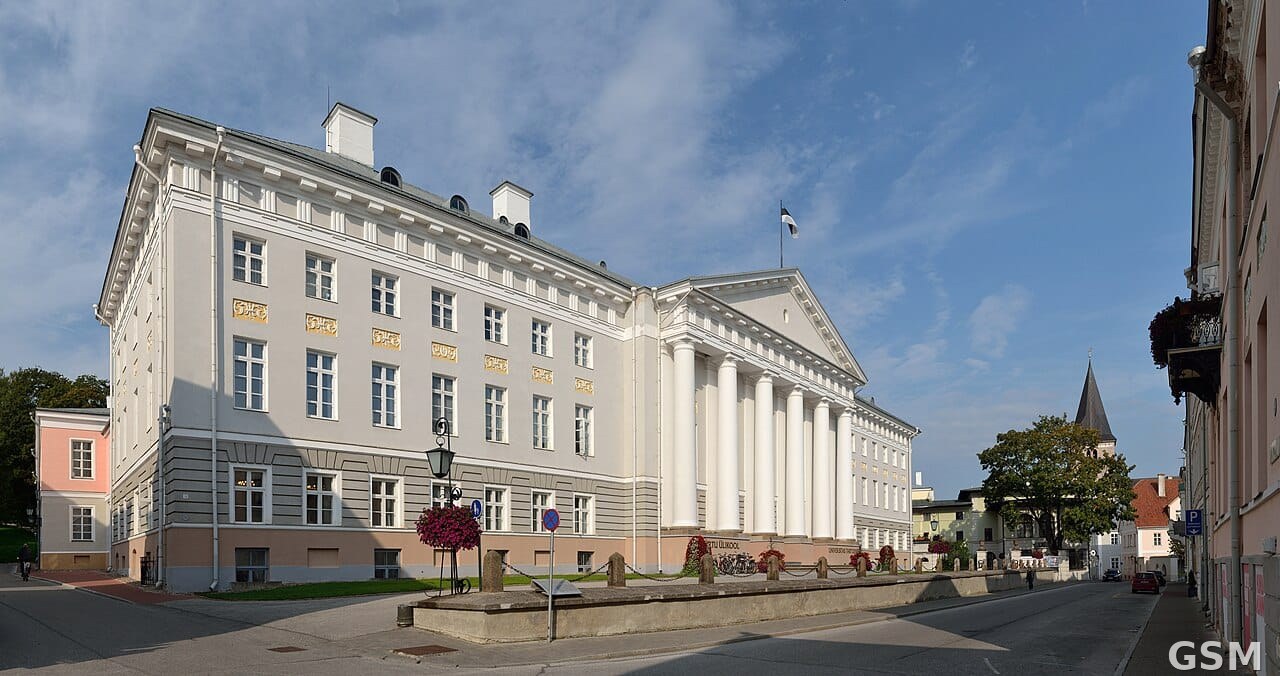
Photo: Ivar Leidus, CC BY-SA 3.0 ee, via Wikimedia Commons