Senate Votes 70-27 to End Debate on Bipartisan Permitting Reform Bill, Moving It Toward a Final Vote
The U.S. Senate on November 16 voted 70 to 27 to invoke cloture on the substitute amendment to the Bipartisan American Affordability and Jobs Act (BAAJA), moving the bipartisan bill that would rewrite federal permitting and environmental review rules toward a final Senate vote. The roll call, vote No. 264, took place at 6:27 p.m. Eastern Time, with three senators not voting. Both of California's senators, Alex Padilla and Adam Schiff, voted no.
The bill travels in H.R. 2347, a measure already passed by the House, and the substitute amendment, No. 6883, carries the negotiated BAAJA text. The bill was introduced on September 30 by four senators, Environment and Public Works Committee Chair Shelley Moore Capito (R-W.Va.), Mike Lee (R-Utah), Sheldon Whitehouse (D-R.I.) and Martin Heinrich (D-N.M.), as S. 5653, and the four released the negotiated substitute text on November 7 after talks with the House, the White House and other stakeholders.
The bill would revise review and permitting requirements under the National Environmental Policy Act, the Clean Water Act, the Endangered Species Act, the National Historic Preservation Act and the Federal Power Act, setting deadlines for environmental reviews and agency decisions, narrowing the window for lawsuits over reviews, and strengthening certainty for permits already issued. It also includes ratepayer provisions requiring new data centers to cover the grid infrastructure costs they create rather than shifting higher electricity costs to other customers. Capito has argued that lengthy federal permitting and review processes delay investment, prevent job creation and raise costs for businesses and consumers.
The Senate had previously voted 73 to 25 on November 9 to invoke cloture on the motion to proceed, and agreed 62 to 21 on November 10 to take up the bill. Monday's vote only ends debate on the substitute amendment. The Senate must still vote further on the amendment and the bill itself, and the legislation must pass the House and be signed by the President before it can become law. The vote does not constitute final passage.
(Source: U.S. Senate)
Source: U.S. Senate
Published by GSM · USA (original Chinese edition)
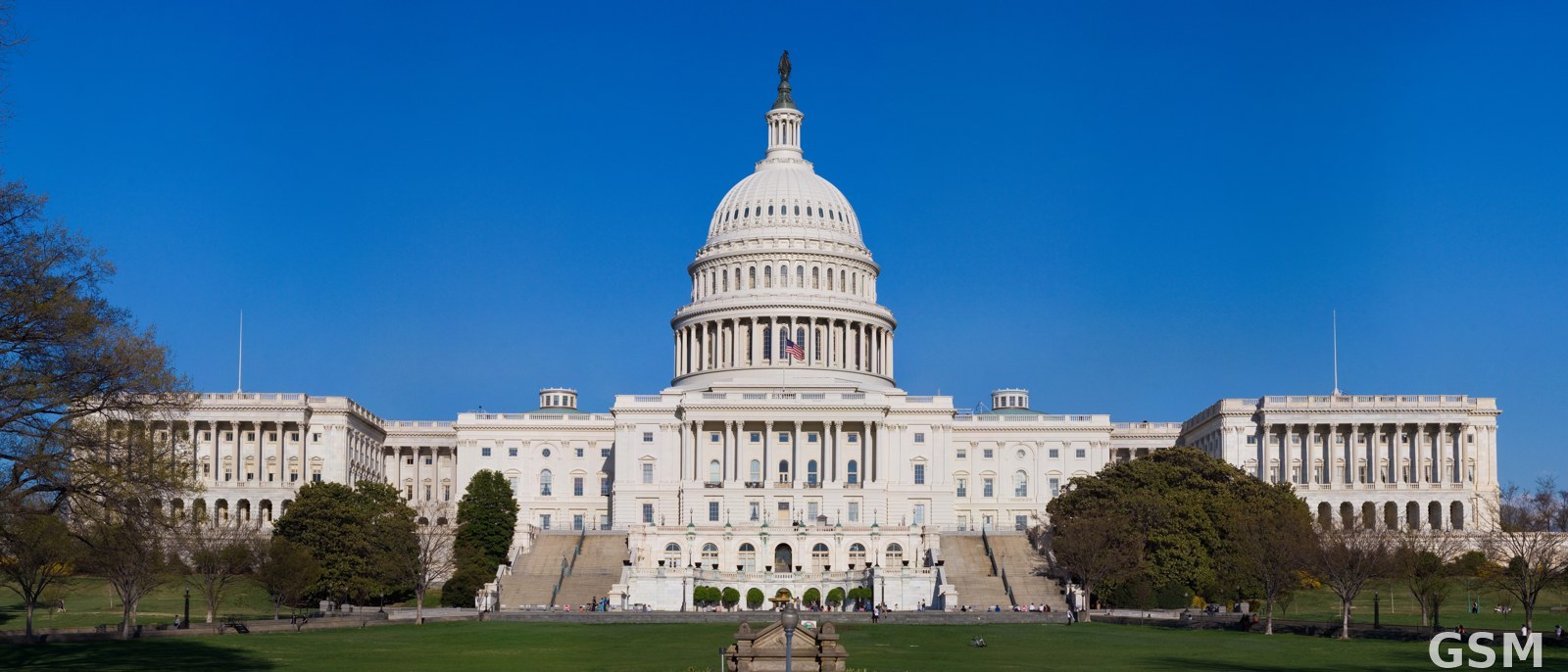
Photo: 图:美国国会大厦全景。Noclip 摄,公共领域,经 Wikimedia Commons。 / Photo: Full view of the U.S. Capitol. By Noclip, public domain, via Wikimedia Commons.
- 2026-11-08Trump Urges Senate to Pass Permitting Reform Bill, Says Data Centers Must Pay for Their Own Electricity
- 2026-11-09Follow-Up: Senate Advances Permitting Reform Bill 73-25, Moving It Into Full Debate
- 2026-11-16Senate Votes 70-27 to End Debate on Bipartisan Permitting Reform Bill, Moving It Toward a Final VoteThis story