CFTC Approves Blockchain-Based Derivatives Exchange and Clearinghouse; Backpack Announces U.S. Licenses the Same Day
The U.S. Commodity Futures Trading Commission (CFTC) announced in Washington on November 16 that it has approved the applications of a firm using blockchain-based architecture for the execution and settlement of derivatives contracts, granting it designation as a designated contract market (DCM) and registration as a derivatives clearing organization (DCO). Crypto trading platform Backpack announced the same day that the approvals cover its U.S. derivatives exchange and clearing operations, giving it both licenses.
CFTC Chairman Michael S. Selig said in a statement that the approvals mark an important milestone in the evolution of American financial markets and demonstrate that there is a regulated pathway for a new generation of market infrastructure built using blockchain technology. He said the Commodity Exchange Act establishes core principles for registered exchanges and clearinghouses without prescribing a particular technological architecture, and that firms employing novel technologies must satisfy the same regulatory standards as traditional market infrastructure, including robust anti-money laundering programs, customer protection and segregation requirements, market surveillance programs, financial resources, risk management policies and system safeguards. Selig added that since the beginning of his chairmanship he has stressed the importance of American innovators having clear rules of the road so they can build, invest and compete on American soil.
In a release distributed via GlobeNewswire, Backpack said the licenses encompass a Designated Contract Market and a Derivatives Clearing Organization, establishing the regulatory foundation for bringing its global trading platform into the United States. Under the licenses, U.S. users will be able to trade crypto perpetual futures on a leveraged basis 24/7, use both fiat and crypto assets as collateral, apply cross-margin across positions, and access Backpack's global liquidity in one unified order book. The company did not announce a launch date for its U.S. operations. Mark Wetjen, President of Backpack US, said bringing blockchain-based financial infrastructure into the U.S. regulatory framework, subject to the rigorous oversight and standards that govern U.S. financial markets, is essential to moving price discovery from offshore unregulated venues to the United States.
Backpack says it previously brought regulated perpetual futures to Europe, serves users in more than 150 countries and regions, and has recorded more than $450 billion in cumulative trading volume. Chief Executive Armani Ferrante said Backpack has taken the fully regulated approach in every market it has launched, including Asia, the EU, the UAE and now the United States. The CFTC statement did not name the approved firm, describing it only as one utilizing blockchain-based architecture for execution and settlement of derivatives contracts; Backpack's release was issued the same day and corresponds to the statement.
(Source: U.S. Commodity Futures Trading Commission)
Source: U.S. Commodity Futures Trading Commission
Published by GSM · USA (original Chinese edition)
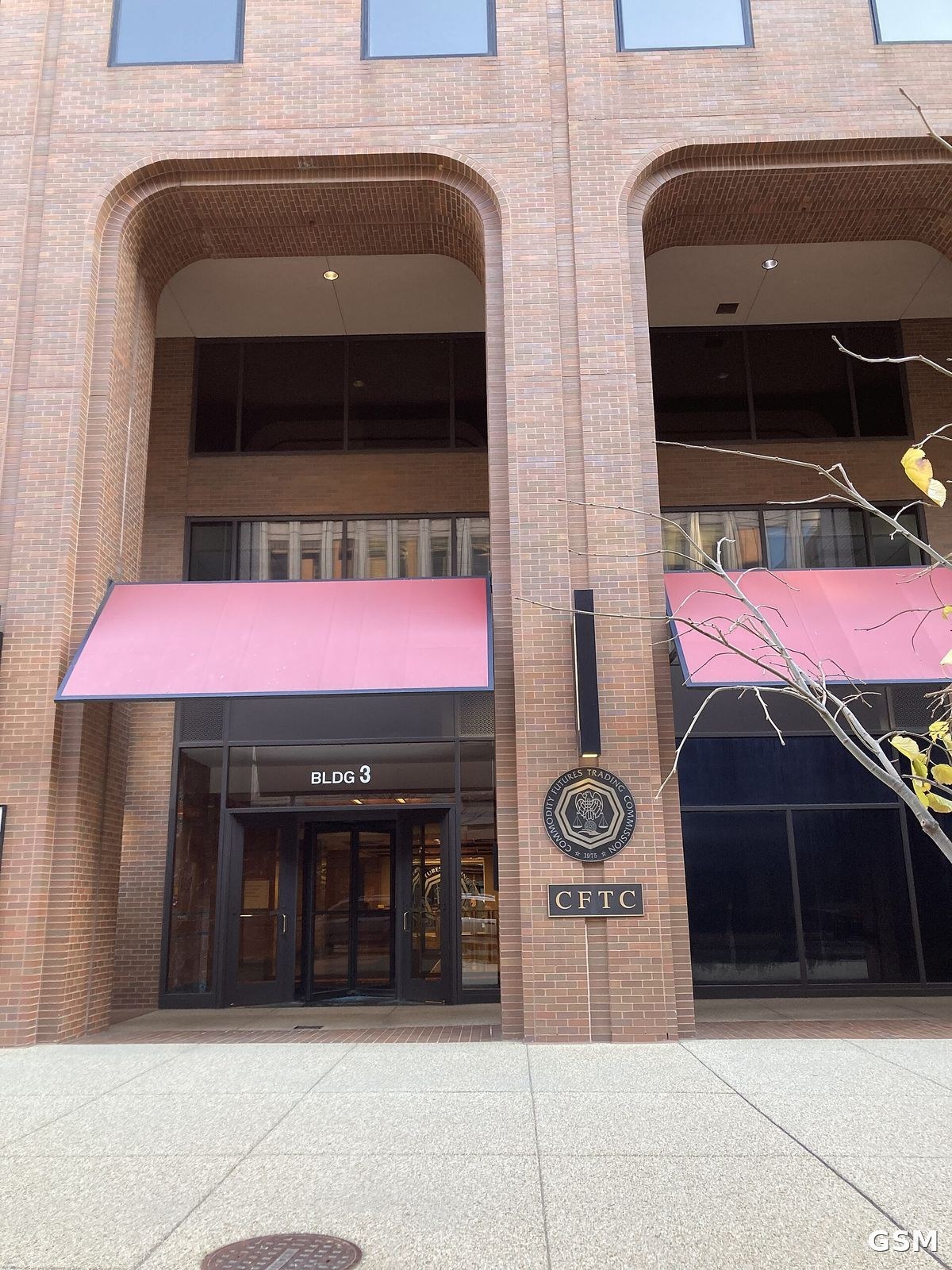
Photo: 图:位于华盛顿的美国商品期货交易委员会总部入口(Three Lafayette Centre)。Dclemens1971 摄,CC BY 4.0,经 Wikimedia Commons(GSM 联邦固定图库)。 / Photo: Entrance of the CFTC headquarters at Three Lafayette Centre in Washington, D.C. Photo by Dclemens1971, CC BY 4.0, via Wikimedia Commons (GSM federal fixed library).