CRISPR/Cas13a Assay Distinguishes SARS-CoV-2 From Related Sarbecoviruses, With Detection Limits of 15 to 150 Femtomolar
A study published November 14 in Scientific Reports presents a dual-channel CRISPR/Cas13a assay designed to distinguish SARS-CoV-2 from related sarbecoviruses using synthetic RNA targets. The authors are Leski, Dean, Johnson, Green, Díaz, Stenger, and colleagues.
The researchers built a panel covering 12 zoonotic sarbecoviruses and sorted results into three classes: SARS-CoV-2, its nearest neighbor BANAL-236, and the remaining near neighbors. Guide RNA design used a two-stage machine learning optimization, screening first with RuleFit and then retraining on 382 in vitro data points, with the mismatch exclusion threshold raised from 4 to 6.
In experiments on synthetic RNA targets, the assay's analytical detection limit ranged from 15 to 150 femtomolar. The authors state that the work demonstrates, on synthetic targets, the ability of a Cas13a assay to discriminate among closely related viruses.
Source: Scientific
Published by GSM · USA (original Chinese edition)
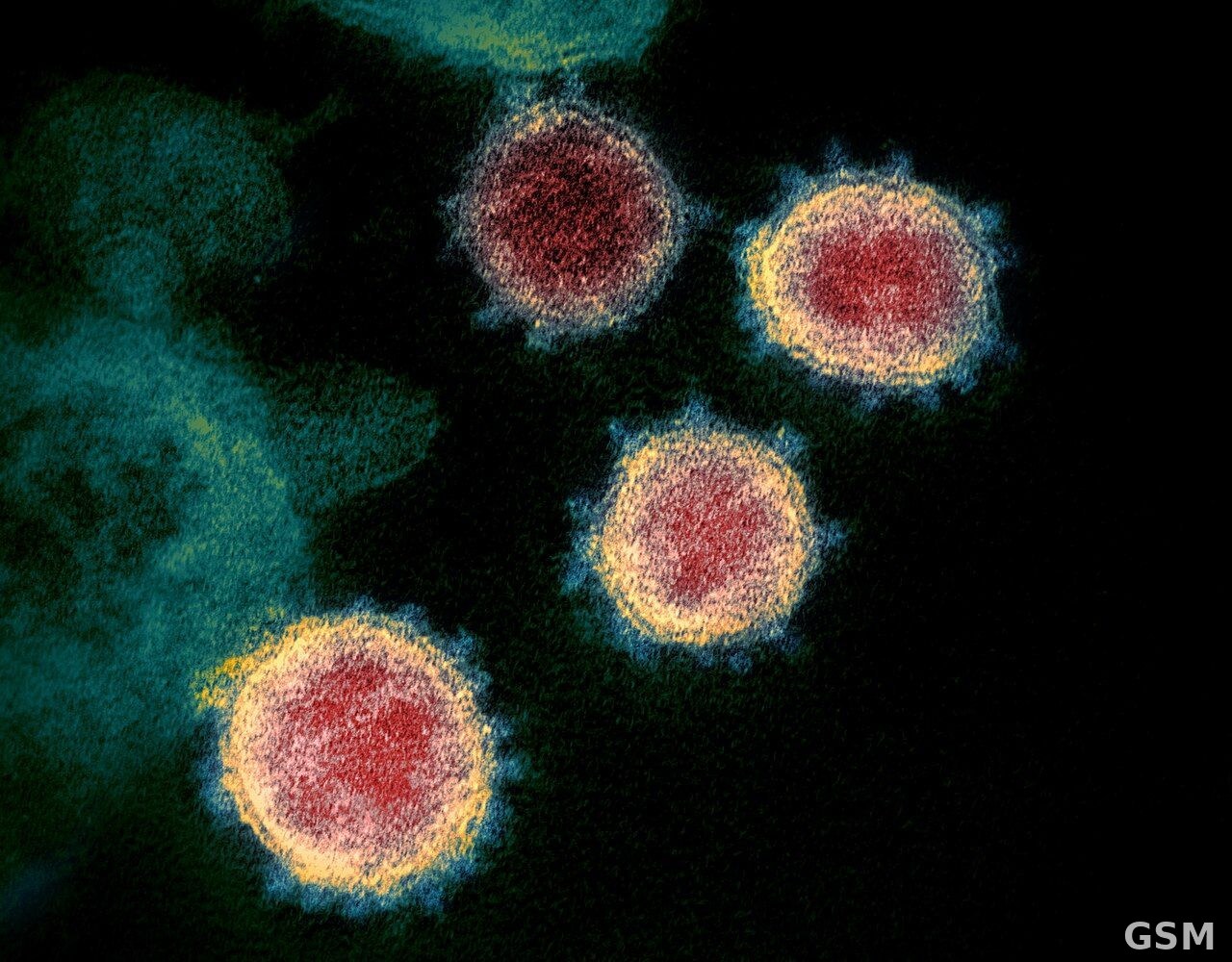
Photo: 图:SARS-CoV-2 病毒颗粒从实验室培养的细胞表面释出的透射电子显微镜图像。来源:NIAID-RML,Wikimedia Commons,CC BY 2.0。 / Photo: Transmission electron microscope image of SARS-CoV-2 virus particles emerging from a lab-cultured cell. Source: NIAID-RML, Wikimedia Commons, CC BY 2.0.