Lactate-to-Hemoglobin Ratio Features in Mortality Model Built on 3,925 Critically Ill Patients With Heart Failure and Atrial Fibrillation
A study published November 14 in Scientific Reports built a hospital mortality prediction model for critically ill patients with heart failure and atrial fibrillation using intensive care databases. The authors are Alioglu, Kahraman Ay, and Isleyen. The development cohort, from the MIMIC-IV v3.1 database, comprised 3,925 patients, of whom 760 died, or 19.4 percent; the external validation cohort, from the eICU-CRD v2.0 database, comprised 403 patients, of whom 125 died, or 31.0 percent.
Using a landmark time of six hours after ICU admission, the study examined lactate, blood urea nitrogen, and hemoglobin, together with ratios formed from them. In adjusted analyses, the lactate-to-hemoglobin ratio was associated with mortality in both cohorts, while estimates for the urea nitrogen-to-hemoglobin ratio were imprecise externally.
The locked XGBoost model reached an external AUC of 0.668, with a 95 percent confidence interval of 0.610 to 0.723, which was 0.053 higher than a logistic regression model using clinical variables plus the ratio, with a 95 percent confidence interval of 0.002 to 0.101. Against a logistic regression model using clinical variables plus the three raw markers, with an AUC of 0.672, there was no clear advantage, the difference being minus 0.004 with a 95 percent confidence interval of minus 0.042 to 0.034. Removing both ratios changed the AUC by only 0.0005. The study received no funding; ethics approval was granted by Bezmialem Foundation University on March 31, 2026.
Source: Scientific
Published by GSM · USA (original Chinese edition)
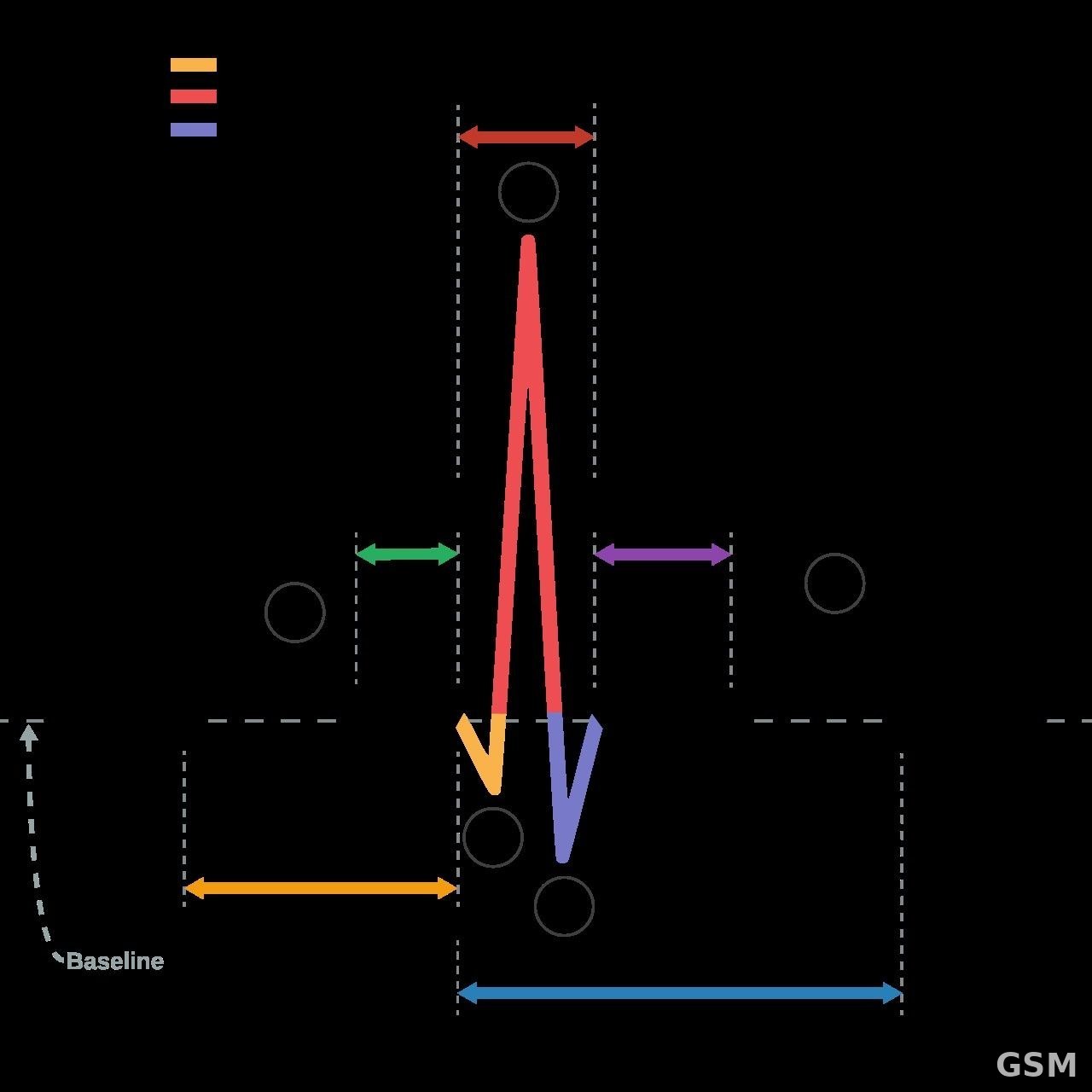
Photo: 图:正常窦性心律的心电图波形示意图,标注了 P 波、QRS 波群与 T 波。来源:Anthony Atkielski (Agateller),Wikimedia Commons,Public domain。 / Photo: Diagram of a normal sinus rhythm electrocardiogram waveform, showing the P wave, QRS complex and T wave. Source: Anthony Atkielski (Agateller), Wikimedia Commons, Public domain.