University of Tsukuba Team Finds Short Peptides From Fruit Fly Sleep Protein Nemuri That Inhibit Drug-Resistant Bacteria via Ribosomal Condensation
Researchers at the University of Tsukuba and collaborating institutions in Japan, publishing in Nature Communications, identified several short antimicrobial peptides derived from Nemuri, a sleep-inducing protein previously discovered in the fruit fly Drosophila melanogaster. The Nemuri peptides inhibited the growth of a wide range of microorganisms, including clinically important drug-resistant bacterial strains, and in Escherichia coli and Staphylococcus aureus showed bactericidal activity at concentrations close to those required to inhibit growth.
The peptides were shown to enter bacterial cells and accumulate in ribosome- and RNA-rich regions, interacting broadly with RNA molecules and ribosomal surfaces and inducing condensation-like remodelling that reduced ribosomal mobility and suppressed global protein synthesis. No substantial membrane disruption was detected at antimicrobial concentrations under the conditions tested, and the peptides showed low toxicity toward cultured insect and mammalian cells. The team said the peptides are a starting point for developing antimicrobial agents against drug-resistant bacteria, and that efficacy and safety must still be evaluated in animal models. The paper, by Suguru Nishinami and colleagues, has DOI 10.1038/s41467-026-78960-5.
Source: Nature Communications
Published by GSM · USA (original Chinese edition)
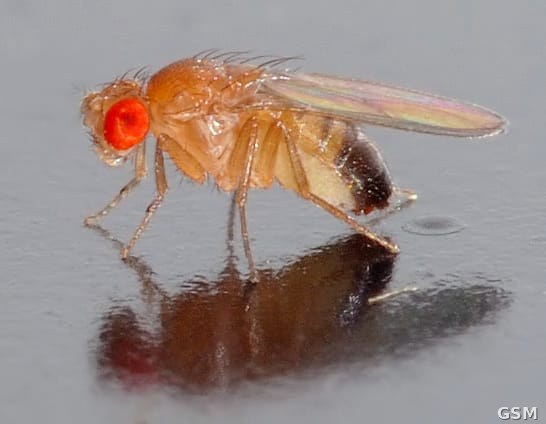
Photo: 图中是黑腹果蝇(Drosophila melanogaster)侧面特写。Wikimedia Commons — André Karwath aka Aka, CC BY-SA 2.5