
NASA Stratosphere Dust: 12 Grains Point to Ancient Water Reservoir Beyond Neptune in Kuiper Belt
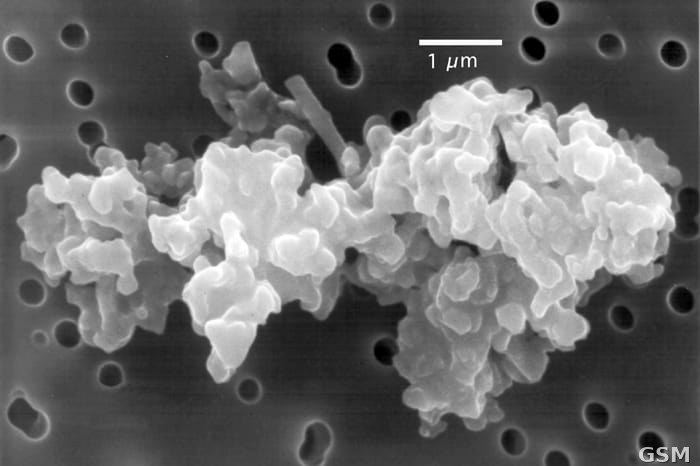
A team led by Lindsay Keller of NASA's Johnson Space Center, with collaborators at the University of California, Los Angeles, reported in Science Advances in 2026 on microscopic interplanetary dust particles collected from Earth's stratosphere, identifying 12 grains that contain evidence of ancient water-rock interactions.
Measuring oxygen isotope ratios in the grains, the scientists inferred that water in the early outer solar system was significantly enriched in heavy oxygen, oxygen-17 and oxygen-18, compared with water in Earth's oceans. The calculated enrichment in oxygen-18 was 15% compared with Earth's standard, providing a chemical fingerprint that may help distinguish materials from different solar system reservoirs. Electron microscopy showed the grains are primarily composed of saponite, a water-bearing clay mineral, alongside magnesium- and iron-rich carbonates.
High densities of solar-radiation tracks in the grains indicate travel times exceeding a million years, suggesting an origin much farther out than the typical asteroid belt, the team said. Future work will analyse additional grains to determine whether the isotopic signature is widespread in the Kuiper Belt or specific to particular parent bodies, and will compare the results with samples from asteroids such as Bennu.
Source: NASA Johnson Space Center
Published by GSM · USA (original Chinese edition)
Photo: 图中是一粒多孔球粒陨石质行星际尘埃颗粒,与本研究分析的平流层尘埃颗粒同类。来源:Wikimedia Commons, File:Porous chondriteIDP.jpg, The original uploader was Amara at English Wikipedia, CC BY 1.0。

