
Science Advances Paper on November 13 Confirms Macromolecular Carbon in Two Bright Angel Rocks on Mars Measured by Perseverance
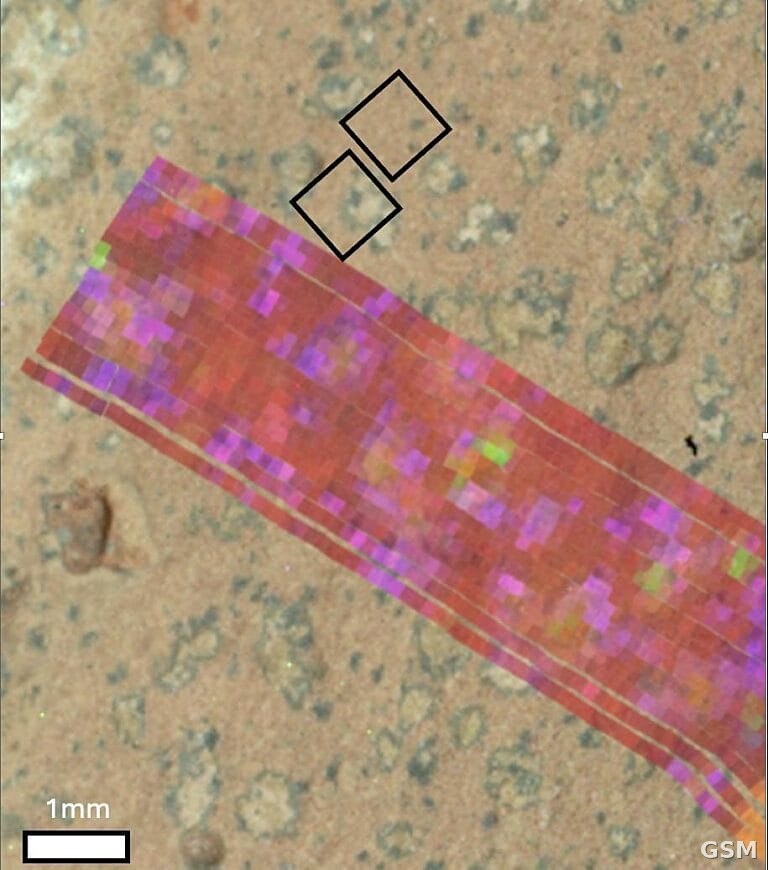
Research published in Science Advances on November 13, 2026, confirms that two ancient rocks in the Bright Angel formation of Jezero crater contain macromolecular carbon, measured by NASA's Perseverance rover. The study was co-led by Ashley Murphy of the Planetary Science Institute and Kyle Uckert, deputy principal investigator of the SHERLOC instrument.
SHERLOC, short for Scanning Habitable Environments with Raman and Luminescence for Organics and Chemicals, fires laser light at rock and reads the scattered signal to map minerals and organic compounds in place. The carbon survived a few microns beneath the exposed surface, the shallowest detection of macromolecular carbon ever reported on Mars, the study said. Murphy said the carbon is either resistant to degradation or shielded by other minerals, such as clays or the iron-rich Martian soil around it.
The study also noted that macromolecular carbon can form through biological activity and through chemistry that never involved life, and that Raman readings alone cannot settle the difference; the specific formation mechanism remains unknown. Perseverance drilled the Cheyava Falls rock in the same formation and cached the core, nicknamed Sapphire Canyon, for a future return to Earth, where laboratories could run the decisive analysis.
Source: Planetary Science Institute
Published by GSM · USA (original Chinese edition)
Photo: 图中是火星 Cheyava Falls 岩石的矿物分布图,该岩石位于本研究涉及的 Bright Angel 地层。来源:Wikimedia Commons, File:Cheyava-falls-mineral-map 2025-09-12-170425 bdvl.jpg, NASA / JPL-Caltech, Public domain。

