NASA November Skywatching Guide: Northern Taurids Peak Around November 12 at About Five Meteors an Hour With Occasional Fireballs
The November 2026 skywatching guide released by NASA's Jet Propulsion Laboratory on November 2 shows the Northern Taurid meteor shower peaking around November 12, making the night of November 12 the month's first viewing window.
The Taurids come in two branches: the Southern Taurids peaked around November 5, followed by the Northern Taurids around November 12. Each shower produces only a handful of meteors per hour, around five under ideal conditions, but an occasional bright fireball can make the wait worthwhile. The guide is presented by the laboratory's Raquel Villanueva.
Three more events fill the rest of the month. On the mornings of November 15 and 16, Mars and Jupiter appear about 1.2 degrees apart in the southeast before sunrise, Jupiter the brighter point with reddish Mars nearby, both easy to see unaided. The Leonids offer their best viewing in the early morning hours of November 17 and 18, after the Moon sets, at up to around 15 meteors per hour under ideal conditions, though most viewers will see fewer.
November 17 also carries a milestone: the Voyager 1 spacecraft becomes the first human-made object one light-day from Earth, meaning a signal traveling at the speed of light takes 24 hours to reach it, and NASA marks the day with a public activation. On November 24, a full supermoon lights the evening sky, the first in a series of three consecutive supermoons, rising in the east around sunset.
The guide's viewing advice is to find a dark location, give the eyes about half an hour to adjust, and take in as much sky as possible. Southern California readers should weigh local cloud cover on the night itself, with rain in the daytime forecast for November 13, and desert locations offer darker skies.
(Source: NASA)
Source: NASA
Published by GSM · USA (original Chinese edition)
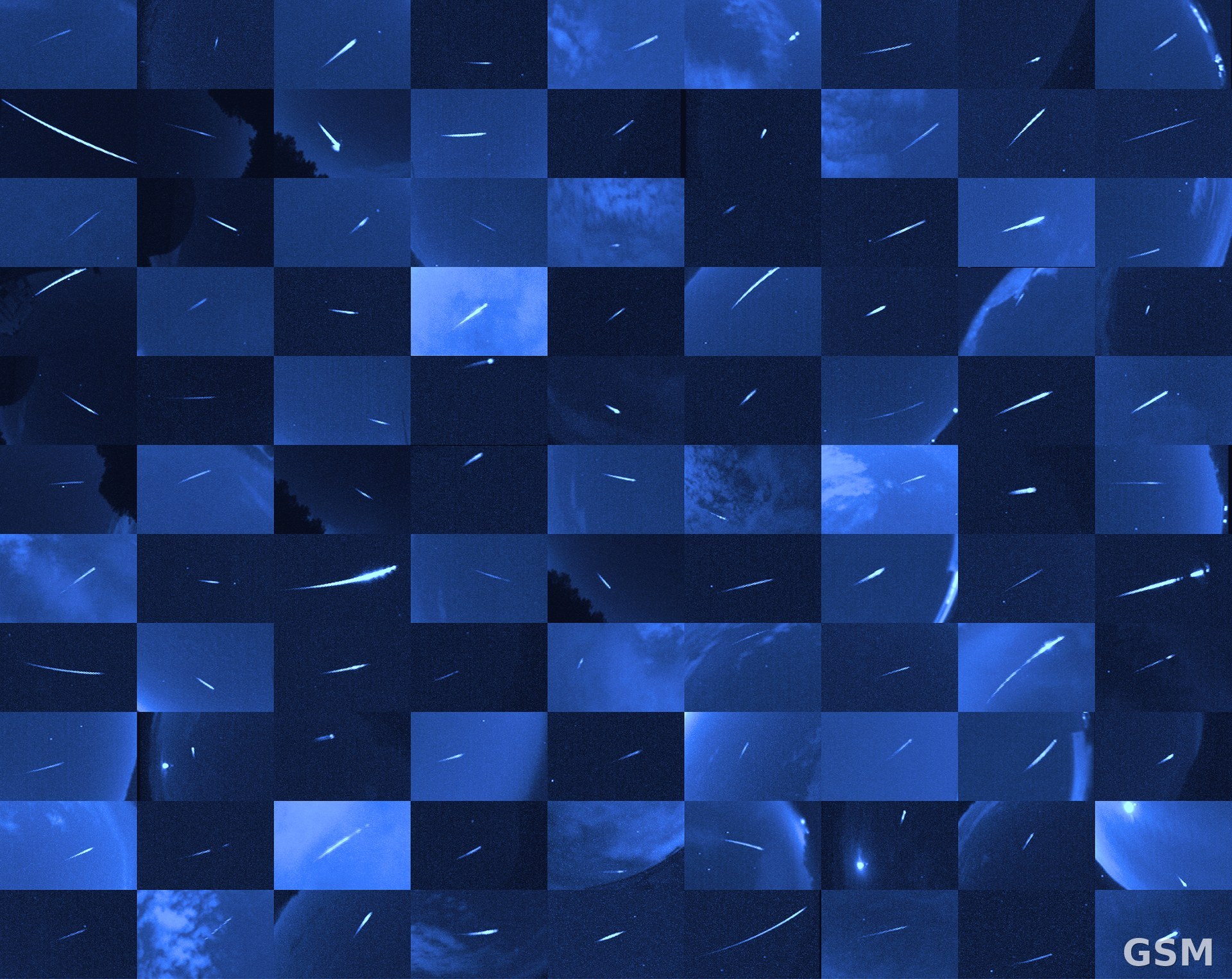
Photo: 图:流星雨划过夜空的合成影像。照片:美国国家航空航天局全天火流星网络,公共领域,经维基共享资源。 / Photo: A composite image of meteors streaking across the night sky. Photo: NASA All Sky Fireball Network, public domain, via Wikimedia Commons