JPL Study in Acta Astronautica: About 96% of Long-Term Orbital Collision Risk Comes From Dead Objects
A paper by Dr. Slava Turyshev of NASA's Jet Propulsion Laboratory, published in the journal Acta Astronautica and reported on November 13, argues that solving the space junk crisis is not just about counting trash, but about control and economics.
The paper cites filings made to the Federal Communications Commission showing that SpaceX, which runs the largest satellite megaconstellation, had its Starlink satellites perform 144,404 collision avoidance maneuvers in the six months from December 2024 through May 2025, an average of roughly one dodge per satellite per week.
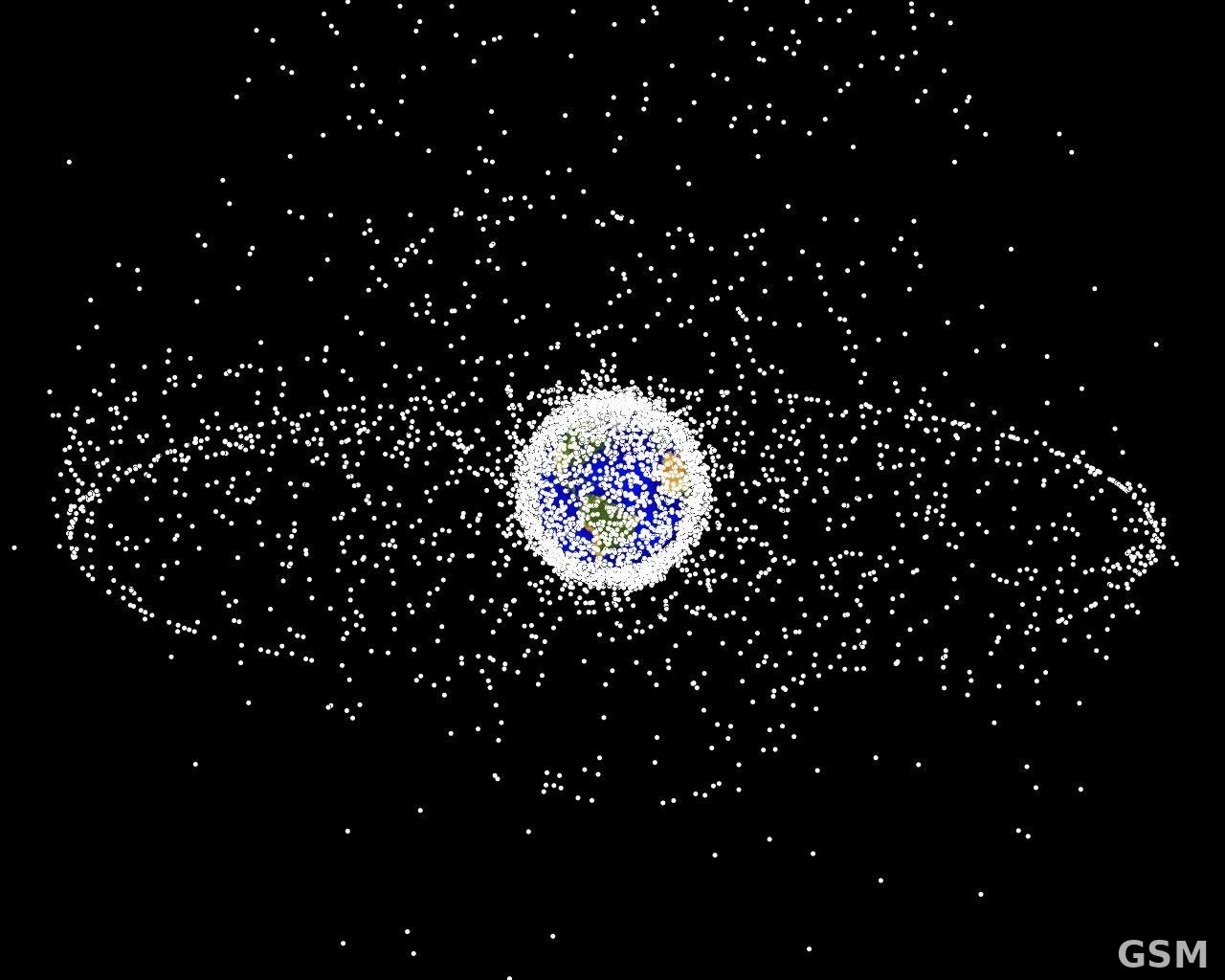
The paper separates orbits by altitude. At 500 to 600 kilometers, enough atmosphere remains that dead satellites and debris burn up in a few years, making the region partly self-cleaning. At around 850 kilometers, giant rocket stages from past launches remain with no control and little atmosphere to drag them down, able to stay in orbit for decades or centuries. Citing European Space Agency data, the paper puts about 96% of the long-term collision risk on these dead objects.
The first lever Turyshev identifies is regulation. The paper notes that the FCC has introduced a rule requiring satellites to clear out within five years of retirement, rather than the 25 years that held for decades. According to the paper, if disposal reliability rises from 90% to 99% and a satellite's allowable afterlife is cut to five years, the environmental hazard decreases by a factor of 50.
The second lever is better tracking. Rather than tracking every bolt, the paper suggests concentrating on shrinking the uncertainty zone around high-risk close calls, aligning with upgrades through NOAA's Traffic Coordination System for Space, known as TraCSS. The third lever is just-in-time collision avoidance, using ground-based lasers or small swarms of shepherd satellites to move two dead objects a few meters apart just before impact.
The paper also addresses economics. Under the 1967 Outer Space Treaty, a private company cannot simply deorbit an abandoned rocket booster owned by another government, and one firm removing debris benefits all operators while bearing the cost alone. Turyshev proposes contracts that pay for verifiable reductions in long-term risk, financed in part by disposal bonds, to incentivize companies to remove the most dangerous pieces first.
Source: NASA Jet Propulsion Laboratory
Published by GSM · USA (original Chinese edition)
Photo: 图:地球轨道碎片分布示意图(对地静止轨道视角)。作者:NASA Orbital Debris Program Office,公共领域,维基共享资源。 / Photo: Visualization of orbital debris around Earth (GEO view). Credit: NASA Orbital Debris Program Office, public domain, via Wikimedia Commons.