Study of 66,651 Urgent IBD Admissions in Poland: Same-Day Nitrogen Dioxide Showed the Strongest Association, With 17% Higher Odds Under Joint High Exposure
A nationwide Polish study published in Scientific Reports on November 14 examined short-term associations between environmental exposures and urgent hospital admissions among patients with inflammatory bowel disease (IBD). The analysis included 66,651 cases of urgent hospital admissions among patients with Crohn's disease or ulcerative colitis, recorded as either a primary or comorbid diagnosis in Poland between 2012 and 2019. It used a nationwide time-stratified case-crossover design: an exploratory nationwide screening evaluated 49 environmental exposures at lags of 0 to 10 days, followed by targeted urban analyses at pooled multi-city and Warsaw-specific levels.
At the multi-city stage, same-day nitrogen dioxide and nitrogen oxides showed the strongest associations: NO2 had an odds ratio of 1.081 (95% CI 1.050-1.113) and NOx 1.056 (95% CI 1.030-1.082), both with adjusted p values below 0.001 in the multi-city analysis. Among meteorological factors, solar radiation at lag 3 days showed the strongest association.
Joint exposures showed larger effects. Among patients aged 19 to 60, joint exposure to high NO2 and high solar radiation at lag 3 was associated with 17% higher odds of urgent IBD admission, and joint exposure to high NO2 with temperatures above 20°C at lag 0 with 9% higher odds. The associations were most consistent among working-age adults aged 19 to 60, urban residents, and patients with ulcerative colitis.
The authors state that the findings indicate short-term associations between ambient air pollution, particularly nitrogen oxides, and meteorological conditions, and urgent IBD hospitalisations in Poland, while the observed joint exposure patterns warrant further investigation. The research received no external funding; the protocol was approved by the Ethics Committee at the Centre of Postgraduate Medical Education in Warsaw, and the analysis used anonymised registry data from the Polish public statistics system.
Source: Scientific
Published by GSM · USA (original Chinese edition)
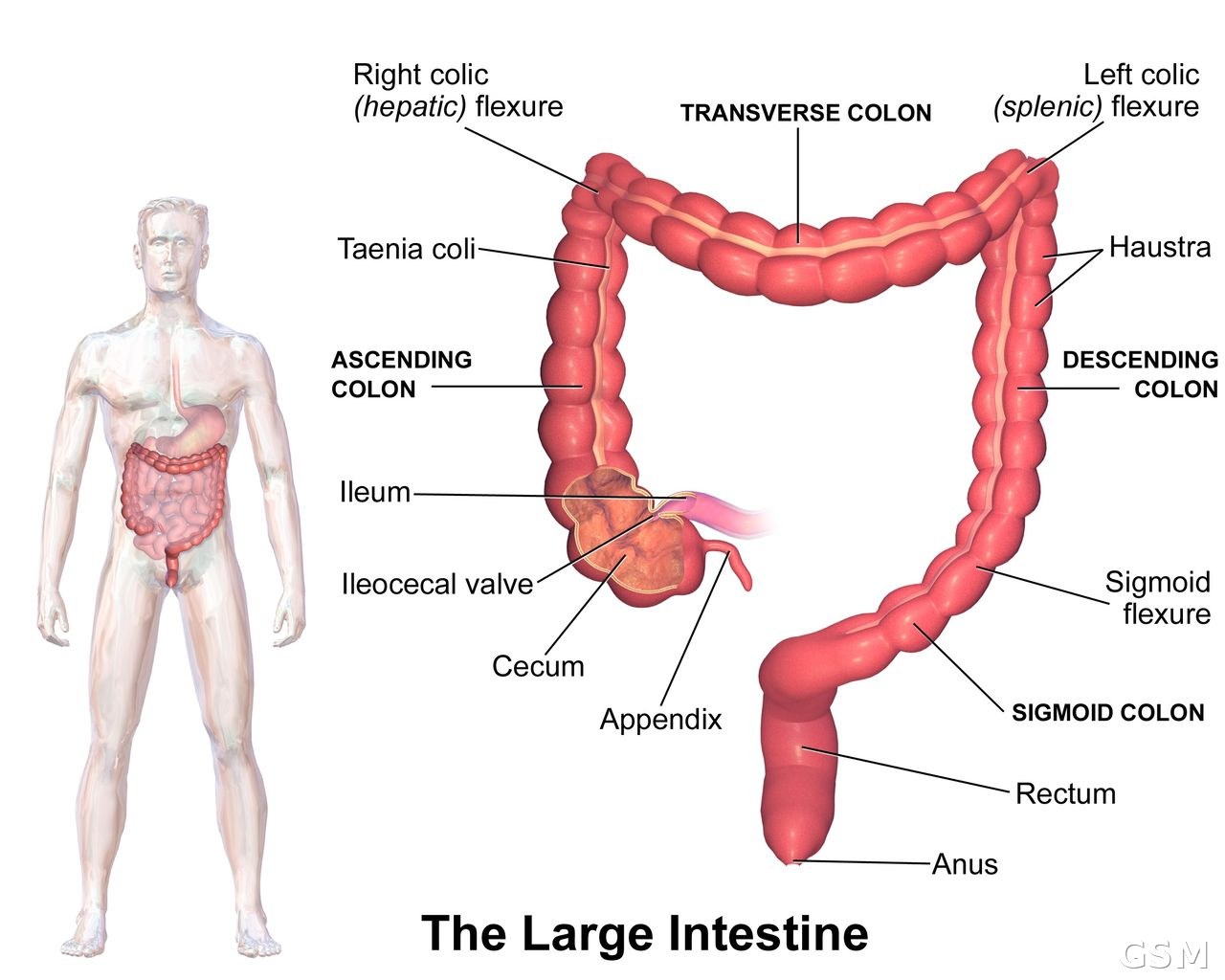
Photo: 图:大肠解剖图,标注盲肠、升结肠、横结肠与降结肠。作者:BruceBlaus,CC BY 3.0,维基共享资源。 / Photo: Anatomical diagram of the large intestine. Credit: BruceBlaus, CC BY 3.0, via Wikimedia Commons.