Fifteen Years: From Abduction and a 911 Call to a Five-Year Restraining Order — One Chinese Woman's Road to Help
About this story: This is a true story. A Chinese woman tells how she went from being trafficked and controlled to calling the police, getting medical care, obtaining protective orders, and gradually recovering — a span of fifteen years (2009 to 2024). In her own reckoning, those years fall into three stretches: from 2009 to 2019, a decade spent under another's control; from 2019 to 2025, six years of seeking help while still being harassed, pulled at, and dragged back — the entanglement never stopped; and only after 2025 did she truly begin to live as a survivor. Domestic violence and coercive control follow a recognizable pattern: demands, isolation, manipulation, and treatment that alternated between coldness and intensity.
There is a defined path out, with an institution for each step: the police, family, doctors and counselors, a Family Justice Center, and a court-issued protective order. A step-by-step self-help checklist and full resource information appear at the end of this article — along with the one thing she most wants to tell those who come after her: find professional help early. This article tells how a victim, gravely harmed in body and mind, became — step by step, carried by professional resources all along the way — a survivor; and how living as a survivor, in truth, only began for her after 2025.
In her own summary, those fifteen years ran like this: from not understanding any of it, to fright, to flight, to helplessness; to being covered in wounds, and coming close to death more than once; and finally to recognizing the manipulation for what it was — and, after a long struggle, getting out.
Editor's note: Since the beginning of October, the editor-in-chief has spent nearly a month assembling the materials in this case and visiting and verifying, step by step, the places and services from which she sought help. We are publishing her account now. She does not wish her life to be disturbed. She chose to share it in the hope that anyone now experiencing physical or psychological violence in an intimate relationship will learn sooner where help can be found, and will not have to travel the painful road she did.
In 2009, she was trafficked. As she tells it, he had first come close to her through a faith they shared — he seemed like a work contact, or simply a good man, and she had no reason to be on her guard. She never imagined that what she was walking into was not an honest relationship but a chaotic romantic game. Taken away from everything familiar, she had little control over her own life in the years that followed: in 2011 she gave birth to a child; in 2013 she escaped — all the way to the United States. She felt she was fleeing for her life, finally leaving an environment that had been suffocating her: a new country, a new city, and what she hoped would be a new beginning. That same year, she gave birth again.
But in 2015, arguing that the child needed a complete family, he had her file a green-card petition to bring him to the United States. Everything she believed she had escaped followed her to the new country.
Once he arrived in the United States, the suffocating environment she had fled closed around her again. For a long time she was not even allowed to see a doctor. Problems of body and mind had to be endured alone. In a country entirely foreign to her, she did not know whom she could even speak to — still less that the country had institutions whose whole purpose was to help people like her.
The Years She Was Trapped: Demands, Isolation, and Control
Looking back, those years were not a string of accidents but a pattern of control, one link locked to the next. In her own words, that decade was "like ending up inside one of those scam compounds in Myanmar" — held in servitude, living like a slave. It began with her being taken away from everything familiar. Then came endless demands for money and things: she was treated as a provider, expected to meet every demand and every wish, and even the assets in her name were demanded of her.
Socially, she was used as a talking point in other people's conversations while being steadily cut off from the outside world — an isolation built up over years: he would not let her hear any word from outsiders that differed from his own; the only account she was allowed to hear was his own, repeated to her day after day. The children were used as leverage over her; even childbearing was not hers to decide; and she was forced to sign documents. Threats and intimidation, treatment that swung between coldness and intensity, and long-term psychological manipulation became the texture of daily life; when she fell ill, treatment was delayed and doctors were not allowed.
For a time, to reduce the harm done to her, she felt she had to pretend not to understand and to appear compliant. As she puts it, when every support a person has is cut away like that, bit by bit, and she spends years in a loneliness no one understands, both mind and body are dragged down — to a degree outsiders can scarcely comprehend.
It was not that she never ran. In those years she escaped more than once and moved from city to city, only to be found again, and the demands resumed. Only at the very end did she find her chance to get away for good. To protect the children, she had to give up her job and devote herself to caring for them. The provider being drained and the children's only support were the same person.
She came to understand that a boundary has to be set early. If someone is not right for you, or approaches you with an ulterior motive, refuse clearly and firmly. Do not rely only on running away or hiding, and do not meet demands under threat in the hope that giving something will make the harm stop. A person who causes harm over a long period, she says, will not stop because they have received something; nor will receiving it end the demands. The earlier the refusal, the more room remains to seek help and to leave.
As she tells it, the threats were not words spoken in a moment of anger. He openly declared that he would squeeze her dry — take everything she had — and that he would destroy her name and reputation; and year after year, threats and intimidation hung over her daily life in just this way. She is explicit on one point: none of this is something she invented after the fact. As she tells it, the police reports she made at the time recorded these threats and intimidation as well; these things rest on documented reports, not on her word alone. Nor did that pattern of threats and entanglement stop once she set out on the road to help; even after she obtained a restraining order, it went on in other forms.
The Words That Told Her to Endure
In her view, what trapped her was not only the person controlling her, but also a whole set of ideas she had heard since childhood: harmony in the family makes everything prosper; family shame must never be aired outside; when you are hurt, you swallow the tooth that has been knocked out, blood and all; once there are children, you endure all the more, for their sake; elders and authority are to be respected and obeyed; and when others weigh in on a marriage, the saying goes, "better to tear down ten temples than to break up one marriage" — people urge reconciliation, never separation.
In her faith life, too, what she heard taught to women was to be gentle, to be kind, to be submissive; and those words, too, later became reasons given to her to keep enduring and to hold the relationship together. Only slowly did she come to understand: this relationship had been wrong from the very beginning, and the wrong was not hers. When a person's body and mind have already been gravely harmed — when she can barely hold on — and everyone around her is still demanding that she "persist," that is not her predicament alone; many survivors have been trapped by exactly such words, one urging to endure after another.
As she later came to see it, the most painful part of seeking help was that no one could truly understand the state a survivor is in. People asked, again and again, why she did not leave, why she had not spoken sooner; few ever asked what she had actually been put through. That is why the one piece of advice she most wants to leave to those who come after her is this: when you notice that something is wrong with your body, and something is wrong with your state of mind, go early to professional people and professional institutions — a Family Justice Center, for example. The counsel of relatives and friends comes from kindness, but it cannot take the place of professional help.
She herself turned first to relatives and friends, and spent many years on detours before she finally stood in front of professional help; had she found the professionals at the very beginning, she says, she might have been spared years of suffering.
Back then, she had no idea that America had places like a Family Justice Center, or a whole system of agencies and procedures built for domestic-violence cases. She says that alone in a foreign country, with almost no one around her, she did not even know where the first step should land; there were few people she could talk to, and no one at all who truly understood what she was living through. For years she groped her way forward while enduring it all, and only at the very end did she reach the door of professional help.
As she later came to feel, people who do not understand do survivors a second kind of harm. She repeats the things bystanders so often say: "Hitting is affection; scolding is love." "It was only a few words — how much harm can that possibly do?" "We only speak to you this way because we care about you." "Just be submissive, just endure it — the children are this big already; give it a couple of years and it will be fine." In the eyes of those who do not understand, a person who has suffered all this and still cannot get out is just "being dramatic." But it is precisely those dismissive words, landing one after another on someone already gravely wounded, that she calls a second injury — at times harder to guard against than the violence itself.
What bewildered her further was that most of this discouragement was kindly meant — and yet the harm did not grow lighter for being kindly meant. It stacked, layer on layer: first the harm of being urged to reconcile, then the harm of being treated as dramatic — a second injury, a third, round after round. She says that, piled high enough, it becomes a despair of there being no door left to knock on. She had usually reached a very grave state before she finally came out to ask for help at all; and what she met, when the people facing her were not professionals, was not help but incomprehension, mockery, every kind of urging to reconcile, and interventions offered without understanding her situation.
In her view, this is the survivor's deepest predicament: there is no one who can empathize with, or even understand, the state she is in.
There is one more trap on the road to help, and she learned of it only by stepping into it: not everyone who says "I can help you" can be trusted. She says that she was already trapped in an abusive relationship, with nowhere left to turn, when she reached outward for help — and some who came in the name of help took her money instead. That happened to her more than once. For someone already living inside harm, even an offer of help made while she is asking to be rescued may not be reliable; it is a trap many survivors fall into, she says.
In her view, the comfort of faith has its limits, too. People at church cared about her and often told her, "We'll pray for you." She has never dismissed prayer — prayer has its place, she says — but prayer cannot take the place of action: a pastor is not a mental-health professional, and a person cannot simply wait, rely on prayer alone, and do nothing; the professional steps cannot be skipped, not one of them. A restraining order has to be applied for through the proper professional channels, so that legal protection actually takes hold. If your body has been injured, see a doctor and get a physical examination — wherever you were struck, have it checked for injury inside — and keep the findings as a formal medical record.
If your mind and spirit have been gravely traumatized, see a psychiatrist and receive psychotherapy; in serious cases, take medication as prescribed. Hers was such a case: in professional evaluations and testing, her depression, her PTSD, and her stress responses all registered as severe. She has words for sufferers — and for their families: when it has reached that point, do not try to tough it out; and families, do not assume that this person is not ill. Take her to a doctor in time, get her treated in time, start the medication in time, and begin professional counseling and therapy in time.
What she came to understand is this: only when the body, the mind, and the spirit are all held in professional care can a person slowly walk out of a relationship marked by this kind of harm. And because such a relationship is formed over many years, undoing it cannot happen overnight — you can only give yourself time, and take it one step at a time. It is the same as with any other specialty, she says: no one takes a shattered bone to a dentist, and no one takes an eye problem to a pediatrician — every field has its own specialists. The psychological and spiritual wounds left by domestic violence likewise call for the right profession; do not grasp at just any doctor in desperation.
If it is the relationship that is broken, then it is the relationship that must be dealt with.
That conclusion came only after she had tried every road she could try. She had a child, and it did not make him stop. She gave him money, gave him what he wanted, and it did not make him stop. She fled to America, moved from city to city, and it did not make him stop. She separated from him and lived apart for a long time, raising the child on her own as a single mother — and still it did not make him stop; he kept coming back to harass her. As she sees it, this was never a dispute that reason could untangle. It was his endless assertion of power over her — and as long as that assertion stood, nothing she did could free her from it.
As she tells it, behind that assertion stood a set of assumptions he treated as a matter of course. In his reckoning, everything in her name — all her property, her body, her heart and her spirit, and even what she had built up, little by little, by her own efforts — belonged to him and to his family, as their private property. He could take from her anything he wanted, at any time and at any place; and what she was there for, in his mind, was to satisfy his every wish.
As she tells it, that reckoning reached into every cent she spent: since she was wholly his in his view, any money she spent was his money on the move — barring her from seeing a doctor was barring her from spending his money on her own treatment, and barring her from seeing her family was keeping his money from flowing to them. In her eyes, his whole family thought this way. Put together, denying her medical care and isolating her socially were, in his logic, a single act: guarding what he counted as his property. As she describes it, he held himself high above her in that relationship — like an emperor seated on a shrine, expecting her worship and her offerings.
In her eyes, though, he was in truth a man who never stopped taking: a parasite, she says, living off her property, her labor, and her life. As she tells it, that logic had one more turn: anyone who came near her, anyone willing to help her, was in his eyes a "bad person" set against him — because, in his reckoning, to help her was to lay a hand on his private property. The people around her who had been willing to draw close and lend a hand, she says, were smeared and cut off, one by one, for exactly this reason. And in his eyes, as she tells it, she was never a person on equal footing with him: she was a money tree he could keep taking from, a tool for bearing children, a slave he could control completely — a private possession.
And in his reckoning, everything she had was, in turn, something he had 'bestowed' on her: the children were his gift to her; the chance to work was his to give; her ability to earn, and the money she earned, were his achievement; if the family grew better off, that too was his doing. As she tells it, the truth ran the other way: after he met her, he never again held a regular job at a company — and he still hasn't, to this day — doing only odd work in services and management; he called himself a man of a higher level, someone meant to be a boss, and having taken her company, he told people he was its owner; in truth, though, he lived mainly on money he asked from her. He paid nothing toward the wedding or the bride price, and carried no responsibility at all.
What he did was have her pay for everything, and then call everything in her name his own — even when she was in childbirth, he waited for her to wake and had her settle the bill. In his reckoning, the girl was free, the marriage was free, the children were free; the house, the car, the children, the everyday everything — all of it was free, and all of it was his. He never seemed to think that those bills had, all along, been paid by her. By his account, the ledger ran one step further: the opportunity had been his to give, and what she could earn, she earned because of him — 'giving her the chance' was itself his investment. On that logic, every sum she earned already carried his share, and her handing money to him was not support, but simply what was owed.
As she puts it, at bottom this was his philosophy of life: in his eyes, he was born to be the emperor, and being served and provided for by others was simply his due.
Only later did she slowly come to understand: a relationship marked by this kind of harm cannot be ended by running from it on her own — she had run, and been found. It cannot be cut off by her family's help either — what family can give is comfort and a temporary place to land; it cannot by itself bring the demands and entanglement to an end. Even divorce, even separation, cannot by itself put a complete stop to all of it. What truly helps a person out of such a trapped state is two things intervening at the same time: the law — calling the police, applying for a protective order, so that protection rests on a clear legal basis — and professional help — doctors, counselors, psychiatry, and the Family Justice Center, catching the body and the mind, piece by piece.
Neither path on its own, she says, is enough to walk out.
The turning point came at the end of 2018. That year, after an incident of domestic violence, she called the police — the first stirrings of seeking help: the police report created a record, and every protection that followed started from that step. In 2019, she set out in earnest on the road to help. She reached out to her family for help. At her lowest point, she called the national suicide crisis line, 800-273-8255 (now also reachable by dialing 988), and received help. As she puts it, this is how she was helped, step by step.
In 2019, she finally began seeing doctors. She first consulted mental-health professionals in China, and then found a bilingual clinical therapist at SSG's Asian Pacific Counseling & Treatment Centers (APCTC). Under her therapist's care, she was referred to a psychiatrist, and professional treatment for her mental health continued from there. APCTC's Moreno Valley location provides bilingual (including Mandarin) counseling for Asian Pacific residents; it was the first place locally where she could get professional help in her own language. For her, counseling came to mean more than treatment: it was after finding a counselor that she learned to refuse the endless demands — to say no — and slowly woke up from years of manipulation.
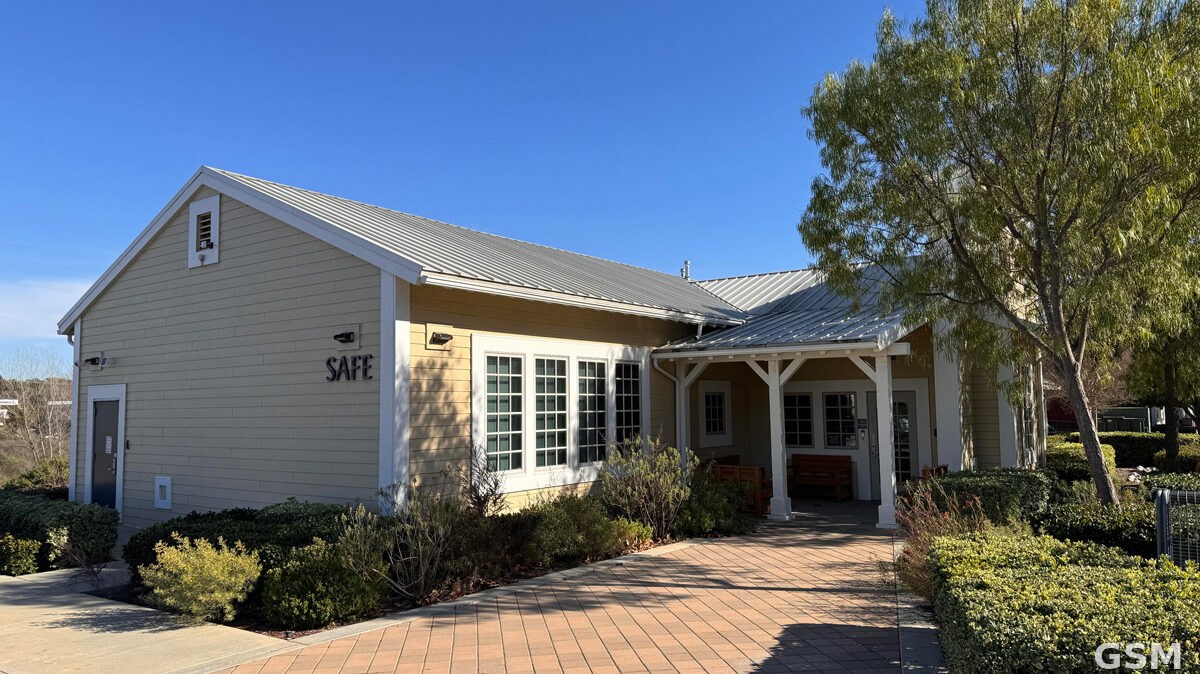
Alongside medical care, legal protection had to follow. She next went to Riverside County's Family Justice Center (the SAFE Family Justice Centers), where intake, assistance, and referrals for victims are gathered in one place, including help preparing a restraining-order application. She then went to court and obtained a one-year restraining order.
The order was not the end of the road. The road to help took six years, from 2019 to 2025 — years of seeking help while still being harassed, pulled at, and dragged back: even as the police reports, the medical care, and the court proceedings moved forward step by step, the entanglement never stopped. That is why it took six years to reach the five-year order of 2025. After that year, she saw a series of specialists for her physical health and obtained IHSS (In-Home Supportive Services) to support daily living.
In 2025, before the one-year order expired, she applied to the court again and received a five-year extension of the protective order — in California, a domestic-violence restraining order can be renewed before it expires — for five years, or permanently if the court so orders — without having to prove new abuse. That five-year order, granted only in 2025, is the hinge between her six years of seeking help while the entanglement never stopped and her life as a survivor: from 2019 to 2025 she connected treatment and protection, step by step, and only after crossing that threshold did she truly begin to live as a survivor.
Yet once the order was on paper, the harassment did not stop with it. As she tells it, after the five-year order was granted, he still would not let go: the threats, intimidation, and harassment continued in a different form — no longer delivered directly, but passed through third parties and acquaintances, relayed by people who knew her, carrying pressure on his behalf; the bad words about her kept spreading, without pause; and, she says, he even taught the child to hate her mother. The restraining order held the harm back on paper; her life as a survivor began under precisely this continuing harassment — the law's protection was in place, while peace in her everyday life still had to be won back, day by day.
The Story Told in Reverse
It was also along this road to help that she saw the other story — the one set down in legal filings. As she tells it, that account turned everything around: the things he had done were laid, one by one, at her door. She had schemed to attach herself to him, they said; she had used pregnancy and children to secure her place; she had stolen his money and had another man; she had raised a hand to his parents, mistreated the elderly and the children, and harmed the interests of his friends; he even denied that the children were his. Even the money of clients she had handled in her work was written down as money she had stolen — as she tells it, the entire account was fabricated and put into legal filings to paint her as a woman beyond redemption.
Reading those words, she was stunned: everything she had actually lived through had been turned, intact, in the opposite direction.
Not until she was sitting with professional counselors did she learn that all of this had names — that it was a system of techniques, studied and understood. The professionals walked her, item by item, through twelve patterns of psychological manipulation; measured against her own life, she recognized her experience in pattern after pattern: children used as leverage, money used as a choke point, isolation from the outside world, years of intimidation and threats, belittling and tearing down, and — whenever anything happened — denial, minimizing, and the blame pushed back onto her.
The professionals then laid these out for her on the Power and Control Wheel (from the Duluth model): the patterns she knew were the wheel's spokes — isolation, intimidation, emotional abuse, economic abuse, using children, minimizing, denying and blaming, coercion and threats — all of them turning around the hub of power and control. A pattern of control this long-running and systematic, they told her, is called coercive control: not any single quarrel or any single incident, but a continuing state of control. Her years of guilt and confusion had a name, too — gaslighting: being told, again and again, that she was the one at fault, that she was imagining things, until she no longer dared to trust her own feelings.
And the reversed story in the filings had a name as well: DARVO — Deny, Attack, and Reverse Victim and Offender: first deny what was done, then attack the person who speaks of it, and finally swap the places of victim and offender altogether. When it had all been laid out for her, years of bewilderment suddenly made sense: that he could seem a good man in front of others and a menace in front of her, that he always struck at the weakest places in her character and her body — to the professionals, none of this was her imagination; these were known techniques. What had trapped her was never that she had done something wrong.
With the professionals' help, her head cleared, little by little. But the harm done to her body and her mind was already grave: those fifteen years had drained her body, mind and spirit, her savings and her career — and at one point she nearly died on the streets of a foreign country. The effects of the trauma are still with her: she lives with severe post-traumatic stress (PTSD), and still feels fear toward people, toward social interaction, and toward intimate relationships. She is still in treatment and still recovering, and she is still looking for further treatment — for the body, for the mind, and for the spirit. She knows the road of recovery ahead of her is still long.
Recently, she has been seeing doctors at RUHS (Riverside University Health System). Today, she has only just begun to live as a survivor — still taking medication as prescribed, still continuing treatment, with legal matters and recovery both still on the road ahead. From being trafficked in 2009 and a decade under control, to six years, beginning in 2019, of seeking help while the entanglement never stopped, to a survivor's life that truly began only after 2025, she has come step by step to today.
She has only just begun to live as a survivor, and remains in recovery today, taking it step by step. Ahead of her are legal proceedings that are still under way and complicated, with more litigation still to come; she needs further legal aid, and hopes that lawyers in this field will be able to assist her. A long process of healing lies ahead of her as well. She has chosen to set down the road to help that she herself had to find as guidance for those who come after her: when something happens, where to go first and whom to turn to next, written out clearly so others can avoid some of the detours she took.
Looking back now, she says, getting out was never a matter of sheer endurance, and never a matter of luck. It happened when she finally stood in front of people who knew what they were doing. Let professionals do what professionals do: if you are in danger, call the police; to protect yourself, go to court and apply for a restraining order; when your body and your mind are hurt, see a doctor — the right specialist. Do not grasp at any remedy in desperation, and do not go on placing your hopes in persuasion and endurance. And she has one more thing she wants to say to everyone reading her story: trust your own feelings. If being with someone feels bad, then it is bad — do not doubt what you feel, and do not keep pressing your feelings down, layer upon layer.
A feeling that something is wrong is itself the warning; what comes next is to find the right way and the right path, and walk, step by step, to the people who can truly help.
She says that she believes God will restore her innocence — that God knows the wrongs done to her and all that she has suffered. She tells her story in the hope that people still trapped in controlling, abusive relationships will find their direction sooner: rescue yourself first, and find the right channels — professional institutions, and the help offered by government and nonprofit organizations — without walking the years of detours she walked.
Self-Help Checklist: Steps You Can Take
1. Call the police first if you are in danger: Dial 911, and keep the police report, photos of injuries, and text or chat records — you will need them when applying for a protective order.
2. Tell family or someone you trust: Do not carry it alone. Let at least one person know what is happening and where you are.
3. Call a crisis line in the hardest moments: The National Suicide & Crisis Lifeline is 800-273-8255, or simply dial 988 — answered 24 hours a day.
4. See a doctor, then get psychological support: Get injuries treated promptly and keep the medical records. Then seek counseling; if needed, a doctor or counselor can refer you to a psychiatrist. Make a Safety Plan with your therapist. Family members: if you see that something is wrong with a loved one's state, do not treat it as though she is not ill — accompany her to a doctor and get her treated in time.
5. Go to a Family Justice Center: It takes domestic-violence cases in one place and can help you prepare a protective-order application, so you do not have to run from office to office.
6. Apply to the court for a protective order: A restraining order has an expiration date. In California, you can apply to renew it before it expires — for five years, or permanently if the court so orders — without having to prove new abuse.
7. Connect the support for daily life: Apply for IHSS and other in-home and living support, see specialists as directed, and keep follow-up appointments — physical and psychological treatment both take time.
8. Give yourself time: Going from escape to recovery can take years. Take it one step at a time.
9. Guard against fraud while seeking help: Go only to established institutions and licensed professionals — a Family Justice Center, official hotlines, reputable counseling and medical providers. If an individual's "help" begins with a demand for money, or comes with a promise that they can "fix everything," verify that person's identity and credentials first, and beware of being cheated.
Help Resources (Riverside County and Nationwide)
In an emergency, call 911. A police report is the starting point for restraining orders and other protections.
National Domestic Violence Hotline: 1-800-799-7233 (24 hours, with services in Chinese and other languages).
National Suicide & Crisis Lifeline: 800-273-8255, or dial 988 (24 hours).
SSG Asian Pacific Counseling & Treatment Centers (APCTC): Moreno Valley location; bilingual (including Mandarin) counseling and referrals for Asian Pacific residents; phone (951) 405-8250. Ask about making a Safety Plan with a therapist — write down emergency contacts, safe places, and steps in advance.
Riverside County SAFE Family Justice Centers: one-stop help for domestic-violence victims, including assistance preparing restraining-order applications.
Tell family or someone you trust: asking people close to you for help is itself a step on the path.
(This case is published with the subject's own consent. At the end of the interview, she asked that her name not be disclosed; to protect her, she is not named, and no identifying information about the perpetrator is included.)
Related: Google Engineer's Wife-Murder Case: Liren Chen Seeks Not-Guilty Plea on Insanity Grounds
Related: Victorville Man Arrested on Suspicion of Murder After Wife Fatally Shot and Stepson Wounded
Related: D.C. Man Sentenced to 20 Years for Shooting Death of His Girlfriend
Related: Former NFL Returner Cordarrelle Patterson Arrested in Tennessee on Suspicion of Domestic Assault
Related: Abuse Allegations Shake a Safe GOP District in Ohio: Rep. Miller's Seat Turns Competitive
Related: Veteran WRAL Producer Arrested in TV Station Lobby Over Alleged Domestic Violence Order Violation
Related: Orange County Family Justice Center Marks 20 Years; Multilingual Help Including Chinese
Related: Newsom Signs AB 1657, Unifying DV Restraining-Order Rules Statewide
Related: More Than 100 Gather at Columbus City Hall for Domestic Violence Vigil
Related: Detroit Mayor Appoints DV/IPV Advocate and Signs Executive Directive
Related: Maryland Invests Nearly $60 Million in Victim Service Providers
Related: 134 Killed in Domestic Violence Incidents in Ohio in a Year: Nearly Half Were Trying to Leave
Related: Florida: Volusia County Launches State's First Domestic Abuse Offender Database
Source: GSM · USA (original Chinese edition)
Photo: 图:河滨县 SAFE 家庭司法中心位于特梅库拉市的中心外景,墙上可见 SAFE 标识。照片来源:SAFE Family Justice Centers 官方网站。 / Photo: Exterior of the SAFE Family Justice Centers location in Temecula, Riverside County, with the SAFE sign visible on the building. Photo via the official SAFE Family Justice Centers website.