Swift Observatory Expected to Re-enter Around Nov. 6 After 22 Years and 2,000+ Gamma-Ray Bursts
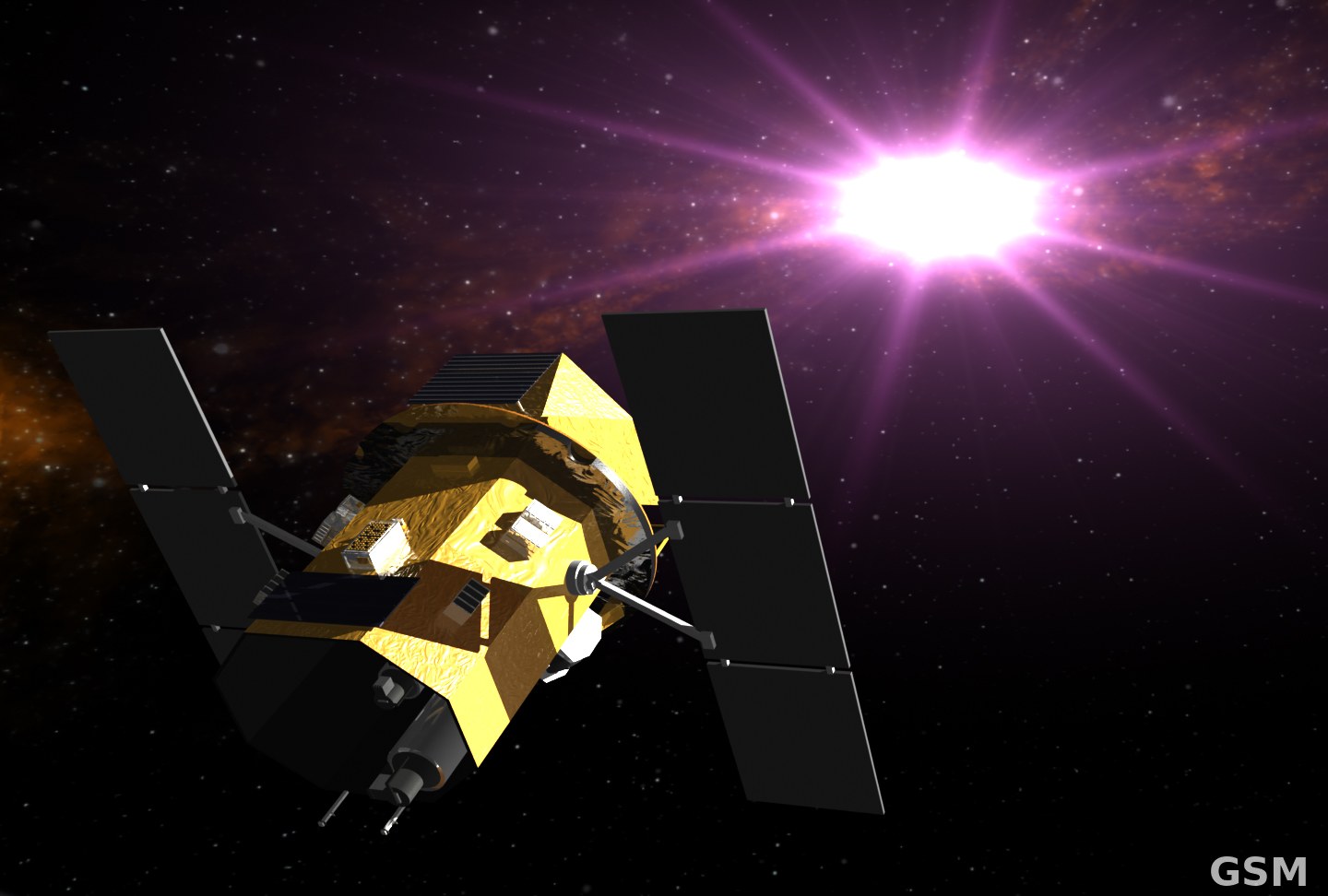
The U.S. Space Force predicts that NASA's Neil Gehrels Swift Observatory will plunge through the atmosphere on or around Friday, Nov. 6, ending a 22-year career in orbit. Most of the roughly 1.5-ton telescope is expected to burn up during the uncontrolled re-entry.
NASA's Brad Cenko, the mission's chief scientist, says a handful of parts made of tungsten — denser than lead — and some mirror components could survive re-entry; any surviving wreckage will most likely plunge into the ocean. The re-entry zone spans parts of Africa, Australia, India, Southeast Asia, and Central and South America, and the Space Force is tracking the spacecraft's dwindling path.
Swift launched on Nov. 20, 2004, with a planned mission of just two years. Intense solar activity in recent years heated and expanded Earth's upper atmosphere, increasing drag and pulling Swift down faster. NASA awarded a $30 million contract to Arizona-based Katalyst Space Technologies to boost Swift's orbit: its robotic spacecraft Link launched in July but ran into trouble, never getting closer than about 12 to 15 kilometers (7 to 9 miles) from the telescope. The rescue was called off, and Link itself re-entered in September.
After the rescue attempt ended, Swift resumed observations and caught still more gamma-ray bursts and other high-energy events. By late October it had sunk to about 275 kilometers (171 miles), too low to hold its telescopes steady, and its systems were shut down. NASA announced the end of science operations on Oct. 23, as GSM reported on Oct. 24.
Swift's final tally: more than 2,000 gamma-ray bursts and 1,400 exploding stars, plus a slew of comets, asteroids and star-shredding black holes. Nicknamed astronomy's "first responder" for its ability to swivel rapidly toward erupting events, it fed targets to the Hubble and Webb telescopes for deeper study. "We've known this day would come since before Swift was launched. At least in low-Earth orbit, what goes up must come down. And that end is catastrophic," said Pennsylvania State University astronomer John Nousek, who led the control team.
Related: NASA's Swift Observatory ends operations after sinking to 171 miles
Source: GSM · USA (original Chinese edition)
Photo: 图片来源:Wikimedia Commons(美国航天局NASA公有领域图片,Swift天文台概念图) / Image: NASA via Wikimedia Commons (public domain)
- 2026-10-24NASA's Swift Observatory Ends Operations: After Sinking to 171 Miles It Entered Safe Mode and Will Re-enter Within Weeks
- 2026-11-01Swift Observatory Expected to Re-enter Around Nov. 6 After 22 Years and 2,000+ Gamma-Ray BurstsThis story