384 Bread Wheat Genotypes: Seven Loci for Soluble Arabinoxylan Found, Heritability About 0.67
A genome-wide association study published in Scientific Reports on November 14 reveals the genetic architecture of soluble arabinoxylan fibre in bread wheat. The work, by Alabdullah, Kosik, Leverington-Waite and colleagues, was received on August 12 and accepted on October 30.
Arabinoxylan (AX) is the dominant fibre component in wheat starchy endosperm, and its water-extractable fraction (WE-AX) is particularly beneficial to health. The team assembled an Elite Fibre Panel of 384 elite modern wheat genotypes from Western European commercial breeding programmes, and quantified WE-AX in wholemeal, as a proxy for soluble AX in white flour, across two UK field environments.
Wholemeal WE-AX showed substantial quantitative variation, with a broad-sense heritability of about 0.67 on a genotype-mean basis and a moderate positive correlation between sites (r = 0.51). Association analyses using 6,791 single nucleotide polymorphisms (SNPs) identified seven loci associated with WE-AX content.
The strongest and most stable effects mapped to major loci on chromosomes 1B and 6B, previously implicated in AX regulation, while additional loci of smaller and sometimes environment-dependent effect were detected on chromosomes 3A, 5B and 7A. Genotypes carrying more favourable alleles generally had higher mean WE-AX. The authors said the favourable alleles already segregating within elite germplasm are potential targets for breeding wheat with enhanced soluble dietary fibre.
Source: Scientific Reports
Published by GSM · USA (original Chinese edition)
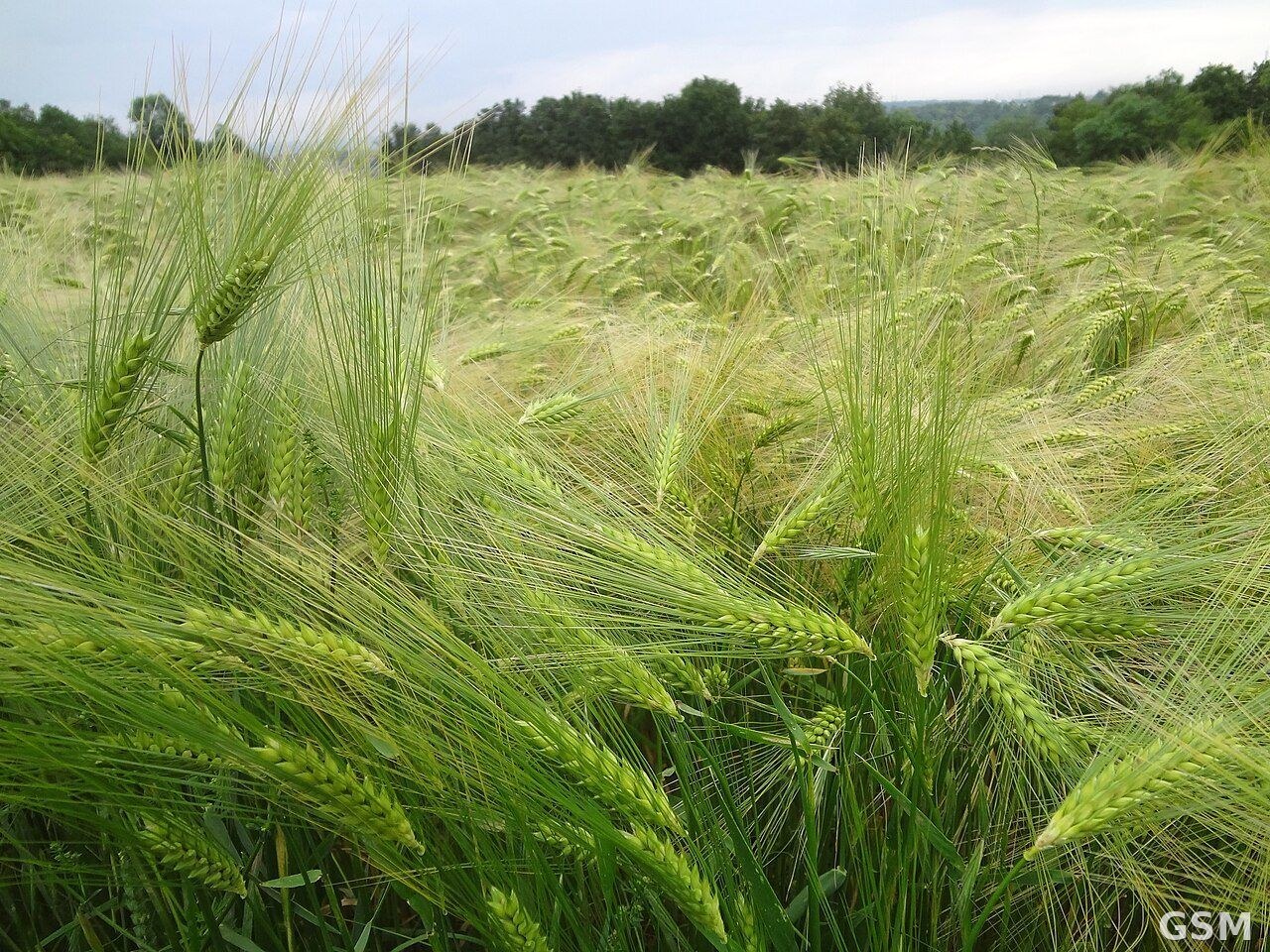
Photo: 图:一片面包小麦(Triticum aestivum)田。作者:Teknad,CC0,维基共享资源。 / Photo: A bread wheat (Triticum aestivum) field. Credit: Teknad, CC0, via Wikimedia Commons.