Fed Governor Waller Backs a 25-Basis-Point December Hike and Says 50 Should Be Considered If Core Inflation Runs at 0.3%
LONDON — Federal Reserve Governor Christopher J. Waller delivered prepared remarks titled "Economic Outlook" in London on November 10. He said economic activity is strong and the labor market is stable, but inflation remains well above the Federal Open Market Committee's (FOMC) 2 percent goal, and that even if the October inflation data due later in the day improve over September, he is leaning toward supporting a 25-basis-point increase in the policy rate at the December meeting. If October core consumer price index (CPI) inflation comes in around 0.3 percent or higher, similar to the past two monthly readings, he said a 50-basis-point hike should be considered at the December meeting, and that hiking only 25 basis points would put the Fed's credibility at risk.
Waller said he supported holding the policy rate steady at the October meeting because the Committee's earlier communication about likely tightening had already led financial markets to price in some tightening, and what matters is that the promised hikes are eventually carried out within a reasonable period, not that rates rise at consecutive meetings. Real gross domestic product (GDP) rose 3.4 percent in the third quarter on the initial estimate, supported by strong consumer spending and robust business investment, especially in high-tech equipment associated with the super intelligence (SI) buildout. The unemployment rate ticked down to 4.1 percent in October, payrolls rose 165,000 in the month, and estimates for the previous two months were revised up by a combined 85,000, with six- and twelve-month average gains near 80,000 a month, leaving labor supply and demand in rough balance.
On inflation, Waller called September's data bad, with no silver lining: personal consumption expenditures (PCE) inflation, the measure targeted by the FOMC, rose 0.5 percent in September and 3.7 percent over the previous 12 months, while core PCE inflation rose 0.3 percent on the month and 3.1 percent from a year earlier, and the breadth of price increases widened, with more than 70 percent of core PCE services components posting 12-month increases above 3 percent. He said he would look in the October data due later in the day to see whether that breadth continues, including whether high-tech goods prices tied to the SI buildout keep rising rapidly and whether the run-up in energy prices is passing through to goods and services.
Citing Federal Reserve research, he said price-pressure indexes built from purchasing manager surveys point to further producer price increases ahead, and that energy shocks may now pass through to core inflation in a more sustained way than in the past, with pressures potentially persisting well into 2027 if oil prices stay elevated. Tanker traffic through the Strait of Hormuz is moving at great expense, with insurance and ship-to-ship transfers reportedly boosting oil prices by $20 to $30 a barrel, while limited refining capacity is expected to keep U.S. diesel prices elevated even if crude moderates.
Waller also raised a longer-run question about whether the current "low hire, low fire" labor market is as healthy as the headline unemployment rate suggests. The share of unemployed workers looking for work for more than six months has climbed steadily since 2022, and the share of new labor force entrants in unemployment is close to its highest in twenty years, which could hinder productivity growth, he said, though for now he sees employment close to the FOMC's maximum-employment goal and inflation as the focus of policy.
(Source: Federal Reserve Board)
Source: Federal Reserve Board
Published by GSM · USA (original Chinese edition)
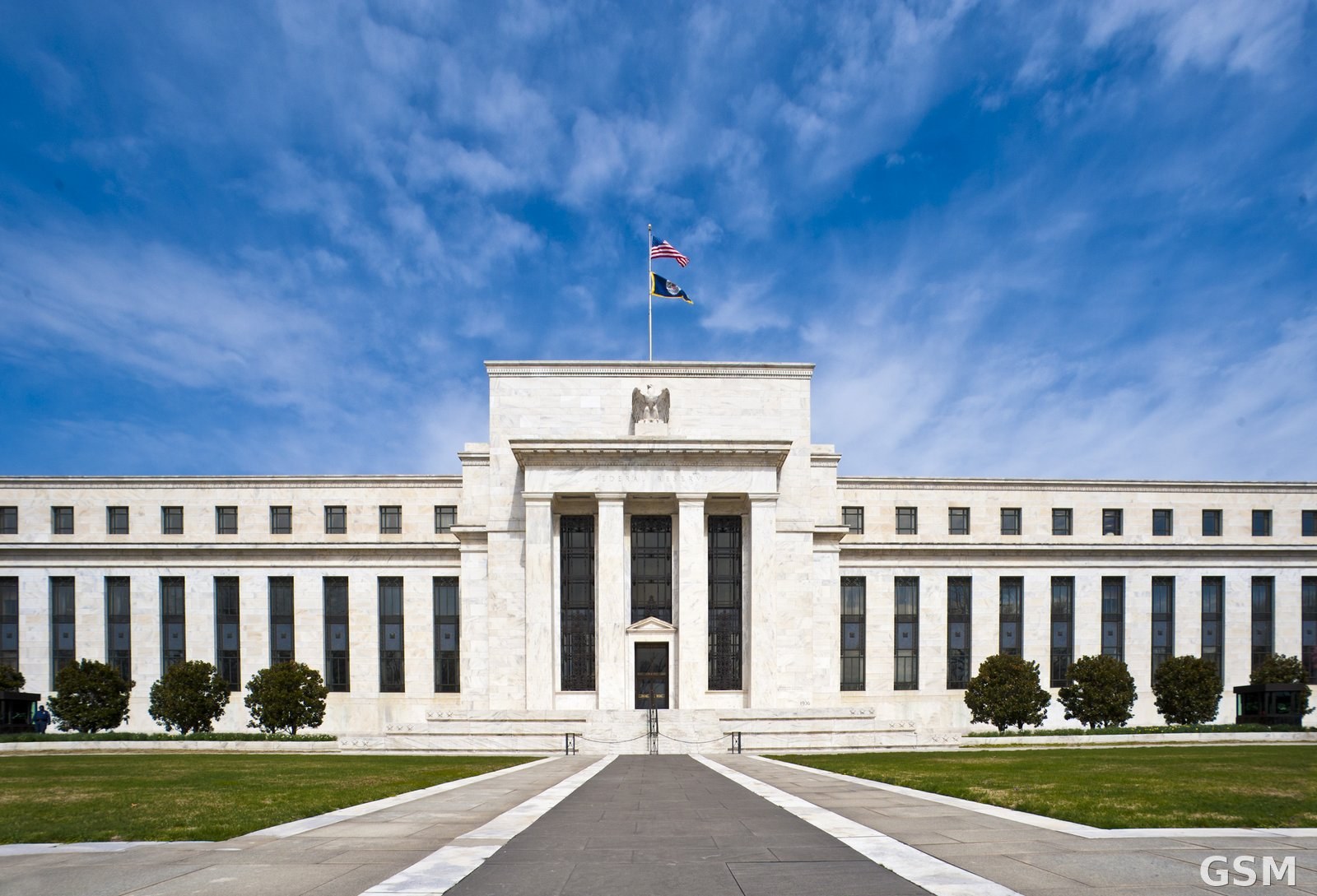
Photo: 图:美国联邦储备委员会总部大楼(GSM 固定图库)。 / Photo: Federal Reserve Board headquarters (GSM asset library).