All 8 Extradited ANOM Encrypted-Device Distributors Plead Guilty: FBI Secretly Ran the Network
On February 7, 2025, the U.S. Attorney's Office for the Southern District of California announced that all eight extradited distributors of ANOM hardened encrypted communication devices have pleaded guilty. Alexander Dmitrienko of Finland pleaded guilty in federal court in San Diego, a city in San Diego County, California, becoming the last of the eight to do so. The pleas mark another step in a case built around an encrypted network the Federal Bureau of Investigation (FBI) secretly operated before a worldwide takedown.
The eight were among 17 defendants indicted in San Diego in 2021 in connection with Operation Trojan Shield, an international law enforcement effort in which the FBI secretly operated an encrypted messaging network. According to the Justice Department, the ANOM enterprise distributed more than 12,000 devices in 100 countries. While ANOM's criminal users unknowingly communicated on the system operated by law enforcement, agents catalogued more than 27 million messages between users around the world, whose criminal discussions were covertly obtained and reviewed by the FBI.
The Justice Department said ANOM devices were sold to and used by over 300 criminal syndicates, including outlaw motorcycle gangs, Italian and Balkan organized crime groups, and international drug trafficking organizations. The investigation culminated in a worldwide takedown on June 7, 2021, during which more than 10,000 law enforcement officers made over 500 arrests and searched over 700 locations around the world. In total, the investigation resulted in approximately 1,200 arrests; the seizure of more than 12 tons of cocaine, three tons of methamphetamine or amphetamines, 17 tons of precursor chemicals, 300 firearms, and $58 million in various currencies; the dismantling of more than 50 drug labs; and the prevention of over 150 threats to life.
The guilty pleas came in stages. Seyyed Hossein Hosseini and Aurangzeb Ayub of the Netherlands and Shane Ngakuru of New Zealand entered their guilty pleas on January 23, 2025, and Dragan Nikitovic, Edwin Harmendra Kumar, Miwand Zakhimi, and Osemah Elhassen pleaded guilty between May and September 2024. All eight pleaded guilty to Count 1 of a superseding indictment charging them with a racketeering conspiracy in connection with the ANOM enterprise. Before their pleas, the defendants filed motions to dismiss the indictment and to suppress the ANOM evidence; the District Court denied those motions, concluding that the Fourth Amendment did not apply to the defendants and that the ANOM data collection did not violate the U.S. Constitution.
According to their plea agreements, the defendants promoted the ANOM platform as "Built by criminals for criminals," and touted security features such as the ability to wipe devices remotely when seized by law enforcement. The defendants admitted that the conspiracy's purposes included money laundering and laundering with cryptocurrency. The four defendants who pleaded guilty in January and February 2025 - Hosseini, Dmitrienko, Ayub, and Ngakuru - all admitted that they sold ANOM devices knowing that they would be used to traffic at least 50 kilograms of cocaine; Ngakuru also admitted the importation, exportation, and distribution of at least five kilograms of methamphetamine.
The plea agreements and other court filings also describe the defendants' individual roles. Hosseini was part of a team of ANOM distributors, "Team Wijzijn," based in the Netherlands; he and Dmitrienko discussed the distribution of "90% pure, Peruvian" cocaine, and he and Kumar messaged each other about bringing "kilos" from Belgium and getting drugs to Australia by "Fisher boats." Hosseini also admitted to obstructing justice through wiping ANOM devices when they were seized by law enforcement. Dmitrienko distributed ANOM devices from Spain and frequently used ANOM for cocaine and other drug distribution, and he promoted money laundering through a company he had in Delaware. Ayub was an ANOM distributor in Europe who also sold encrypted communications devices in the U.A.E. and had been imprisoned in Dubai for distributing these types of platforms; he was involved in cocaine distribution, talking about cocaine from Colombia and delivery to London, and sending "100k at a time" to pay for the drugs. Ngakuru was based in Thailand, distributing ANOM devices there and in New Zealand and Australia; he used the platform for extensive cocaine and methamphetamine distribution and money laundering, was tied to two seizures of methamphetamine, and detailed in messages how seven kilograms of methamphetamine was concealed in boxes of "commercial lights."
The eight were extradited to the Southern District of California from Australia (Kumar), Colombia (Elhassen), the Netherlands (Hosseini, Ayub, and Zakhimi), Spain (Dmitrienko and Nikitovic), and Thailand (Ngakuru). Elhassen and Zakhimi were previously sentenced to 63 and 60 months in prison, respectively; the other six defendants who have pleaded guilty were scheduled to be sentenced in February, April, and May 2025. Eight other defendants in the case have been arrested in locations outside the United States and are yet to be extradited, and one remains a fugitive. The case number is 21cr1623-JLS. Count 1, racketeering conspiracy under Title 18, United States Code, Section 1962(d), carries a maximum penalty of twenty years in prison and a fine of up to $250,000 or twice the gain or loss.
"The statistics of this case are staggering," said U.S. Attorney Tara McGrath. "The FBI led this unprecedented collaboration for years, harnessing the evidence to bring down cocaine, meth, and cash traffickers across the globe. These guilty pleas underscore the impact of international partnerships in dismantling organized crime." FBI San Diego Special Agent in Charge Stacey Moy said Operation Trojan Shield was "a massive, innovative, and unprecedented case having immeasurable implications to criminal organizations across the globe," and that the extraordinary impact came from an investigative strategy that relied on ingenuity, partnerships, and perseverance, designing a blueprint for disrupting organized crime within the United States and abroad.
The case is being prosecuted by Assistant U.S. Attorneys Joshua C. Mellor, Mikaela L. Weber, and Peter S. Horn. Investigating agencies include the Federal Bureau of Investigation, the Drug Enforcement Administration, the United States Marshals Service, and the Justice Department's Office of International Affairs, along with foreign law enforcement partners. Operation Trojan Shield is part of an Organized Crime Drug Enforcement Task Forces (OCDETF) investigation, and the Justice Department's Office of International Affairs provided significant assistance in securing the arrests and extraditions of the defendants to the United States.
(Source: U.S. Department of Justice)
Source: U.S. Department of Justice
Published by GSM · USA (original Chinese edition)
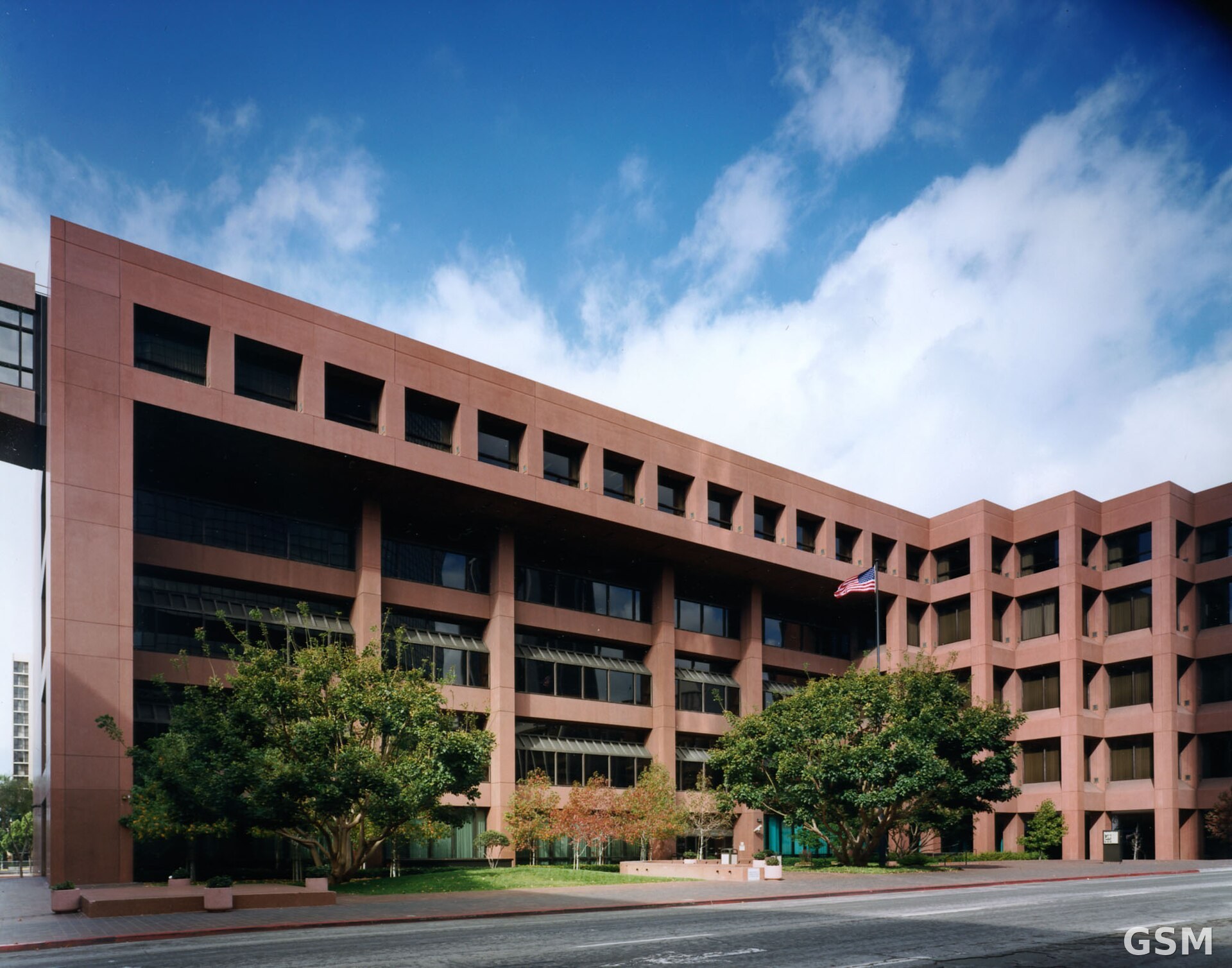
Photo: 图:位于圣迭戈的爱德华·J·施瓦茨联邦法院大楼(美国联邦司法系统摄,公共领域);ANOM 案由加州南区联邦检察官办公室起诉。 / Photo: The Edward J. Schwartz United States Courthouse in San Diego (U.S. Federal Judiciary, public domain); the ANOM case was prosecuted by the U.S. Attorney's Office for the Southern District of California.