After 286 Days in Space, Two Astronauts Are Home: Crew-9 Splashes Down Off Florida
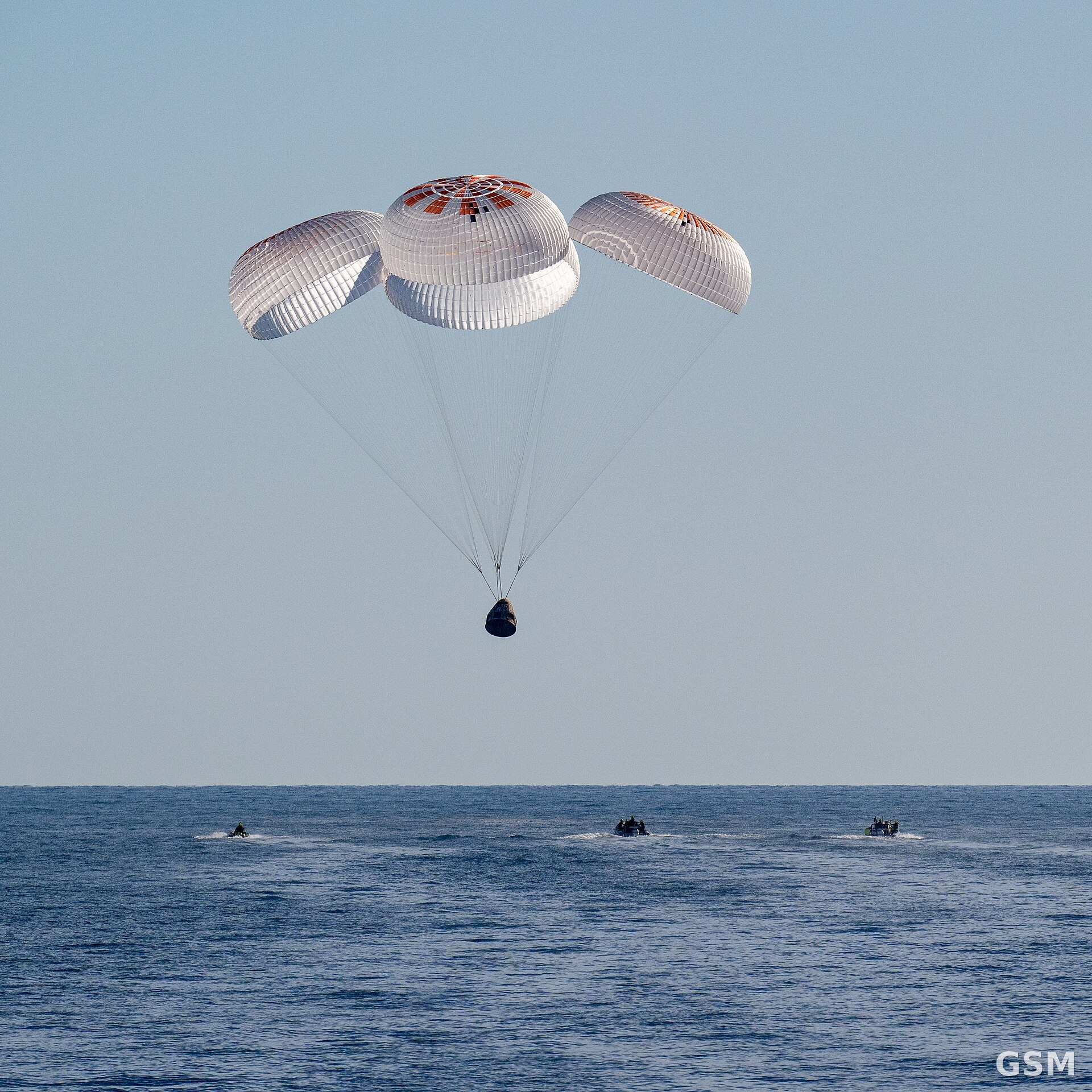
On March 18, 2025, NASA's SpaceX Crew-9 completed the agency's ninth commercial crew rotation mission to the International Space Station, splashing down safely in a SpaceX Dragon spacecraft off the coast of Tallahassee, Florida, in the Gulf of America at 5:57 p.m. EDT. Among the four crew members returning were NASA astronauts Suni Williams and Butch Wilmore, who came home after 286 days in space.
The crew consisted of NASA astronauts Nick Hague, Suni Williams, and Butch Wilmore, and Roscosmos cosmonaut Aleksandr Gorbunov. Teams aboard SpaceX recovery vessels retrieved the spacecraft and its crew; after returning to shore, the crew was to fly to NASA's Johnson Space Center in Houston, Texas, and reunite with their families.
"We are thrilled to have Suni, Butch, Nick, and Aleksandr home after their months-long mission conducting vital science, technology demonstrations, and maintenance aboard the International Space Station," said NASA acting Administrator Janet Petro. She said that, per President Trump's direction, NASA and SpaceX had worked diligently to pull the return schedule a month earlier.
The crew of four undocked from the station at 1:05 a.m. EDT on March 18 to begin the trip home. Williams and Wilmore traveled 121,347,491 miles during their mission, spent 286 days in space, and completed 4,576 orbits around Earth. Hague and Gorbunov traveled 72,553,920 miles, spent 171 days in space, and completed 2,736 orbits.
Williams and Wilmore's journey was exceptionally long: the two launched aboard Boeing's Starliner spacecraft on June 5, 2024, from Space Launch Complex 41 at Cape Canaveral Space Force Station in Florida as part of the agency's Boeing Crew Flight Test, arriving at the station on June 6. In August 2024, NASA announced the uncrewed return of Starliner to Earth and integrated Wilmore and Williams into the station's Expedition 71/72 crew for a return on Crew-9. Hague and Gorbunov lifted off on September 28, 2024, on a SpaceX Falcon 9 rocket and docked to the station's Harmony module the next day.
During the mission, Williams conducted two spacewalks and now holds the record for total spacewalking time by a female astronaut, with 62 hours and 6 minutes outside the station, ranking fourth on the all-time list. The American crew members conducted more than 150 unique scientific experiments and technology demonstrations, totaling over 900 hours of research, including plant growth studies, stem cell technology, and sampling the station's exterior to study whether microorganisms can survive in space.
The Crew-9 mission was the fourth flight of the Dragon spacecraft named Freedom, which previously supported Crew-4 and two Axiom missions. The spacecraft was to return to Florida for inspection and processing ahead of its next flight. Crew-9's return followed the arrival of Crew-10, which docked to the station on March 16 to begin another long-duration science expedition.
(Source: NASA)
Source: NASA
Published by GSM · USA (original Chinese edition)
Photo: 图:2025年3月18日,搭载Crew-9四名乘员的SpaceX「龙」飞船在降落伞下缓缓下降,准备溅落于佛罗里达州塔拉哈西外海,海面上有回收船只待命(照片:NASA/Keegan Barber,公共领域,Wikimedia Commons)。 / Photo: The SpaceX Dragon spacecraft carrying the Crew-9 crew descends under its parachutes toward splashdown off Tallahassee, Florida, on March 18, 2025, as recovery boats stand by (photo: NASA/Keegan Barber, public domain, via Wikimedia Commons).