Argentina Unveils South America's First Citizenship-by-Investment Program: $350,000 Contribution or $800,000 Bond
BUENOS AIRES - Economy Minister Luis Caputo announced on October 2 that Argentina will launch South America's first citizenship-by-investment program, with applications expected to open in the fourth quarter of 2026. Principal applicants have two routes: a non-refundable $350,000 contribution to the Argentine Treasury, or an $800,000 subscription to a new government bond that must be held for seven years.
According to the Economy Ministry, a spouse may apply for an additional $100,000, as may single children aged 18 to 25 without children of their own; children under 18 may apply for $25,000. A consortium advising the government estimated the scheme could raise up to $2.5 billion if application numbers meet expectations. The ministry said the program forms part of Argentina's opening-up and international integration, alongside other measures to improve the investment climate.
The search for dollars is the immediate backdrop. Argentina's Treasury faces nearly $25 billion in foreign-currency debt payments due in 2027, and the government has held off returning to international bond markets, narrowing its financing options. The Milei administration hopes paid citizenship will add a new source of hard currency to its austerity-and-investment strategy.
The plan has also drawn pushback. Opposition lawmakers have filed bills in both chambers of Congress to ban citizenship by investment, and critics argue that a program created by decree rather than statute rests on fragile legal ground that a future government could undo. Those bills were still in committee as of October 6. Implementation rules and actual demand will decide whether the scheme delivers.
Sources: Compiled from Reuters reporting of October 2, 2026, the Associated Press report carried by Barchart and other outlets, and IMI Daily on the congressional bills.
Published by GSM · USA (original Chinese edition)
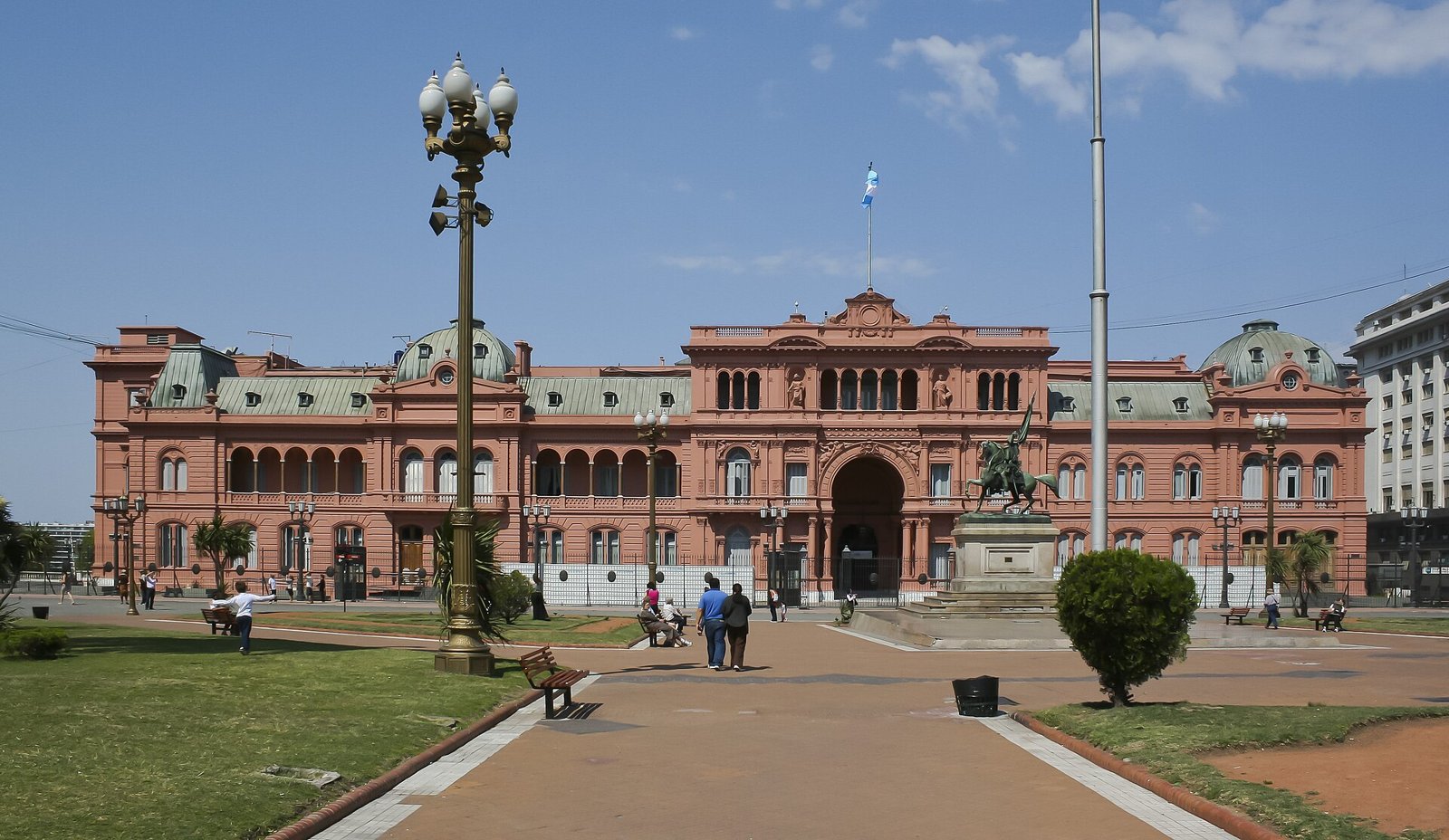
Photo: 布宜诺斯艾利斯玫瑰宫(阿根廷总统府),Diego Delso 摄,CC BY-SA 3.0(Wikimedia Commons)