Unite Accuses Government of Scrapping 'Living Wage' Pledge After Budget
On 7 October 2026, the day after Budget 2027 was delivered, the union Unite, which represents workers across the public sector and other industries, publicly accused the government of betraying the lowest paid by scrapping its 'living wage' pledge. The intervention made the budget's distributional effects the focus of the next day's debate.
The budget raised the national minimum wage to 14.94 euros per hour from January 2027. The union's criticism is that a routine rise in the statutory minimum wage is not the same as delivering a living wage commitment, which differs in how it is calculated and in the level it targets. Unite's overall verdict on the budget, delivered the previous day, was that workers were running to stand still while the wealthiest won.
Other figures in the budget are on the record: total public spending rising to 125.6 billion euros, welfare and pensions up 10 euros a week, and wider income tax bands. Unions argue that, under cost-of-living pressure, these measures are not enough to change the stalemate over public sector pay talks.
The last public sector pay deal expired at the end of June, and talks on a successor have made no substantive progress. Unions insist pay terms must be agreed before other issues are discussed; ministers reject that condition. A nationwide public sector strike on 14 October is already being prepared, and the war of words the day after the budget is a prelude to that confrontation.
Published by GSM · USA (original Chinese edition)
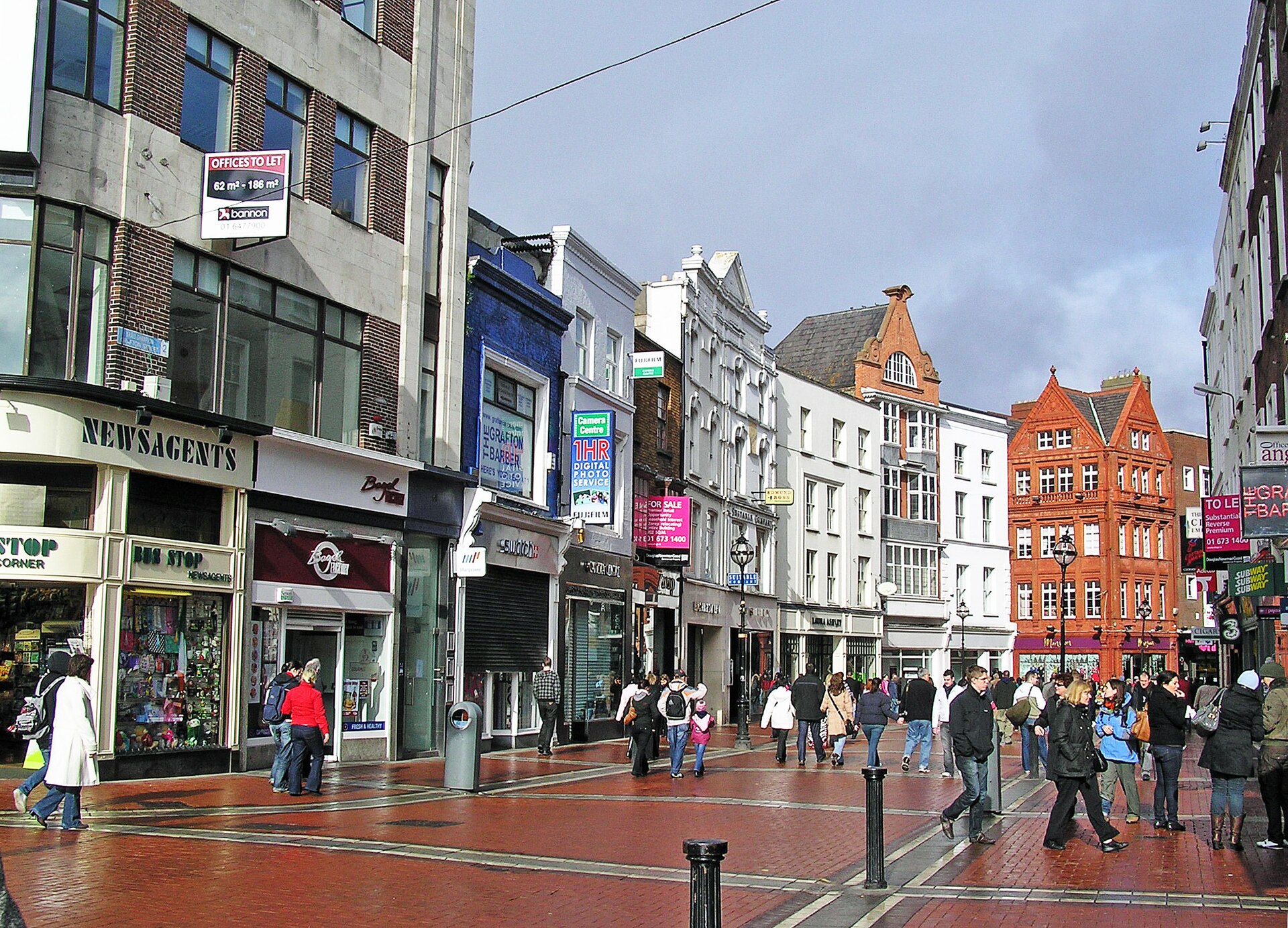
Photo: 都柏林市中心街景。照片:Donaldytong,CC BY-SA 3.0,来源:Wikimedia Commons(Grafton St, Dublin.jpg)