As Temperatures Fall, Tire Pressure Drops Too: Five Fall Car Checks, Explained
October has arrived in Southern California: days are still warm, but mornings and nights have turned noticeably cooler. According to guidance from the National Highway Traffic Safety Administration (NHTSA), tire pressure drops by roughly 1 PSI for every 10-degree Fahrenheit fall in temperature. Air put in during summer can quietly fall several pounds low by autumn, which is why many drivers see the tire-pressure warning light (TPMS) come on when the seasons change.
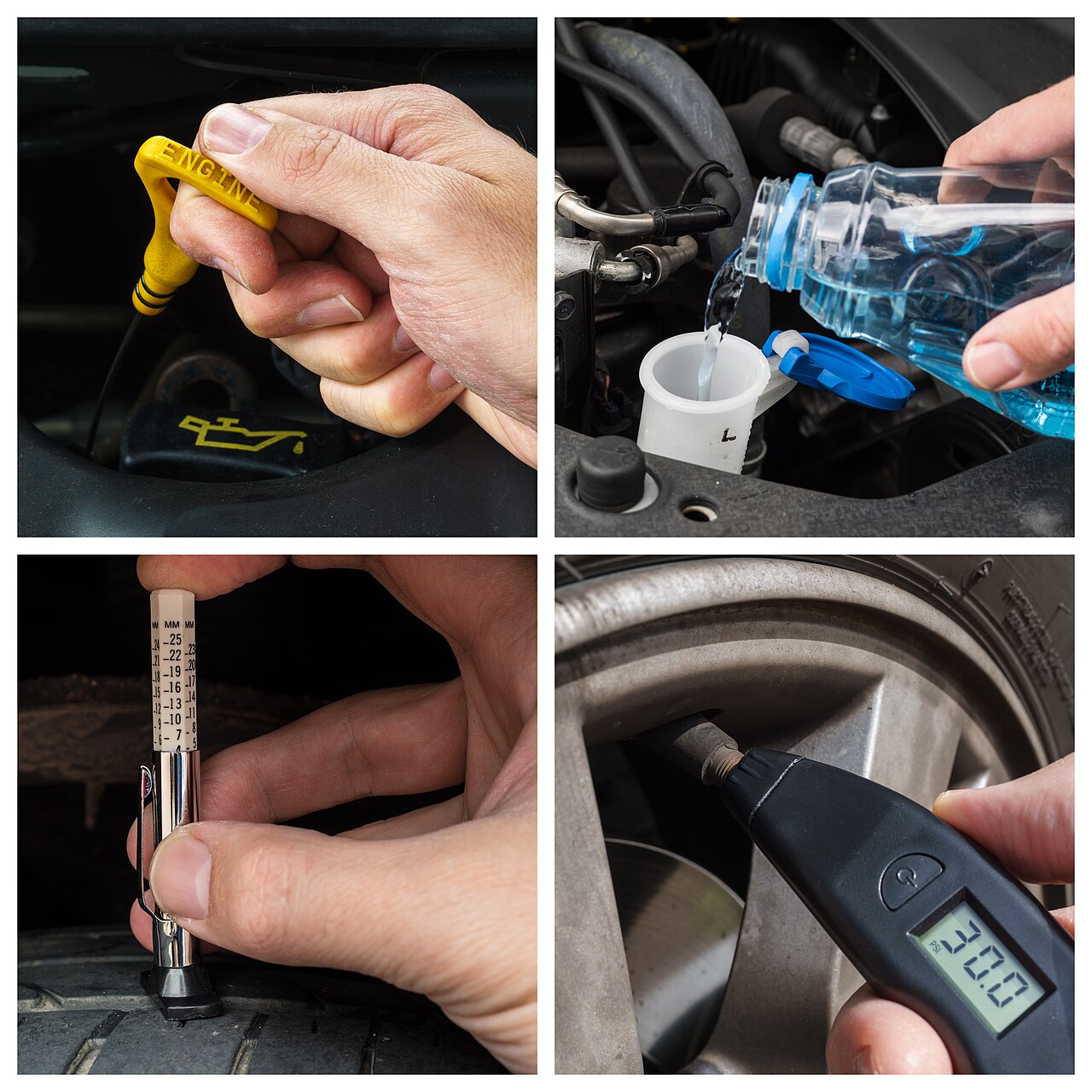
First, tire pressure. NHTSA advises checking at least once a month and before long trips, and measuring when tires are cold — the car parked for at least three hours and driven less than a mile. The correct pressure for each vehicle is printed on a label inside the driver's door jamb or on the fuel door, commonly 30 to 35 PSI; the number molded on the tire sidewall is a maximum, not the everyday target. Underinflation raises fuel use, speeds tire wear and lengthens braking distances.
Second, tread depth. In most U.S. states, tires worn to 2/32 of an inch (about 1.6 mm) are legally bald. The common penny test: insert a penny into a tread groove with Lincoln's head pointing down — if the top of his head is fully visible, the tread is at or below 2/32 of an inch. With the rainy season ahead, many technicians treat 4/32 of an inch as the point to start planning replacement, checkable the same way with a quarter.
Third, the battery. The American Automobile Association (AAA) puts the typical car battery's life at three to five years. Cold weather cuts a battery's cranking output at the same time the engine needs more power to start, which is why aging batteries most often fail at the first cold snap. White or blue-green corrosion on the terminals, or a starter that sounds slower and weaker, are common early warning signs.
Fourth, fluids. Coolant is typically a 50/50 mix of antifreeze and water, and its reservoir has minimum and maximum marks — the level should sit between them. Engine oil is checked with the dipstick: the level should fall between the marks and the oil should not look burnt black. Fifth, wipers and lights: wiper blades generally age out in six to twelve months, and streaking or chattering across the windshield means the rubber has hardened. Shorter winter days also mean headlights, brake lights and turn signals get more use, so confirming every bulb works is part of a fall once-over.
The logic of a fall checkup is simple: when the temperature changes, the car's numbers change with it — pressure and battery output fall with the mercury, while the coming rains demand more from tread and wipers. Most of the five checks need only a pressure gauge, a coin and a dipstick, and take about as long as filling the tires.
Published by GSM · USA (original Chinese edition)
Photo: 图片:Colin 拍摄,CC BY-SA 4.0(Wikimedia Commons)