California Sues to Block Closure of San Francisco National Archives, Home to Chinese Exclusion Era Files
SAN BRUNO — California Attorney General Rob Bonta on October 14 filed a lawsuit challenging the National Archives and Records Administration's (NARA) decision to close the National Archives at San Francisco and transfer its holdings to other facilities across the country. In the suit, filed in the U.S. District Court for the Northern District of California, Bonta argues the closure decision violates the Administrative Procedure Act and should be blocked.
Located in San Bruno, the San Francisco National Archives holds more than 75,000 cubic feet of records from federal agencies in Northern and Central California, Hawaii, most of Nevada, Guam and American Samoa, with records dating back more than 175 years. Its holdings include immigration, court and genealogical records, including Indian boarding school records and immigration case files from the Chinese Exclusion Act era, as well as case records related to Japanese American internment, including those from the famous case of Fred Korematsu, who sued the United States to challenge his arrest for refusing to report for internment during World War II.
In June 2026, an email to employees at the San Francisco Archives said NARA planned to close the facility, along with the Chicago Archives, within the next few years, and would start moving records "within the next few months." In August, NARA announced the records would be transferred to five different National Archives facilities around the United States. That transfer could begin as soon as this week, with planned transfers of NASA records to the National Archives facility in Fort Worth, Texas.
"California won't stand idly by while the Trump Administration hauls away records that tell the stories of generations of immigrants, Tribal communities, and California families," Bonta said. "The San Francisco National Archives holds records going back to 1850, when California was just becoming a state. These records tell the story of injustice, of some of the painful chapters of our nation's history, and the people and communities who lived through them and fought for their rights. These records belong here, and I'll fight to keep them here."
California agencies rely on the archives for legally required research: state parks staff and contractors visited the facility more than ten times during the refurbishment of the Angel Island barracks, and University of California professors send students there to research Asian American history using material available only in person. Less than 4 percent of National Archives records nationwide are digitized, and some are too fragile to digitize. The lawsuit asks the court to vacate the closure decision and prohibit the transfer of records from the San Bruno facility.
Published by GSM · USA (original Chinese edition)
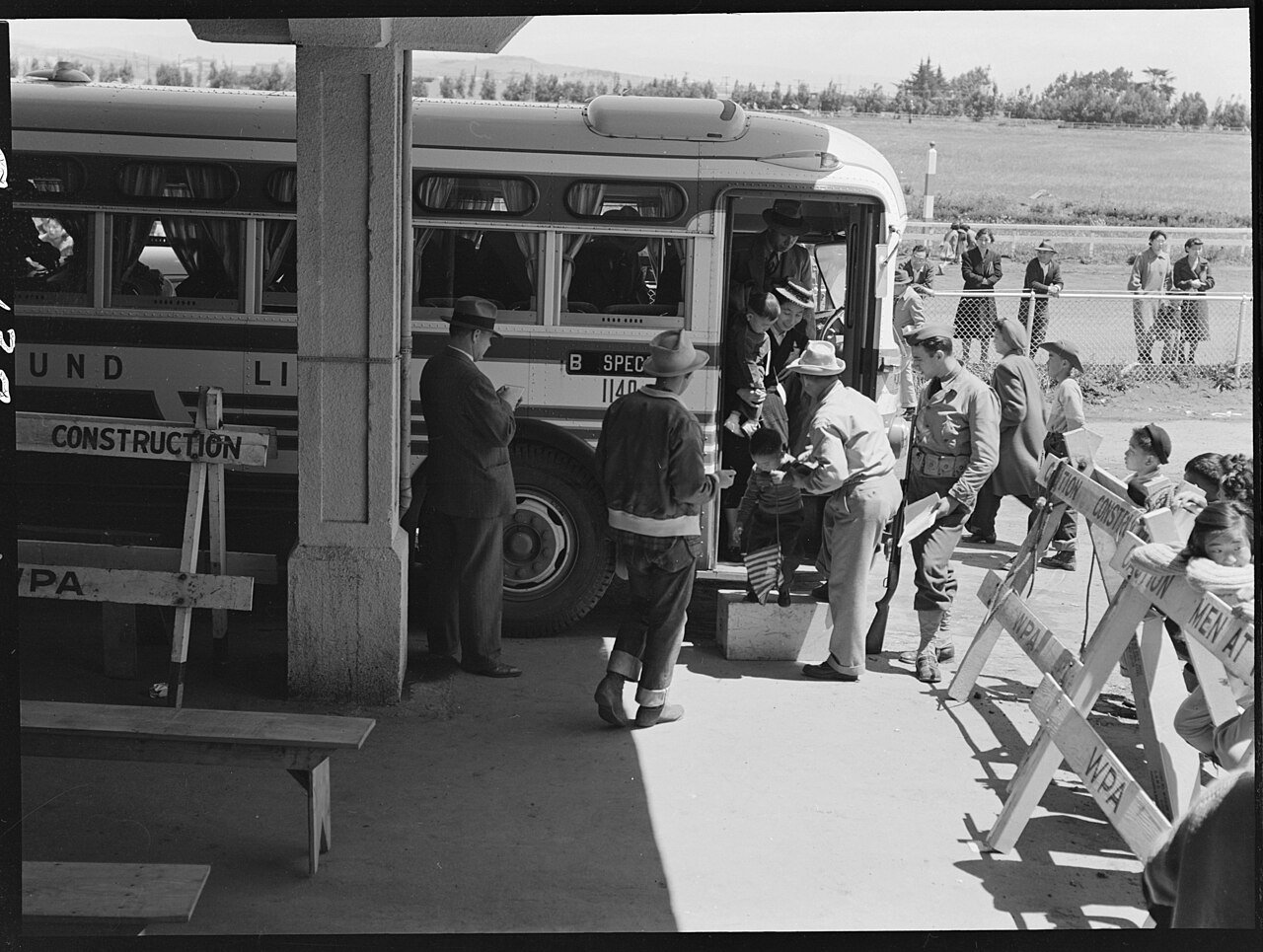
Photo: 图:1942年,日裔家庭在圣布鲁诺登上迁离巴士——旧金山国家档案馆藏有日裔囚禁与《排华法案》时期的移民案卷(国家档案馆馆藏照片,Dorothea Lange摄,公共领域)。Japanese American families boarding an evacuation bus in San Bruno in 1942 (National Archives photo by Dorothea Lange, public domain).