Cornell Suspends Fraternity Parties for the School Year After 2024 Alleged Gang-Rape Lawsuit; President Apologizes as Students Call Move "Too Little, Too Late"
Ithaca — Cornell University announced this week that it is suspending parties and social gatherings at fraternity houses for the remainder of the academic year, The Guardian reported on October 17. Last month, a former student, referred to in court documents by the pseudonym "Jane Doe," filed a civil lawsuit on September 14 accusing seven members of the Chi Phi fraternity of sexually assaulting her at a party at their fraternity house in October 2024. The complaint alleges she was heavily intoxicated and pressured into consuming ketamine before being raped by multiple men over several hours, and describes a Snapchat group chat in which the men discussed her in crude terms. She also sued Cornell and other defendants, alleging the university failed to protect her and inadequately oversaw fraternity activities. All seven men named have denied wrongdoing, and none has been criminally charged. Cornell says it barred the Chi Phi chapter from campus after the alleged 2024 incident and that a Title IX investigation resulted in expulsions and suspensions.
The lawsuit has fuelled sustained campus protest. On October 5, thousands of students and community members attended a "Justice for Survivors" rally on Ho Plaza; on October 7, students held a seven-hour sit-in at the Toni Morrison Dining Hall in solidarity with Doe, and the Ithaca Common Council also approved a temporary moratorium on student event permits, which mainly affects Greek Life organizations. On October 6, Cornell hired former acting attorney general Sally Yates to conduct an independent review of its policies.
On October 13, President Michael I. Kotlikoff announced in a statement: "All parties and social events in Interfraternity Council (IFC) houses at Cornell will be suspended for the remainder of the 2026-2027 academic year. These measures will provide time for a thorough review of fraternity life at Cornell to determine whether and how it can safely continue." He warned of "zero tolerance" for violations, with any fraternity holding an in-house party facing an immediate emergency suspension. "I am deeply sorry for the harm Jane Doe suffered in 2024, and appalled that this act of sexual violence occurred within our Cornell community," Kotlikoff wrote. "It is clear that women on our campus continue to question whether they are safe." Cornell's Interfraternity Council represents more than 20 active fraternities.
The accompanying measures include working with the New York State Police to let trauma-informed investigators handle sexual assault allegations on campus, adding staff to the university's Office of Civil Rights to help students who report assault navigate procedures, expanded bystander training, and bringing in outside national experts on sexual violence prevention.
Students have reacted sceptically. According to The Guardian, students say the school is more interested in scapegoating fraternities than in committing to institutional change, asking whether the response is "too little, too late." Doe's lawyer, Thomas Giuffra, said the suit aimed to improve how Cornell responds to abuse claims, but that the new steps come too late to protect his client; he said she left the university afterwards and has faced threats since suing.
Published by GSM · USA (original Chinese edition)
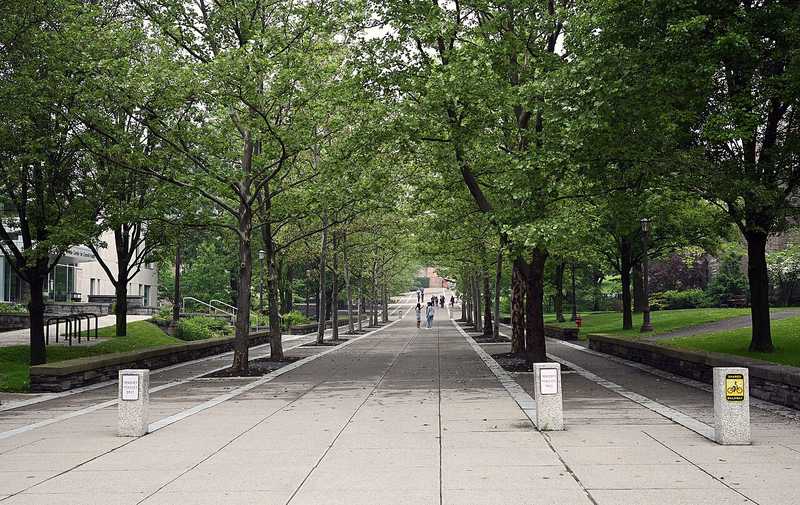
Photo: 图:康奈尔大学何广场(Ho Plaza)资料照片。照片:P. Hughes/Wikimedia Commons(CC BY 4.0)。File photo: Ho Plaza, Cornell University. Photo: P. Hughes / Wikimedia Commons (CC BY 4.0).
- 2026-10-02Hochul Slams Cornell Police and Prosecutors Over 'Grave Failures,' Names AG James Special Prosecutor
- 2026-10-17Cornell Suspends Fraternity Parties for the School Year After 2024 Alleged Gang-Rape Lawsuit; President Apologizes as Students Call Move "Too Little, Too Late"This story
- 2026-10-19Namesakes of Cornell Defendant Winston Lee Flooded With Threats: Chinese American Finance Worker and Penn Student Among Those Misidentified Online