Niger Bans Diesel and Premium Petrol Exports to Protect Domestic Supply as State Oil Firm Faces a Projected 28 Billion FCFA Loss
Niamey — Niger has banned exports of diesel and premium petrol to address fuel supply challenges in recent days and prioritise domestic supply, the Ministry of Trade and Industry said in a statement, according to Bloomberg. The ban was reported on October 17, amid turmoil in global petroleum markets.
Niger's domestic fuel market has been under sustained strain. According to reporting on an International Monetary Fund assessment, the state oil company SONIDEP is heading for a net loss of 28 billion FCFA in the 2026 fiscal year, driven by importing fuel at premium prices on international markets and selling it domestically at subsidised prices. The overall cost of import-related subsidies to keep pump prices unchanged is estimated at 42 billion FCFA for 2026, of which 15 billion FCFA will be drawn from SONIDEP's price stabilisation fund, with the remaining 28 billion FCFA closing the year as a net loss on the state company's accounts.
The reports add that after Nigeria removed its gasoline subsidy, demand shifted toward Niger, where prices are kept artificially low, lifting both local consumption and cross-border flows, while the Zinder refinery (SORAZ), whose output is capped, cannot meet the entire national market, forcing SONIDEP into large-scale imports. Whether the export ban eases domestic shortages will depend on distribution and supply inside the country. (GSM, based on Bloomberg and Faso News reporting)
Published by GSM · USA (original Chinese edition)
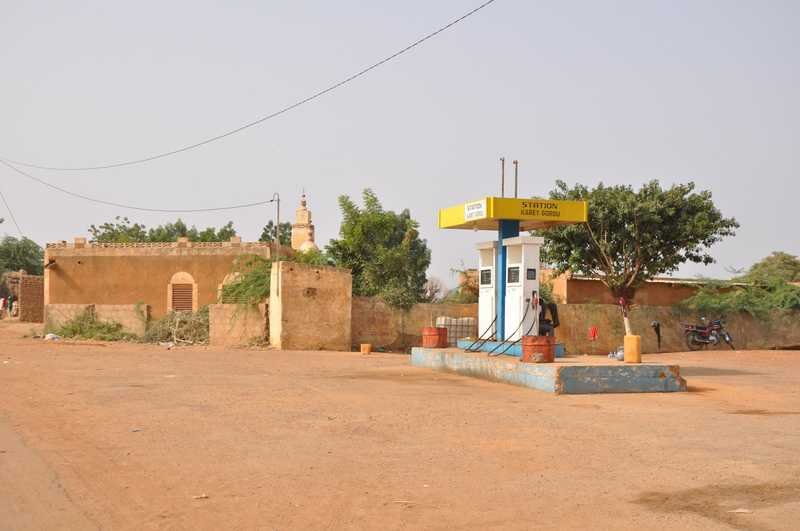
Photo: 图片 Image: 尼日尔Karey Gorou一处加油站资料图 A gas station at Karey Gorou, Niger (file photo), Vincent van Zeijst, CC BY-SA 4.0, via Wikimedia Commons