FDA Approves Ready-to-Use Cefovecin Injectable: Zoetis Convenia RTU Gives Dogs Up to 14 Days of Treatment in One Shot
The U.S. Food and Drug Administration (FDA) on October 20, 2026, approved Convenia RTU for Dogs (cefovecin injectable suspension) for the treatment of susceptible bacterial skin infections in dogs, including secondary superficial pyoderma, abscesses and wounds caused by susceptible strains of Staphylococcus pseudintermedius and Streptococcus canis (Group G). The FDA granted the approval to Zoetis Inc., based in Kalamazoo, Michigan.
The new formulation contains the same active ingredient, cefovecin, as the original product, with two differences. It is more concentrated, at 160 mg/mL compared with 80 mg/mL for the original Convenia, so the same dose can be delivered in a smaller volume; it is supplied as a 10-mL multiuse vial containing 1,600 mg of cefovecin as a ready-to-use suspension, available by prescription from a licensed veterinarian, to be shaken for 60 seconds before each use and administered with a 20-gauge needle. It is also approved for dogs only: the formulation contains benzyl benzoate and propylene glycol, inactive ingredients that may be toxic to cats, and it must not be used in cats. The original Convenia was approved by the FDA in 2008 to treat skin infections in both dogs and cats.
Convenia RTU is administered by subcutaneous injection by a veterinary health professional and provides up to 14 days of antibiotic treatment in a single dose. Zoetis said the product is bioequivalent to Convenia, and that in one study 86% of dogs needed just one injection of cefovecin to resolve their bacterial skin infection. Abhay Nayak, Executive Vice President and President, U.S. Commercial Operations at Zoetis, said that giving a dog pills for a week or two on schedule is challenging for many families, and that the new formulation builds on the established Convenia portfolio for dogs of all sizes. Zoetis said the product is expected to be available to veterinarians in the first quarter of 2027.
On safety, the product must not be used in animals with a history of allergic reactions to penicillins or cephalosporins, and people with known hypersensitivity to penicillin or cephalosporins should avoid exposure; reported side effects include vomiting, diarrhea, decreased appetite and lethargy. The bacteria targeted by the drug can normally live on a healthy dog's skin without causing harm, but when scratching, allergies or injury compromise the skin barrier they can multiply rapidly and cause infection, and bacterial skin infection, or pyoderma, is among the most common reasons dogs are taken to a veterinarian.
Source: GSM · USA (original Chinese edition)
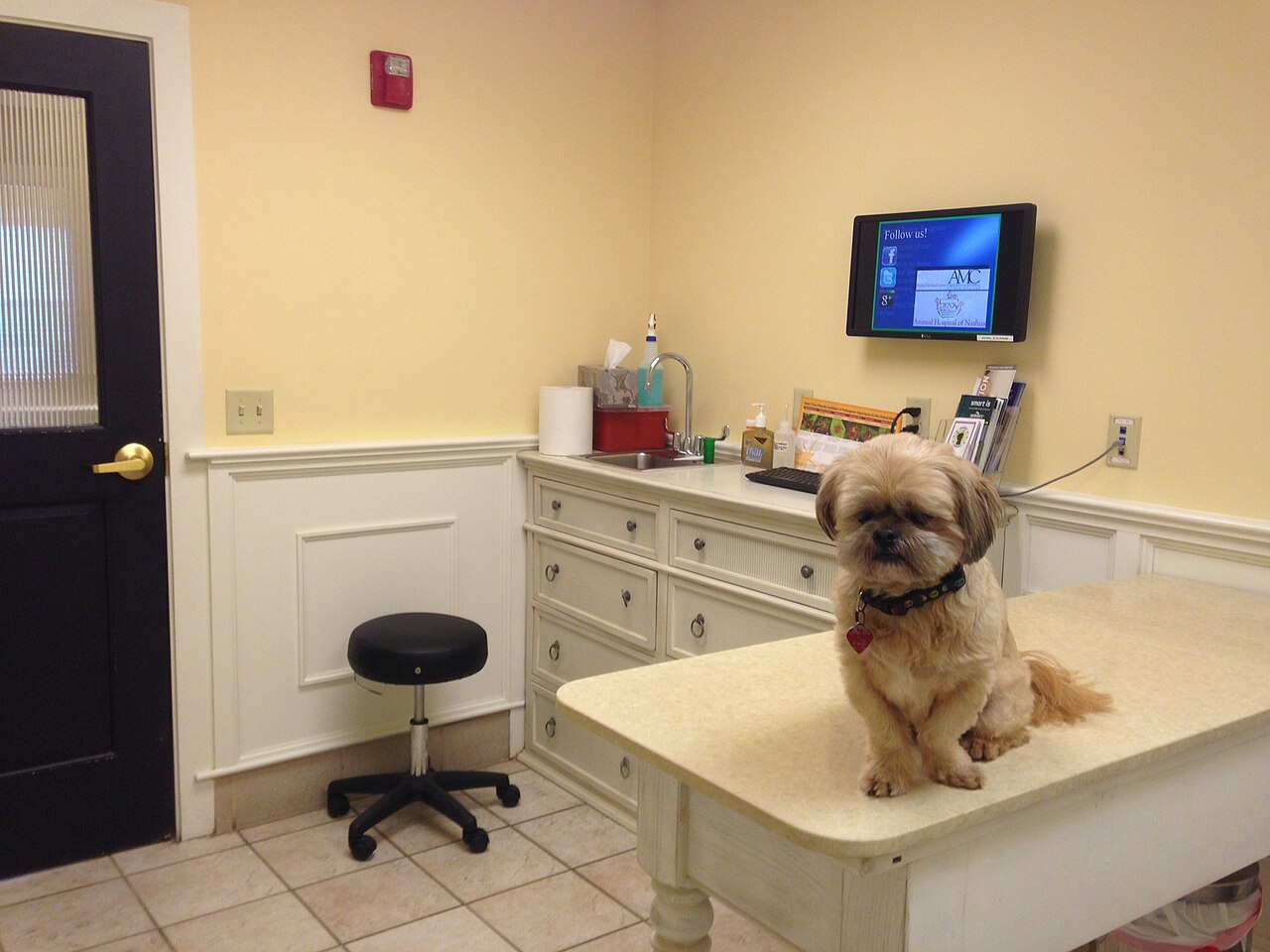
Photo: 图:兽医诊室里坐在检查台上的小狗(资料图)。MarkBuckawicki 摄,CC0,经 Wikimedia Commons。Photo: a small dog on an examination table in a veterinary office (file photo), by MarkBuckawicki, CC0, via Wikimedia Commons.