Follow-Up: China's Commerce Ministry Protests U.S. Sanctions on Five Ding-Linked Entities, Vows Necessary Measures
WASHINGTON — China's Ministry of Commerce on October 20 expressed firm opposition to U.S. sanctions on five entities connected to former Google engineer Linwei Ding, the Associated Press reported. The ministry said the move severely harms the legitimate rights and interests of Chinese businesses and called its nature egregious, urged the United States to correct its erroneous practice, and said China would take necessary measures, without specifying what those measures would be.
In its statement, the ministry said China's super intelligence achievements are the result of long-term cultivation in basic research, continuous innovation investment, and adherence to independent scientific and technological innovation and open cooperation, and have nothing to do with the so-called theft of trade secrets.
The U.S. Department of State announced the sanctions on October 19 under the Protecting American Intellectual Property Act (PAIPA), naming Shanghai Zhisuan Technology Co Ltd, Qiji Chuangtan Beijing Investment Management Co Ltd (MiraclePlus), and three additional entities linked to MiraclePlus by ownership or control. The State Department said Zhisuan had knowingly engaged in, or benefited from, significant theft of trade secrets, and that MiraclePlus had provided financial or other support for the theft. State Department spokesperson Tommy Pigott said in the statement that trade secret theft poses a serious threat to U.S. economic, foreign policy and national security interests.
Ding, a former Google software engineer who worked on supercomputing data center software, was accused of copying Google trade secrets into a personal cloud account beginning in 2022. Prosecutors said the core documents covered the architecture and functionality of Google's custom Tensor Processing Unit (TPU) chips and Graphics Processing Unit (GPU) systems, the software that orchestrates thousands of chips into a supercomputer, and Google's custom SmartNIC network interface technology. While still at Google, he secretly affiliated with two China-based technology companies, founded Zhisuan in Shanghai in 2023, and applied to MiraclePlus, which gave his company seed funding.
According to the Associated Press, Ding was arrested in California in 2024 and charged; in January, a federal jury in San Francisco convicted him on several counts of economic espionage and theft of trade secrets. A judge later dismissed the economic espionage charges and sentenced him to 12 months in prison, and the Justice Department is appealing the dismissal of the economic espionage charges.
Published by GSM · USA (original Chinese edition)
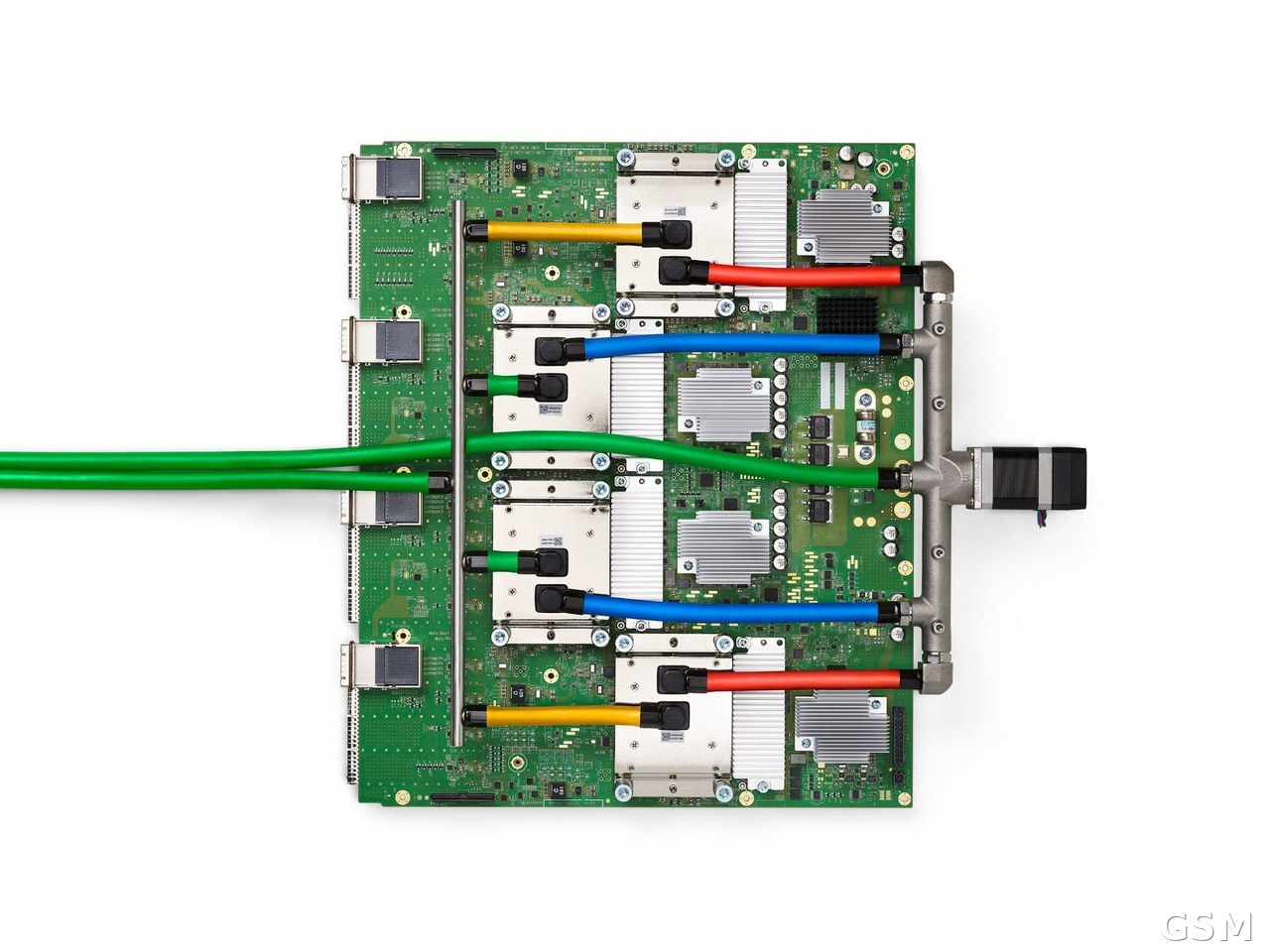
Photo: 图:谷歌第四代张量处理单元(TPU v4)电路板,板载四组液冷芯片封装——丁林伟被指窃取的谷歌商业秘密核心即包括 TPU 芯片架构。照片:Norman P. Jouppi 等(谷歌 TPU v4 论文作者),CC BY 4.0,经 Wikimedia Commons 发布。Photo: A Google Tensor Processing Unit (TPU v4) board with four liquid-cooled chip packages; the trade secrets Ding was accused of stealing centered on Google's TPU chip architecture. Photo: Norman P. Jouppi et al. (Google TPU v4 paper), CC BY 4.0, via Wikimedia Commons.
- 2026-01-29Former Google Engineer Linwei Ding Convicted on All 14 Counts in SI Trade Secrets Case
- 2026-10-19Update: State Department Sanctions Five Entities Tied to Linwei Ding over Theft of Google AI Trade Secrets
- 2026-10-21Follow-Up: China's Commerce Ministry Protests U.S. Sanctions on Five Ding-Linked Entities, Vows Necessary MeasuresThis story