FDA on Arsenic in Rice: Rinsing Does Little, but Cooking in Excess Water and Draining Can Cut Inorganic Arsenic by 40 to 60 Percent
WASHINGTON — Rice is a daily staple for many households, and the arsenic naturally present in rice has long been a consumer concern. In its consumer guidance, the U.S. Food and Drug Administration (FDA) says arsenic is an environmental contaminant that can be present in food, and that inorganic arsenic is more toxic than its organic form; informed choices and cooking methods can help consumers limit their exposure from rice.
Citing published studies, including the FDA's own research, the agency says rinsing rice before cooking has a minimal effect on the arsenic content of the cooked grain. Cooking rice in excess water and draining the extra water, by contrast, can substantially reduce inorganic arsenic: using six to 10 parts water to one part rice and draining the excess after cooking can reduce the inorganic arsenic content by 40 to 60 percent, depending on the type of rice.
The FDA notes a trade-off: that cooking method can also wash away some added nutrients from polished and parboiled rice, including iron, folate, thiamin and niacin, with levels of certain added nutrients falling by roughly 50 to 70 percent; rinsing washes off the same nutrients. Consumers, the agency says, should weigh the potential reduction in arsenic exposure against the loss of nutrients when choosing how to prepare rice.
The FDA also advises that consumers can certainly eat rice as part of a well-balanced diet, and encourages a varied diet rather than reliance on a single grain. For infants, it recommends a variety of iron-fortified cereals — including oat, barley and multigrain — rather than relying solely on infant rice cereal, and it encourages pregnant women to eat a variety of foods, including varied grains. (GSM, based on FDA consumer guidance)
来源:GSM·美国
Published by GSM · USA (original Chinese edition)
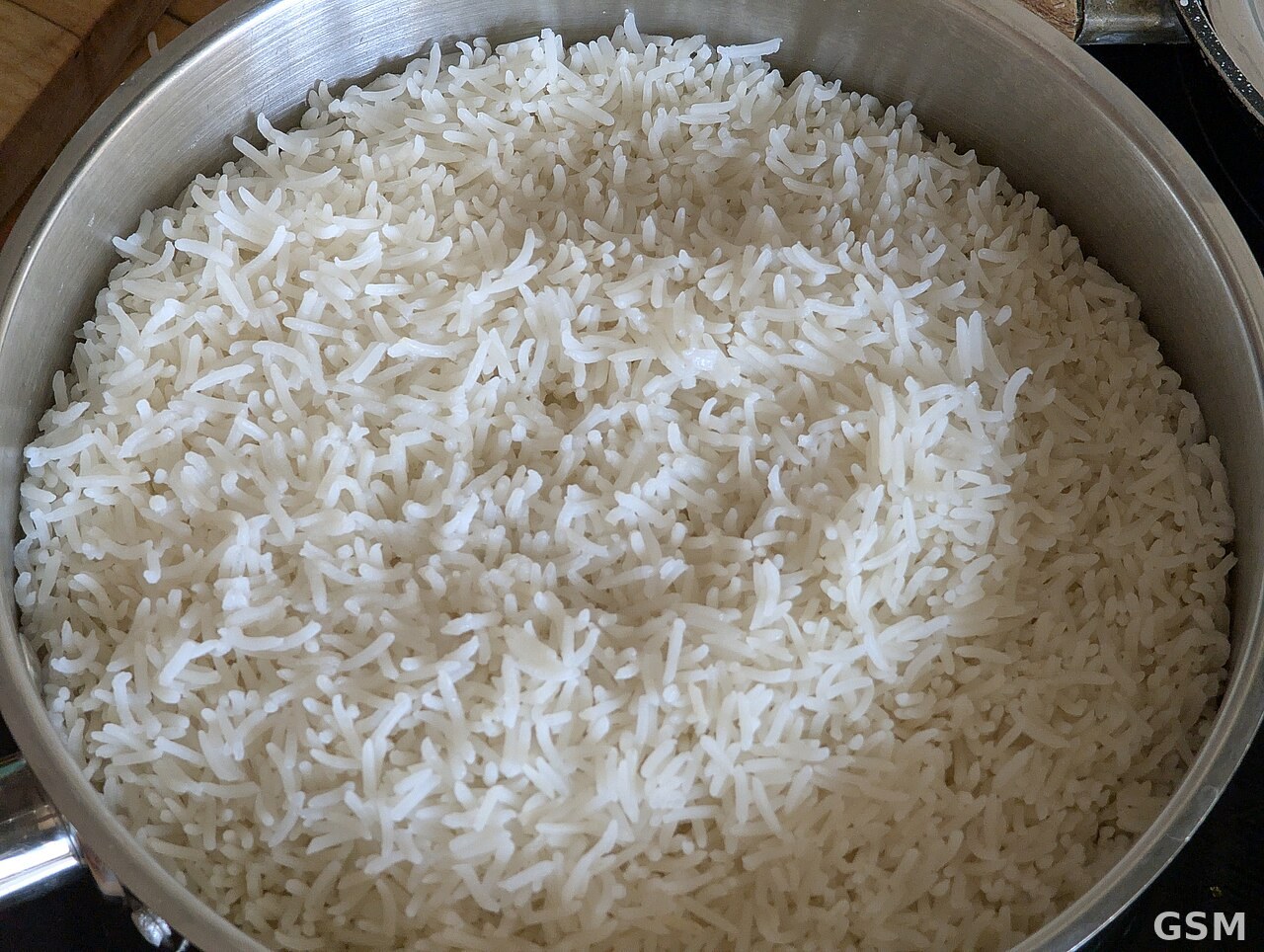
Photo: 图:锅中的印度香米(资料图)。照片:Theanswertolifetheuniverseandeverything,CC BY-SA 4.0,经 Wikimedia Commons。 / Basmati rice in a pot (file photo). Photo: Theanswertolifetheuniverseandeverything, CC BY-SA 4.0, via Wikimedia Commons.