FDA Launches Risk-Based Pilot to Streamline Residue Test Methods for New Animal Drugs, Cutting Evaluation Time by About Two Years
The U.S. Food and Drug Administration (FDA) announced on Oct. 27 that its Center for Veterinary Medicine (CVM) is launching a pilot program offering sponsors of new animal drugs a faster, more flexible path to showing that an animal drug residue testing method meets specific FDA standards, a required step in the approval process for a new animal drug for a food-producing species.
Under the Federal Food, Drug, and Cosmetic Act, animal drug sponsors must submit a practicable method for detecting residues of a prospective new animal drug in meat, milk, eggs, and honey from treated food-producing animals. A practicable analytical method is one that is valid, reproducible, and usable in a government laboratory setting. Typically, meeting this requirement has involved a lengthy interlaboratory trial in which sponsors had to show a testing method can be successfully and reliably used by a government laboratory, a process that alone can take approximately two years. In some cases, sponsors have had to modify their method before the trial could begin, a step that required an entirely separate validation study and pushed timelines out even further.
The pilot, called the Risk-Based Tiered Approach to Demonstrate Residue Analytical Method Practicability, grew out of the 2024 reauthorization of the Animal Drug User Fee Act (ADUFA V), which included a five-year agreement between the FDA and the animal health industry setting goals and commitments for the new animal drug review program. As part of that agreement, CVM worked closely with industry stakeholders to explore streamlined, modernized ways to meet the statutory requirements related to residue analytical methods.
The approach relies on CVM's confidence in a method's reproducibility and usability in a government laboratory: the more closely a method resembles one already used and trusted by the FDA and the U.S. Department of Agriculture, the lower the risk tier and the fewer steps needed to demonstrate practicability. The pilot covers Tier 1 (negligible risk), Tier 2 (low risk), and Tier 3 (moderate risk). A companion One Method Approach document integrates validation criteria from VICH GL49 and Guidance for Industry #3. Under the pilot, sponsors conduct a single method validation study that can be used in residue depletion studies and serve as the basis of the practicable method, eliminating the need for a separate validation study and, in many cases, a separate animal study. Compared with the previous process, the approach may reduce the overall time to complete the human food safety residue evaluation by approximately two years.
The pilot will remain in effect until at least three new animal drug products have completed the Tier 2 or Tier 3 process, or until the end of ADUFA VI (assuming the user fee program is reauthorized), whichever occurs first. CVM may update the pilot documents based on lessons learned during implementation, and sponsors should contact CVM to verify they are referencing the most current versions. Participation is voluntary, and sponsors interested in participating are encouraged to contact CVM early in the development process and initiate a method classification meeting to maximize potential time savings.
Source: GSM · USA (original Chinese edition)
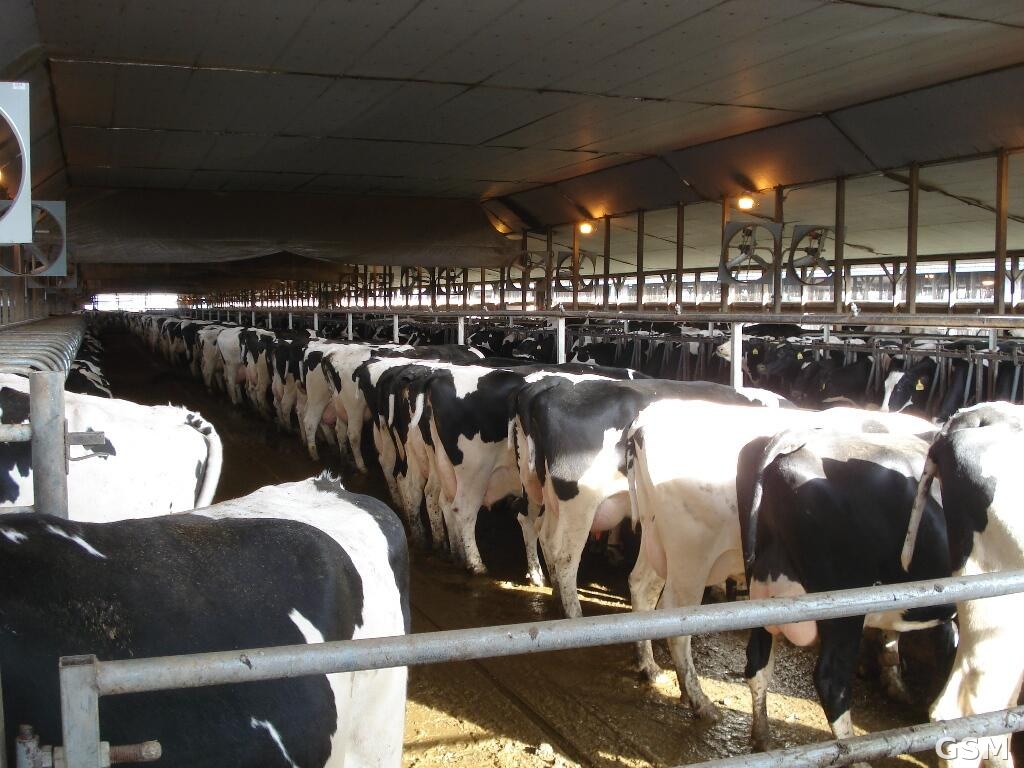
Photo: 图:New York 一处饲养场内的奶牛(食用动物资料图)。美国地质调查局 USGS 发布,公共领域。Image: Dairy cows in an animal feeding operation in New York (file photo of food-producing animals). U.S. Geological Survey, public domain.