NOAA Fisheries Releases Longfin Squid Assessment on October 26: 1.5 Million Industry Length Records Back Two New Models for a Fishery Worth $32.5 Million in 2024
NOAA Fisheries, part of the National Oceanic and Atmospheric Administration (NOAA), reported on October 26 that a research track assessment of longfin squid, completed through collaboration between scientists and the commercial fishing industry, has passed independent peer review, with two new assessment models approved for management advice. Longfin squid are caught mainly from Rhode Island to New Jersey and are a familiar restaurant item as calamari; the commercial fishery was worth approximately $32.5 million in 2024.
According to NOAA, longfin squid live less than a year, grow rapidly, and have highly variable recruitment. The population migrates seasonally, moving south and offshore in the late fall and returning north and inshore in the spring, so scientific surveys capture only seasonal snapshots and cannot show the specifics of the squid caught in the fishery. In August 2026, an independent panel of scientists completed the peer review of the Research Track Assessment and approved two new models, both of which met all required Terms of Reference and were deemed suitable for management advice. The two approaches produced broadly consistent conclusions: low fishing mortality and high longfin squid biomass in recent years. The findings will be implemented in the Management Track Assessment this fall, and the Mid-Atlantic Fishery Management Council will review the results at its December 2026 meeting to set fishery specifications for 2027-2029.
The assessment drew on several years of cooperative research. The working group, made up of scientists from academia, government and independent organizations together with the Mid-Atlantic Fishery Management Council, met 34 times from 2024 to 2026. The Longfin Squid Biological Sampling Program collected squid from commercial fishing vessels weekly from 2023 to 2025, with more than 30 fishing vessels taking part and sampling spanning from Cape Cod, Massachusetts, to Cape Hatteras, North Carolina. Dr. Anna Mercer, chief of the Northeast Cooperative Research Branch, said the partnership produced the most comprehensive dataset to date describing the life history of longfin squid, spanning two years of continuous weekly sampling, and that the foundation of trust and collaboration between the science and fishing communities was critical to the scientific progress made.
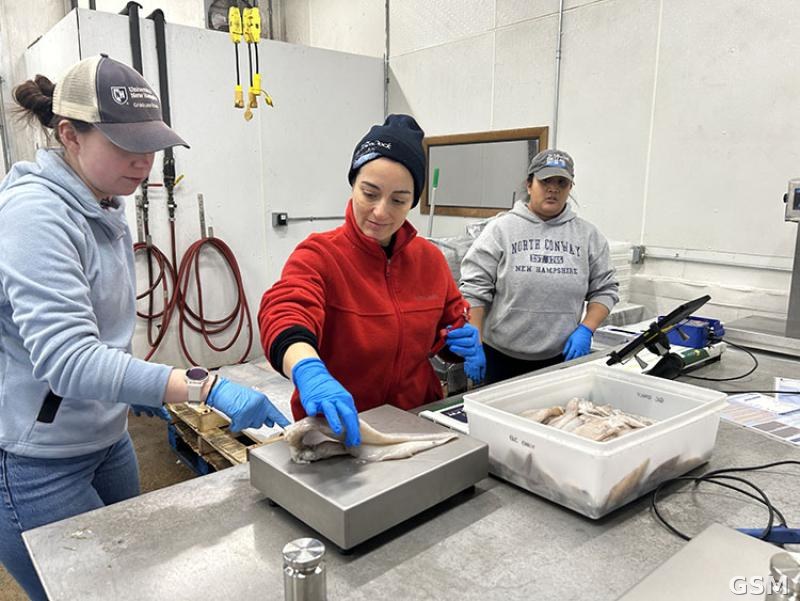
Data shared by seafood processors were also key. Four processing facilities, Lund's Fisheries, Inc., Sea Freeze Limited, Sea Fresh USA Inc. and The Town Dock/American Seafood Partners, contributed their longfin squid size records. Fish biologist Jessica Blaylock said the processors' data on the sizes of squid caught by the commercial fleet were critical. Dr. James Gartland of the Virginia Institute of Marine Science said the industry data totaled more than 1.5 million individual longfin squid lengths and represented up to half of the annual longfin squid landings in recent years. Of the two new models, one tracks the population by length and sex and accounts for temperature-dependent growth, while the other tracks overall biomass across six-month intervals. The Northeast Region Coordinating Council has recommended using the simpler seasonal model as the primary basis for management advice this fall, with either model available for future assessments depending on resources.
Source: GSM · USA (original Chinese edition)
Photo: 图:合作研究人员在加工厂内为长鳍鱿鱼称重测量(与 NOAA 原文同一图片)。照片:NOAA Fisheries / Anna Mercer,美国联邦政府作品,公共领域 / Cooperative Research staff weigh a longfin squid at a processing facility (same image as the NOAA story). Photo: NOAA Fisheries / Anna Mercer, U.S. federal government work, public domain. Source: https://www.fisheries.noaa.gov/feature-story/collaboration-fishing-industry-contributes-successful-longfin-squid-assessment