FCC Approves Amazon Leo's $11.57 Billion Acquisition of Globalstar, Including About 25 MHz of Mobile-Satellite Spectrum
The U.S. Federal Communications Commission (FCC) announced in a news release issued in Washington on October 27, 2026, that it has approved Amazon Leo's acquisition of satellite operator Globalstar, a deal valued at $11.57 billion. The approval covers the transfer of approximately 25 megahertz of Globalstar's internationally harmonized mobile-satellite service spectrum, and concludes the FCC's review of the purchase.
The FCC said the transaction will expand competition in direct-to-device satellite services, strengthen emergency communications, and improve service in unserved and underserved areas. The action was handled by the FCC's Space Bureau and other bureaus.
Amazon and Globalstar reached their acquisition agreement in April 2026. According to Reuters, Amazon Leo has launched more than 300 satellites since April 2025 and aims to deploy about 3,200 satellites in low Earth orbit by 2029; the deal adds Globalstar's roughly two dozen satellites to the Amazon Leo network. Amazon Leo is Amazon's low Earth orbit broadband network, formerly developed under the internal name Project Kuiper before adopting its current brand in November 2025.
Founded in 1991 and headquartered in Covington, Louisiana, Globalstar has more than 450 employees and provides voice and data services through its mobile satellite constellation to industries including construction, agriculture, energy and transportation. Globalstar satellites currently power Apple's iPhone and Apple Watch satellite emergency services, which Amazon has said will continue after the acquisition.
On October 20, GSM reported that the FCC had authorized Globalstar's third-generation C-3 satellite system to operate in the United States; the October 27 approval concerns Amazon Leo's acquisition of Globalstar itself, a separate decision.
Source: GSM · USA (original Chinese edition)
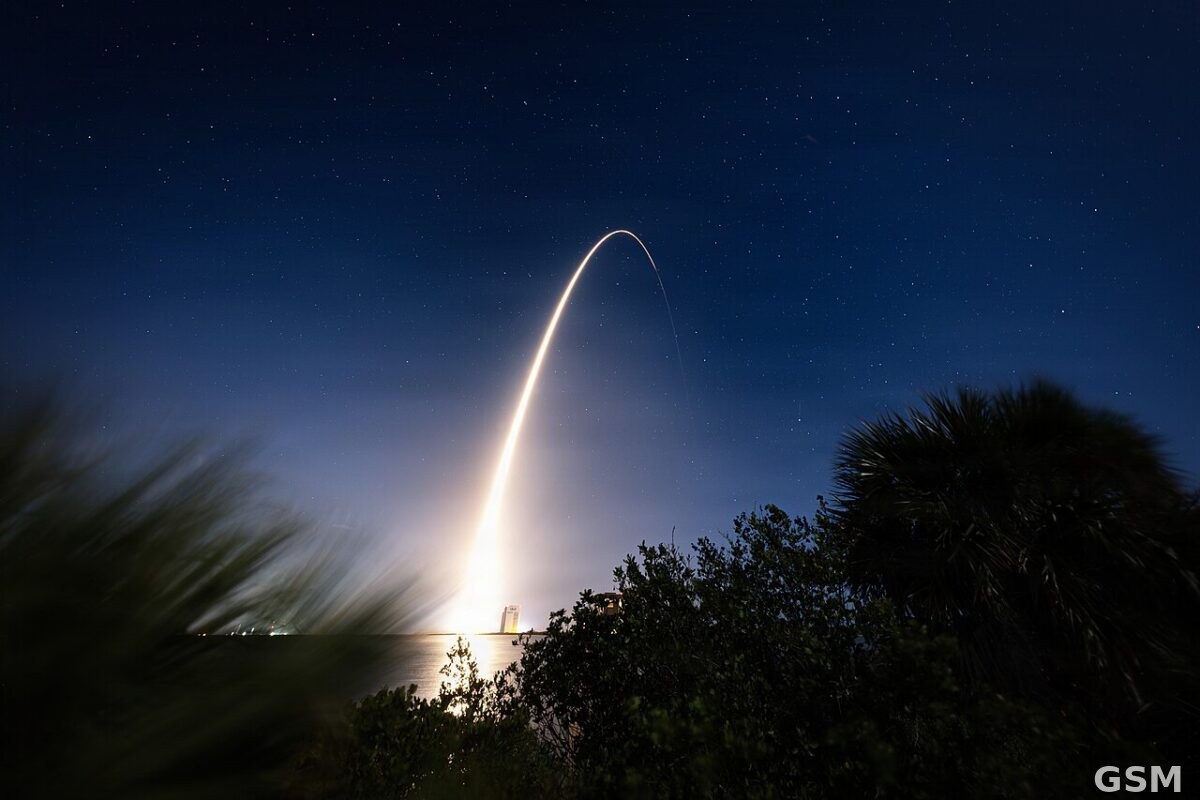
Photo: Atlas V火箭携Amazon Leo卫星升空的夜间长曝光照片(资料图)。照片:Robert Mason,经Wikimedia Commons。 / Long-exposure photo of an Atlas V rocket launching Amazon Leo satellites at night (file photo). Photo: Robert Mason, via Wikimedia Commons.