NASA's Lucy Enters the Jupiter Trojan Asteroid Region After Flying More Than 2.2 Billion Miles
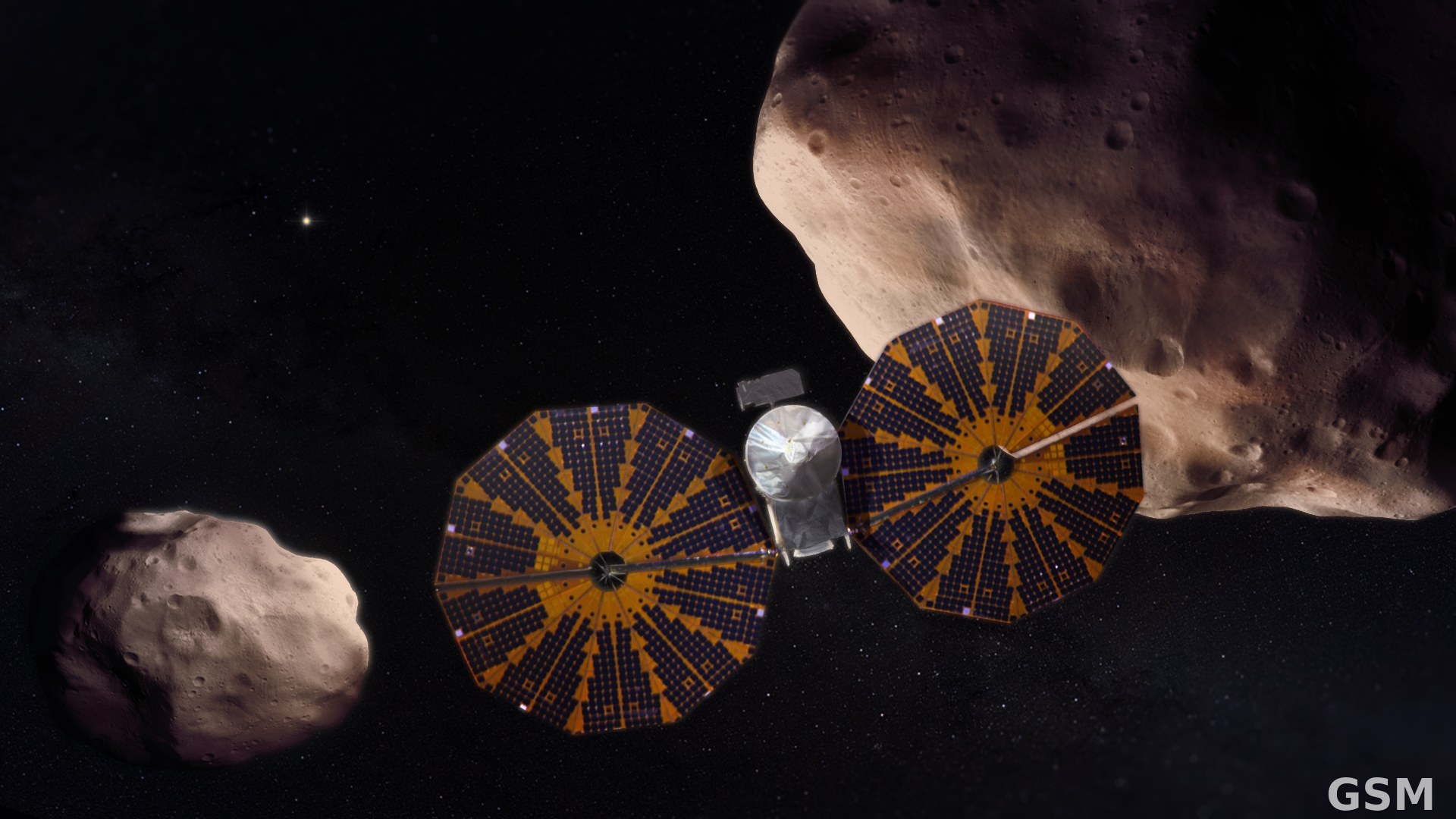
NASA announced on October 28 that its Lucy spacecraft, having traveled more than 2.2 billion miles since its launch on October 16, 2021, has entered the region of the Jupiter Trojan asteroids, becoming the first spacecraft to reach that region. Lucy is approaching Jupiter's Lagrange point 4 (L4), and its first encounter, with the asteroid Eurybates, is set for August 11, 2027.
According to NASA's mission blog, the Trojans travel around the Sun in two groups sharing Jupiter's orbit: one group around L4, ahead of Jupiter, and a second around L5, trailing behind the planet. The clusters are as far from Jupiter as the planet is from the Sun, about 484 million miles. Mission engineers know Lucy is approaching L4 by tracking the spacecraft's location through its radio signals and images of surrounding stars. Because the Trojans are separated from each other by more than 6 million miles on average, they will appear to Lucy as pinpricks of light against a field of stars until the spacecraft closes in on its chosen targets.
NASA said several previous spacecraft have visited Jupiter, some using its gravity to travel even farther in a maneuver called a gravity assist, but none had the opportunity to visit the Jupiter Trojans. Only Lucy, built specifically to explore that population, has had a reason to travel to those regions. Scientists expect that studying the Trojans up close will help them refine theories of how the solar system's planets formed 4.5 billion years ago and how they ended up in their current configuration.
As Lucy cruises deeper into the region, it has adapted to gradually cooling temperatures and dimming sunlight. Its design is optimized for a region more than five times farther from the Sun than Earth, and the spacecraft and its instruments continue to operate as expected. With less than a year until the first encounter, the team is putting the final touches on the encounter plans to make the most of the few hours Lucy will spend studying Eurybates.
After Eurybates, Lucy will visit Polymele in September 2027, Leucus in April 2028 and Orus in November 2028. It will return to Earth in 2030 for a third and final gravity assist, which will send it toward Jupiter's trailing Trojan group, where it will explore the binary pair Patroclus and Menoetius in March 2033.
Source: GSM · USA (original Chinese edition)
Photo: 图:NASA「Lucy」探测器飞掠木星特洛伊双小行星 Patroclus 与 Menoetius 的艺术概念图。NASA Goddard Space Flight Center 制作,公共领域,经 Wikimedia Commons。 / Photo: Artist's concept of NASA's Lucy spacecraft flying past the Trojan binary asteroids Patroclus and Menoetius. Created by NASA Goddard Space Flight Center, public domain, via Wikimedia Commons.