FCC Proposes $4.4 Million Fine Against Boomerang Wireless, Alleging It Claimed the Dead as Lifeline Subscribers
The Federal Communications Commission (FCC) on October 29 in Washington issued a Notice of Apparent Liability for Forfeiture (FCC 26-77) proposing a $4,401,666 fine against Boomerang Wireless. The FCC alleges the company enrolled and claimed hundreds of deceased subscribers with false addresses under the federal Lifeline program.
The FCC's Enforcement Bureau began the investigation based on an advisory from the FCC's Office of Inspector General. The investigation found that Boomerang apparently enrolled hundreds of dead people in the program and manipulated the records of these deceased individuals to enroll them in California, while the false addresses had no connection to where the individuals resided prior to their deaths. The notice proposes the $4,401,666 forfeiture citing the reimbursement requests, the enrollment of hundreds of dead people, and apparent wire fraud violations.
The Lifeline program, funded by the Universal Service Fund to provide a discount on phone and internet services for qualifying low-income Americans, accounts for nearly $1 billion in spending annually. According to the FCC, the Inspector General advisory looked at the three states that had opted out of using the National Verifier and showed that Lifeline providers received nearly $5 million in federal dollars to provide phone or internet service to hundreds of thousands of dead people, with nearly 81% of these incidents in California, where the Commission has revoked the state's opt-out status. Earlier this year, the FCC adopted major reforms to the Lifeline program to ensure that only living and lawful Americans participate.
The notice was adopted by a vote of the full Commission at its October Open Meeting, with Chairman Brendan Carr and Commissioners Anna Gomez and Olivia Trusty approving; Chairman Carr and Commissioner Gomez issued separate statements. The FCC notes that a Notice of Apparent Liability contains only allegations and is not a final Commission action: the Commission may not impose a greater penalty than the amount proposed, and Boomerang Wireless will be given an opportunity to respond with evidence and legal arguments before the FCC acts further.
Source: GSM · USA (original Chinese edition)
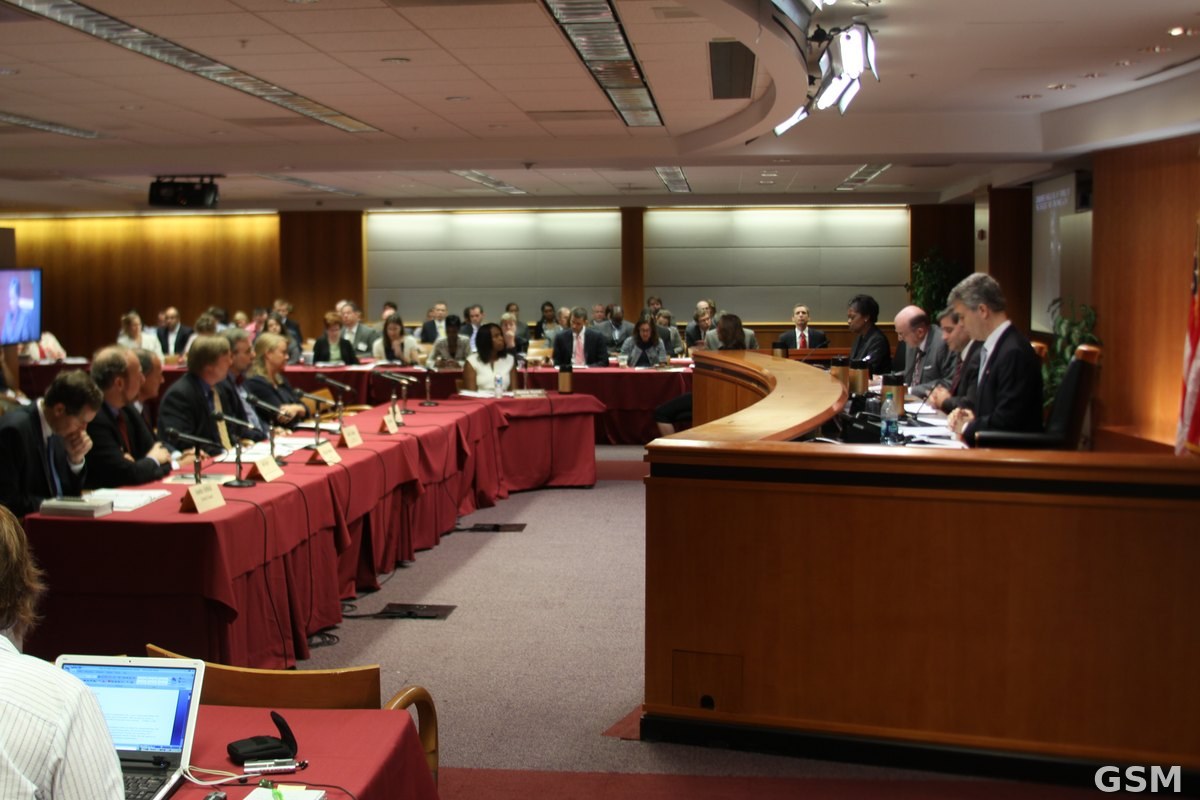
Photo: 图:位于 Washington 的美国联邦通信委员会(FCC)公开会议室,委员席与参会席全景(2011年7月公开会议)。FCC 照片,公共领域,经 Wikimedia Commons。 / Photo: The Federal Communications Commission's open meeting room in Washington, with the commissioners' dais and attendee tables (July 2011 open meeting). FCC photo, public domain, via Wikimedia Commons.