Up to $70 Million Implementation Prize: DOE Moves to Expand America's Mining and Critical Minerals Workforce
The U.S. Department of Energy's Office of Critical Minerals and Energy Innovation launched the PROSPECT Implementation Prize in Washington on October 29, which will award up to $70 million to support universities in expanding the skilled workforce required to domestically produce, process, recover, and recycle critical minerals.
The prize competition is part of DOE's broader up-to-$100 million PROSPECT initiative (Providing Opportunities for Specialized Education in Critical Technologies). DOE said the initiative delivers on President Trump's agenda to restore American energy dominance, secure long-term economic growth, rebuild domestic supply chains, and reduce reliance on foreign adversaries for critical minerals.
Assistant Secretary of Energy Audrey Robertson said DOE has laid the groundwork for growing America's critical minerals workforce and is now turning those plans into reality, with universities taking steps to deliver measurable results, from expanding student support through scholarships to modernizing curricula with new training modules, certificates, and Super Intelligence. She said the administration is committed to freeing America from dependence on foreign sources of critical minerals essential to powering the economy, and to creating good-paying, fulfilling jobs for Americans.
PROSPECT has set a near-term goal of doubling the number of graduates with mining, minerals, and associated supply chain credentials within two years. The Implementation Prize follows the recently completed PROSPECT Planning Prize, which awarded funding to universities for developing comprehensive workforce-expansion plans; the Implementation Prize focuses on putting workforce development programs into action and demonstrating measurable results.
DOE said the U.S. faces a growing shortage of skilled mining and critical minerals professionals, with an estimated 6,000 new mining engineers needed over the next decade. Mining and geological engineering careers offer a median annual wage of $106,220 in 2025.
U.S.-based academic institutions with eligible mining engineering programs are encouraged to apply, and winning programs must demonstrate that at least 50% of each program's budget will support students directly through scholarships, stipends, or other comparable assistance. Applications are now open, with a first-phase submission deadline of November 25, 2026; Planning Prize winners, as well as institutions that did not win or apply, are invited to apply. The prize is funded by the Office of Critical Minerals and Energy Innovation and managed by the National Laboratory of the Rockies under the American-Made prize program, with funding for future phases subject to availability.
Source: GSM · USA (original Chinese edition)
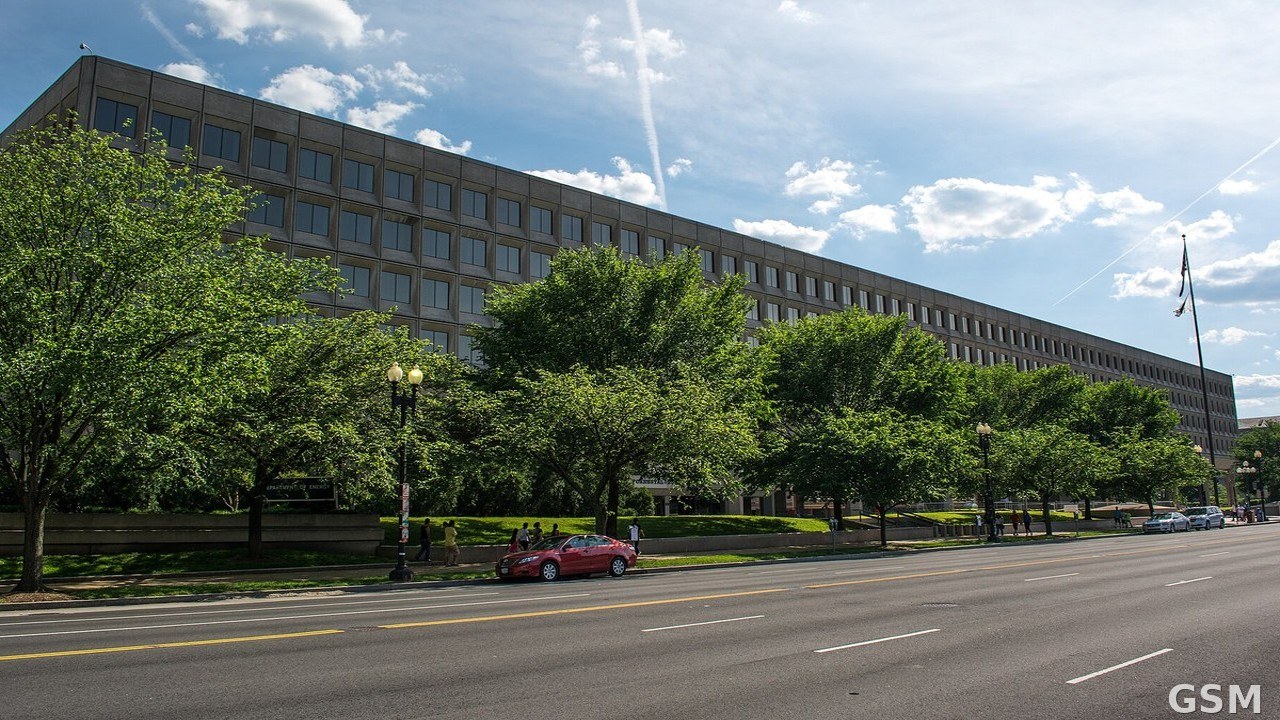
Photo: 图:位于 Washington 的美国能源部总部 Forrestal 大楼。GSM联邦机构固定图库照片,摄影 Tim Evanson,CC BY-SA 2.0,来源 Wikimedia Commons。 / Photo: U.S. Department of Energy headquarters, the Forrestal Building in Washington. GSM federal agency library photo by Tim Evanson, CC BY-SA 2.0, via Wikimedia Commons.