Merkel in Leipzig Speech: Naturalised Syrians Belong to 'the People' as Much as East Germans, as Populists Rank Citizens by Seniority
Leipzig — Former German Chancellor Angela Merkel used her acceptance speech for the International Mendelssohn Prize Leipzig (Europe category) at the Gewandhaus on November 1 to warn that the promise of a life in freedom is under pressure, accusing populist parties of dividing citizens according to how recently they became German. Such parties, she said, try to separate 'the people' from 'the elites' and to rank citizens by how long they have held citizenship, creating hierarchies and stoking hatred and envy; she named no party in the reported portions of the speech.
All power in Germany emanates from the people, Merkel emphasised, and the people comprise all German citizens: 'And no one asks: Did you only come later from East Germany, or did you perhaps arrive as a Syrian just three years ago? All German citizens are the people.' Her comparison drew criticism at home. Outlets such as Junge Freiheit called it historically incorrect, noting that East Germans held German citizenship from birth — the Basic Law upheld a single German citizenship, and the Constitutional Court's 1987 Teso decision confirmed that acquiring East German citizenship made a person a German citizen in the Federal Republic as well, so East Germans moving west never needed naturalisation — whereas Syrians obtained citizenship by applying for it, along fundamentally different paths.
The debate connects directly to naturalisation policy: the previous coalition government had allowed citizenship after three years for exceptional integration, an option abolished by a law change that took effect on October 30, 2025. Preliminary Destatis figures show 332,500 foreign nationals became German citizens in 2025, with Syrians the largest group at 65,600, as they have been every year since 2021; they had lived in Germany an average of 7.9 years when naturalised.
Merkel, chancellor from 2005 to 2021, opened Germany's doors to large numbers of Syrian refugees during the 2015 crisis, and policies from her tenure remain at the centre of Germany's migration debate. The Mendelssohn Prize honoured her commitment to Europe; the award ceremony formed part of a Leipzig festival running November 1 to 8.
(Source: dpa)
Source: dpa
Published by GSM · USA (original Chinese edition)
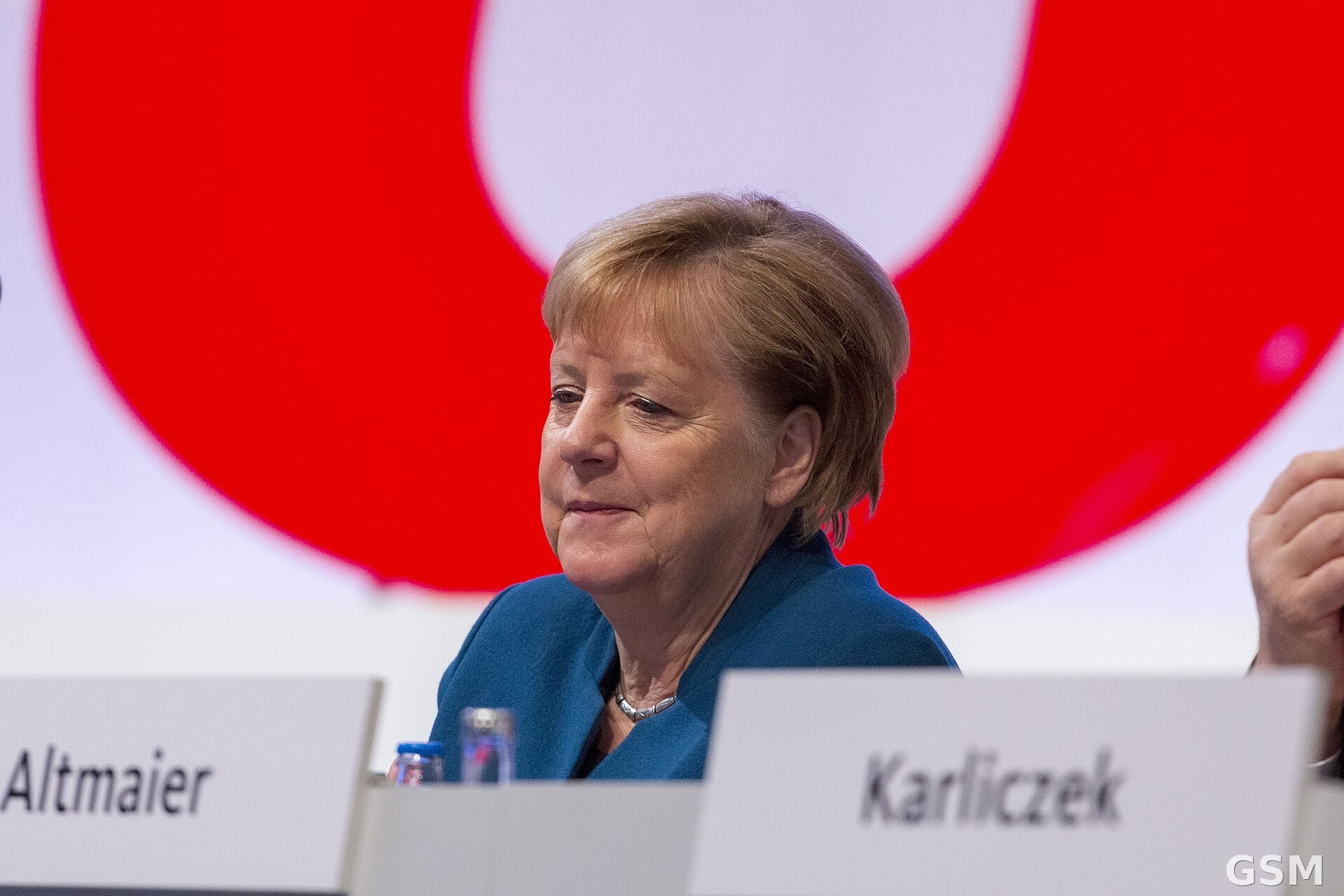
Photo: 图:德国前总理默克尔(2019年基民盟党代会资料图)。Olaf Kosinsky 摄影,CC BY-SA 3.0 de,经 Wikimedia Commons。 / Photo: Former German Chancellor Angela Merkel at a CDU party conference in 2019 (file photo). Photo by Olaf Kosinsky, CC BY-SA 3.0 de, via Wikimedia Commons.