The Election Through Chinese American Eyes: Jobs, Schooling, Family, and Safety Are What Give a Ballot Its Weight
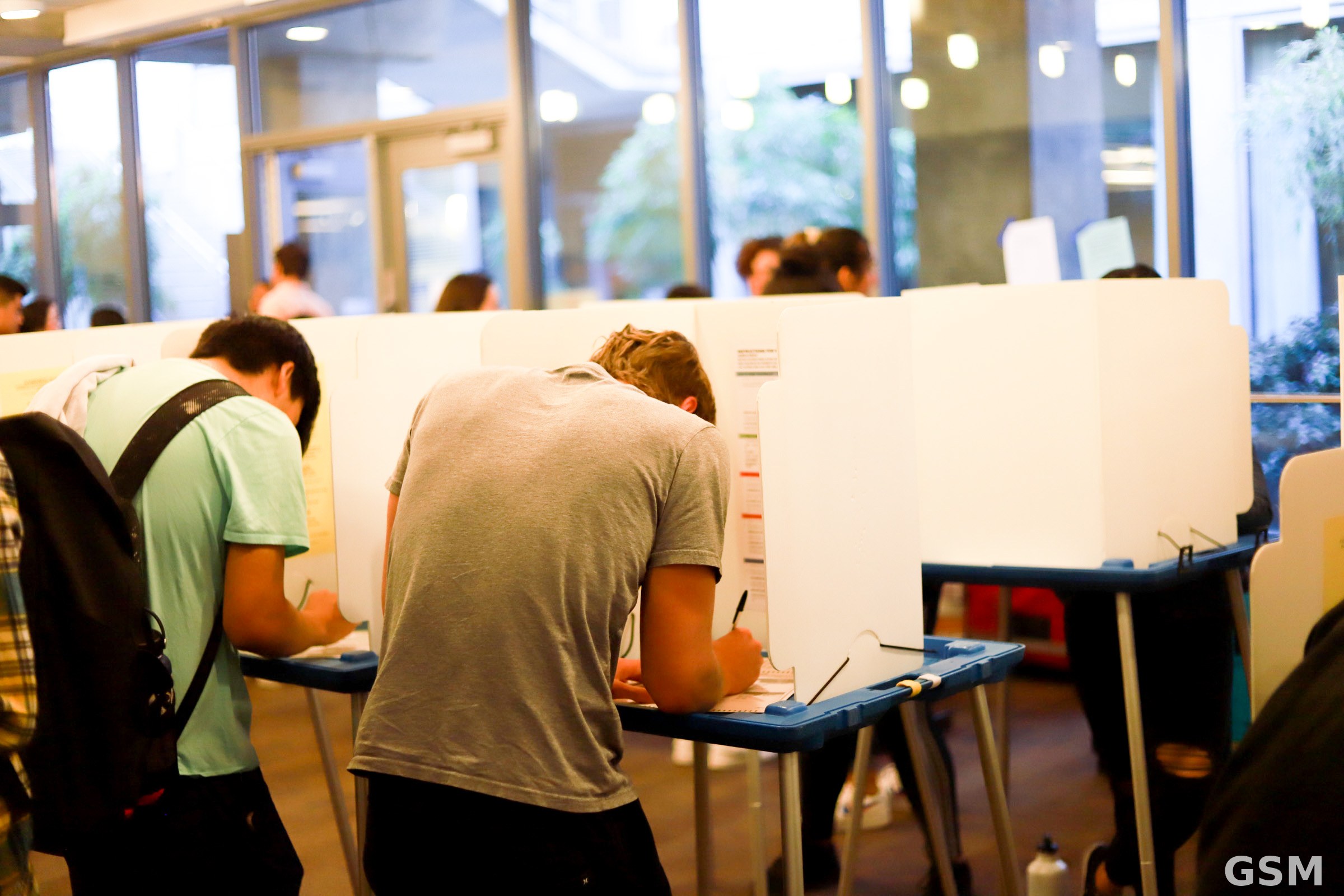
November 3, 2026, is Election Day in the United States. More than 57.5 million early votes have already been cast, and polling places are opening from the East Coast to the West Coast. There will be winners and losers tonight, but this article is not about winning or losing. It is about something else: what the Chinese Americans who walk into polling places today, and those who do not, carry in their minds.
1. Who counts as a Chinese American voter
First, the scope. In this article, a Chinese American voter means one thing only: a U.S. citizen, aged 18 or older, with the right to vote. That covers two groups: the naturalized first generation, and the second generation and beyond born in the United States. Non-citizens are not included; federal elections are limited to citizens. Lawbreakers are not part of this portrait either; the boundaries of the lawful electorate are drawn by law itself.
Once that line is drawn, the portrait comes into focus. According to the Pew Research Center, Chinese Americans are the largest Asian origin group in the United States, making up 22% of the Asian adult population; 55% of Chinese adults hold a bachelor's degree or higher, compared with 32% of all U.S. adults; 72% of Chinese adults were born outside the United States, and 61% of Chinese immigrants have become naturalized citizens. The Migration Policy Institute traces where this road begins: since 1965, many Chinese immigrants arrived either as international students or as high-skilled work visa holders, then obtained permanent residency and naturalized. Studying, working, starting businesses, staying, working regular jobs, paying taxes, naturalizing: that is the road most Chinese American voters have walked.
Diligence and love of learning are not adjectives here; they are the road itself. A person studies first, then works, then pays taxes, then naturalizes, and only then holds a ballot. A ballot does not fall from the sky; it is earned day by day.
2. What they care about
The 2026 AAPI Voter Survey, conducted by APIAVote and AAPI Data from June 3 to July 27, 2026, among about 2,066 registered voters, lists what voters care about. Ranked by the share calling each issue very or extremely important: cost of living and inflation, 90% (59% extremely important); health care, 82%; jobs and unemployment, 80%; Social Security and Medicare, 80%; education, 79%; crime and public safety, 78%; war and foreign policy, 78%; racism, discrimination and hate crimes, 73%; immigration, 68%.
These items share one quality: each one touches daily life. Jobs, schooling, family, safety, the things Chinese communities value most in ordinary days, appear on the ballot unchanged. Education ranks fifth (79%), matching a tradition that prizes schooling and children's studies; public safety ranks sixth (78%), matching a concern for security; Social Security and Medicare at 80% match a concern for future security. The issues on the ballot are the issues of life itself.
Participation is rising too. The same survey found that 90% of registered AAPI voters say they plan to vote in this election, and Asian American midterm turnout has risen from 27% in 2014 to 40% in 2018 and 2022. Chinese American voters are not bystanders; more and more of them are walking into polling places.
3. What kind of leaders they want
Read through that list, and the standard Chinese American voters apply to those who would govern is concrete and practical: who can hold down the cost of living, protect jobs and health coverage, keep neighborhoods safe, and leave room for education and family. That yardstick does not recognize party labels. The Committee of 100's 2025 State of Chinese Americans Survey found that party identification among Chinese Americans varies sharply by gender, birthplace, and length of time in the United States, and that even self-identified partisans do not always vote along party lines. Chinese American voters are not a single bloc; they vote on issues, not on labels.
That is also why this article does not write about whom Chinese Americans support. Support is the result; concern is the cause. The cause is more worth writing about.
4. The young people who do not walk in
But there is also a group that does not walk into polling places. Before writing this article, in an effort to understand what young people really think, a phone number was dialed at random from a Chinese community contact directory. This was not a poll and not a formal interview, only a telephone conversation to learn a young person's thinking. The person who answered was a 24-year-old Chinese young man, anonymous. He did not want to talk about politics in the first place.
He said little, and his meaning was clear: talking about politics is complicated; he does not much like either the Democratic Party or the Republican Party; he will not vote this year. What matters most to him, he said, is his own study, his work, his future, and his social welfare security, all matters closely tied to his own life. For now, those are the things he cares about.
That passage deserves a second reading. His concerns, schooling, work, security, are the same items that top the survey's list. It is not that he has no concerns; it is that he does not believe politics is the road to them. Those who vote place their hopes in the ballot; he places his hopes in his own study and work. The divide is not over what to care about, but over whether politics is of any use.
Among Chinese young people raised in the United States, some no longer speak Chinese fluently, like neither party, find politics tiresome and complicated, and simply opt out. This article offers no criticism of that, only a fact: among eligible voters, some vote and some do not, and those who do not are part of the portrait too.
5. The cultural root
Why these concerns? Look deeper, and the answer is a cultural root. Valuing education, valuing family, valuing relationships, the relationships of family and of community, valuing safety, and honoring propriety, righteousness, integrity, and shame: these are not campaign slogans. They are the stuff of daily life in Chinese families. A family puts its children through school, keeps its household together, looks after its neighbors, and life is built up layer by layer in just that way.
In discussions within Chinese communities, people often note that the emphasis on filial respect and family responsibility in traditional Chinese family values has much in common with the family values emphasized in the Bible. This article records that observation without arguing it further: it suggests that Chinese voters' family values are not something on an isolated island, but something that can be understood by the equally family-valuing traditions of American society.
Ending
Tonight, results will come in one by one. Whatever they are, the list held by Chinese American voters will not change: jobs, schooling, family, safety. Whoever governs this country will be measured against that list. This is not an article about winning or losing. It is an article about weight: the weight of a ballot lies not in victory or defeat, but in the concrete days behind it.
Related: Polling places move onto campus: nearly 50 million young voters face the midterms
Source: 2026 AAPI Voter Survey
Published by GSM · USA (original Chinese edition)
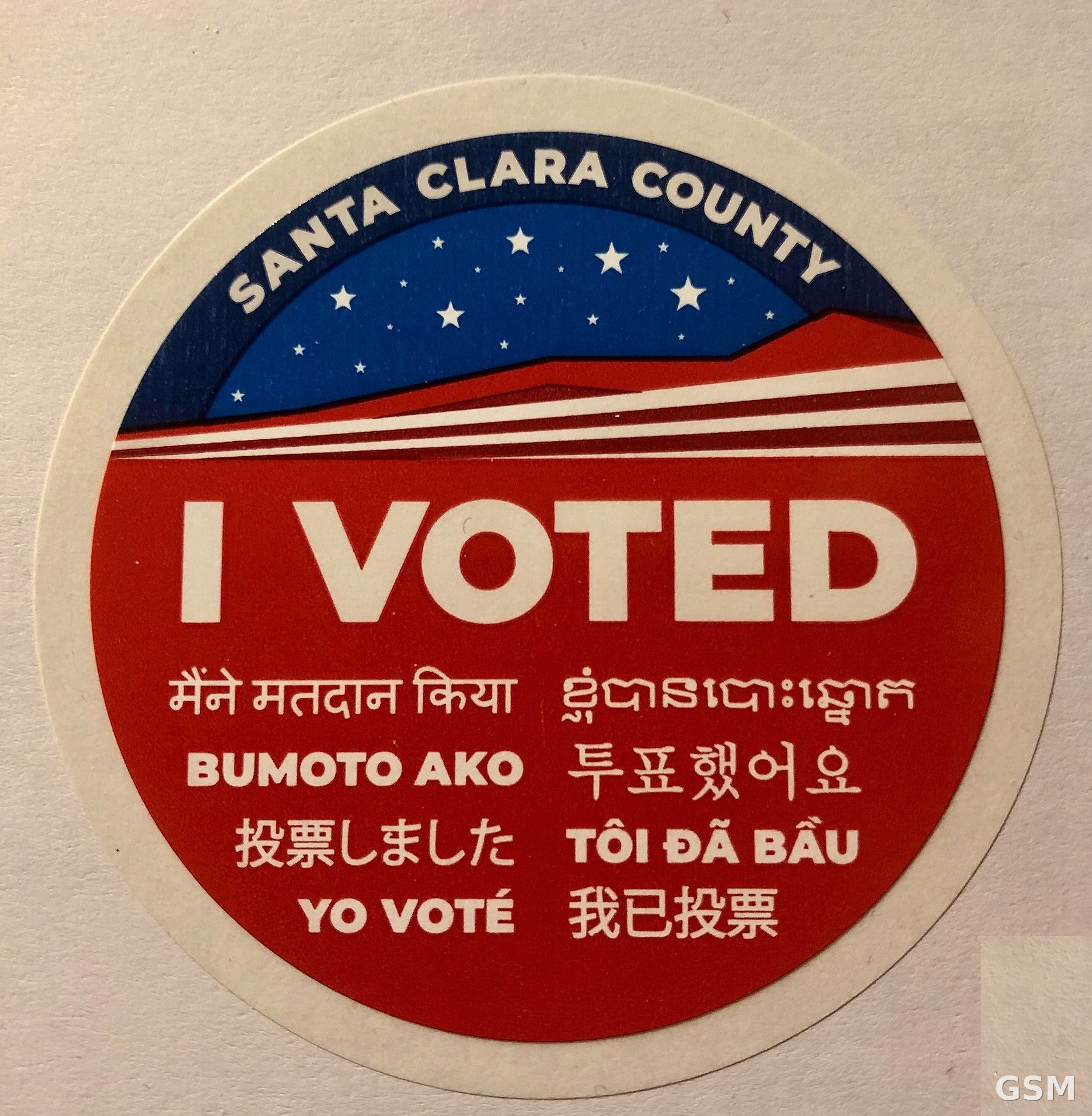
Photo: 加州圣克拉拉县的多语种「我已投票」贴纸,含中文「我已投票」字样(资料图,原图右下角二维码已按本站规范裁除)。圣克拉拉县选民登记处,公共领域,维基共享资源。 / Santa Clara County's multilingual 'I Voted' sticker, including 'I voted' in Chinese (file photo; a QR code in the original corner was removed per GSM policy). Santa Clara County Registrar of Voters, public domain, via Wikimedia Commons.