University of Washington Study: Permanent Daylight Saving Time Could Add at Least 2 Billion Dark School Commutes for U.S. Children
SEATTLE, Washington — A University of Washington study released on November 4, 2026, warns that permanent daylight saving time could force American children to make at least 2 billion additional school commutes in darkness. The findings, published on October 29 in the journal Current Biology, showed that fatal crashes involving school-aged pedestrians were roughly twice as likely during dark mornings as after sunrise.
The research team examined 14 of the 19 states that have already approved permanent daylight saving time measures, combining school enrollment figures, individual school start times and geographic coordinates to determine how frequently students would need to travel to school before sunrise, and compared the total with the current practice of changing clocks twice a year. In Washington state alone, permanent daylight saving time would produce nearly 35 million additional school commutes in darkness; among the other 13 states, Georgia showed the largest increase at approximately 71 million additional dark trips. Extending the findings nationwide, the researchers calculated at least 2 billion more trips to school before sunrise than under the current system, while noting that the figure may substantially underestimate the actual impact because the projection assumed students generally leave home around 8 a.m., while many leave earlier.
Permanent daylight saving time would push sunrise an hour later during the winter months, leaving mornings darker from November through March. The U.S. House of Representatives approved legislation this past summer eliminating the annual return to standard time in the fall; 19 states, including Washington, have already approved measures supporting the change, which would take effect in those states if the federal bill becomes law. The legislation remains stalled in the Senate, with school start times a major concern. Senior author Horacio de la Iglesia, a professor of biology at the University of Washington, said the bill "is called the 'Sunshine Protection Act' because you get an extra hour of light at the end of the day. But you will take that hour from the morning. You could call it the Sunshine Destruction Act."
The communities most affected would be schools near the western boundaries of time zones, including Forks, Washington, where sunrise already occurs relatively late, and districts that begin classes early in the morning. In Mississippi and Alabama, schools begin on average before 8 a.m.; under the current system each state has approximately 2 million school trips in darkness, rising to more than 20 million trips per state under permanent daylight saving time. Losing access to morning sunlight could interfere with the body's natural daily rhythms and affect health, especially for growing children, the researchers said; adolescents' biological clocks typically shift later, so delaying high school start times is beneficial, and permanent daylight saving time could undermine some of those gains by making morning sunlight less accessible. De la Iglesia argued that starting school later to compensate would ripple through daily life and essentially realign everybody to solar time, which, "by definition, is Standard Time."
(Source: University of Washington)
Source: University of Washington
Published by GSM · USA (original Chinese edition)
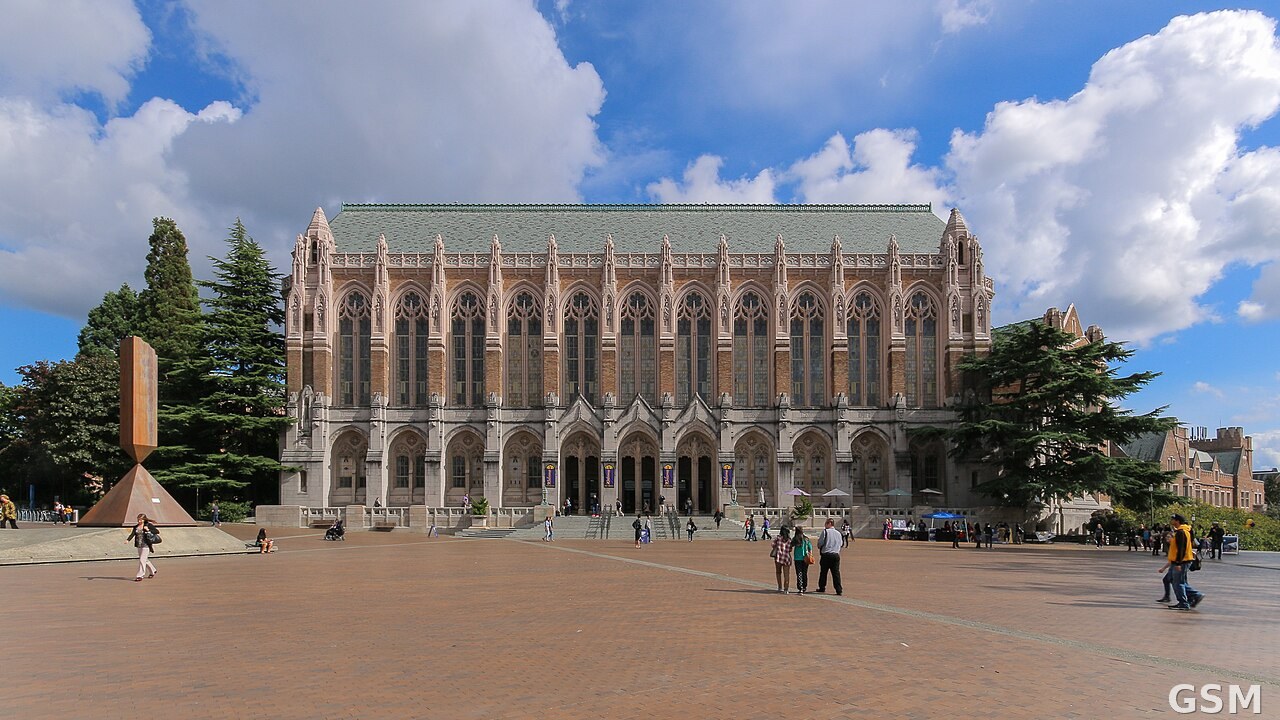
Photo: 图:华盛顿大学苏扎洛图书馆。Martin Kraft 摄,CC BY-SA 3.0,经 Wikimedia Commons。 / Photo: Suzzallo Library, University of Washington. By Martin Kraft, CC BY-SA 3.0, via Wikimedia Commons.