NOAA Rule Lets West Coast Fishing Crews Use One Buoy Line Instead of Two to Cut Whale Entanglements
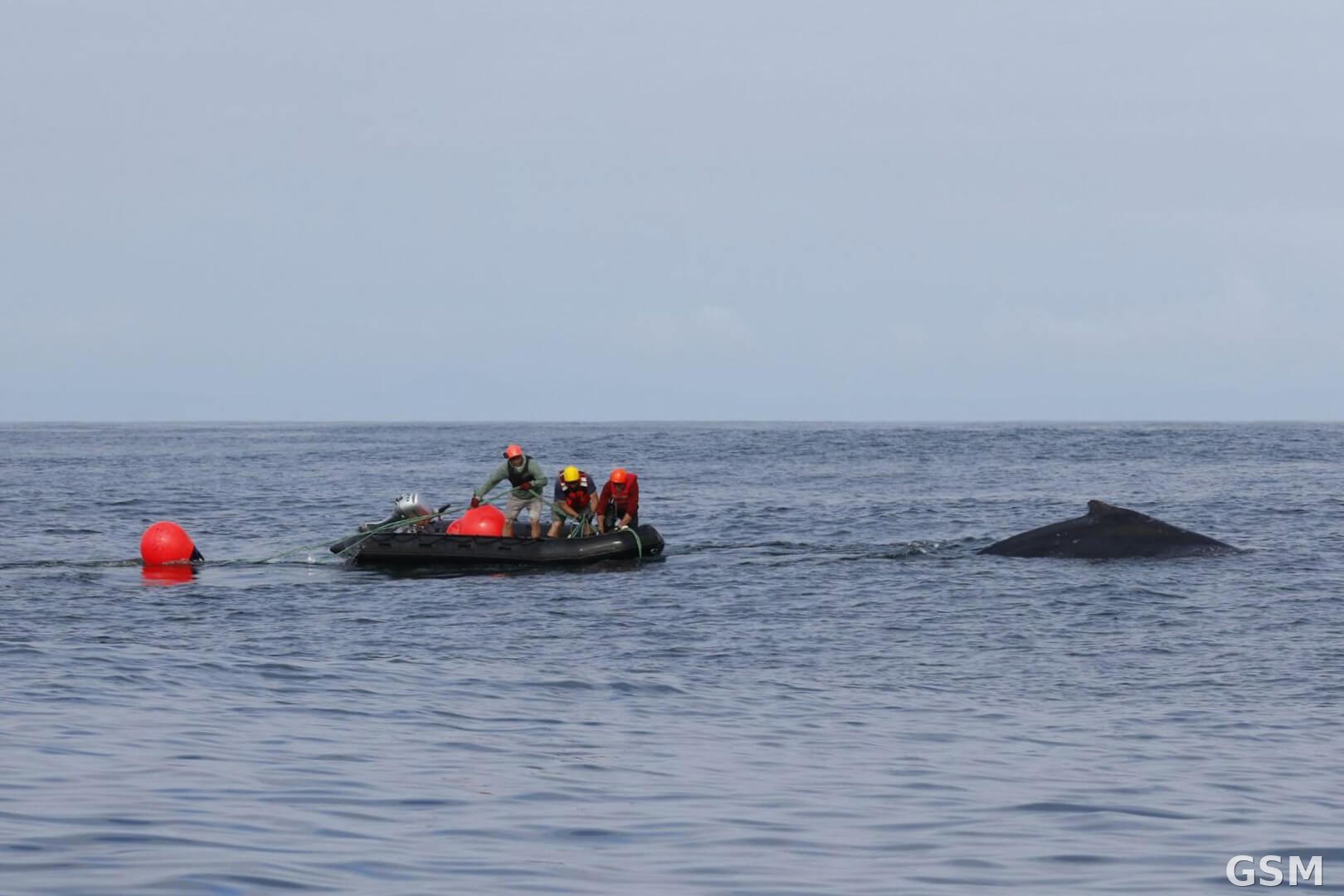
The West Coast Region of NOAA Fisheries announced on November 5, 2026, that it has finalized a new rule for the groundfish fishery: commercial fishing vessels may now deploy strings of gear on the sea floor with just one line to a buoy at the surface, instead of the two buoy lines previously required, in order to reduce the number of vertical lines in the water and lower the risk of whales and other marine life becoming entangled.
The change was sought by the Pacific Fishery Management Council. Under the old rule, each string of gear needed a buoy line at each end; the new rule allows crews to keep only one line when conditions allow. NOAA Fisheries said vertical lines are a leading source of whale entanglements along the West Coast, so fewer lines in the water means fewer chances for an entanglement.
The rule also adds traceability requirements for fishing gear. Starting January 11, 2027, 90 days after the rule is published, the first 120 feet of line connecting surface buoys to gear on the sea floor must carry color-coded marking, and vessels using bottom longline and pot gear must mark their buoys with gear-specific and vessel identification. The line linking surface buoys between vertical lines will also be limited to 10 fathoms, or 60 feet, to keep excess line from posing an entanglement risk. NOAA Fisheries noted that 120 feet is only about 5 percent of the vertical line in a typical gear set, but most entanglements involve 60 feet or less of line below the buoy, so marking should help responders identify the source of gear involved in entanglements.
Fishermen see the savings in time and money most directly. Poggy Lapham, an Oregon fisherman who captains and owns the F/V Michele Ann out of Newport, said the option to use one line instead of two would save him up to 20 percent of his time on the water and close to $1,500 in line for each set of gear. A full set of gear fished at 600 fathoms, more than a half-mile deep, can take 90 minutes or more to retrieve; with one buoy line, crews can haul more sets per day, which also shortens the time gear spends in the water. Lapham helped develop the rule as a member of the West Coast Take Reduction Team. He said making the change optional lets the fleet adjust at its own pace.
Large whale entanglements off the West Coast have increased since about 2014. NOAA Fisheries said a marine heatwave known as The Blob warmed ocean temperatures and brought more whales in search of prey into the same coastal waters where commercial fisheries set pots and traps on the seafloor, with humpback whales particularly affected.
NOAA Fisheries sought public comment on the proposed change early this year. Most of the roughly 20 comments received were positive, though some said the gear-marking rules should be stronger to ensure that gear involved in entanglements can be identified.
Source: National Oceanic and Atmospheric Administration
Published by GSM · USA (original Chinese edition)
Photo: 图:2026年7月,俄勒冈州外海,受过训练并获授权的救援队放出浮标,为一条被渔线和渔具缠绕的鲸鱼减速。照片由 Oregon Coast Aquarium、Oregon State University 与 Cascadia Research Collective 提供,美国国家海洋和大气管理局渔业局发布(许可号 MMPA/ESA Permit #24359)。 / Photo: A trained and authorized response team deploys buoys to slow a whale entangled in fishing lines and gear off Oregon in July 2026. Photo courtesy of Oregon Coast Aquarium, Oregon State University, and Cascadia Research Collective, released by NOAA Fisheries (MMPA/ESA Permit #24359).