Bahrain Uses Iran War to Crack Down on Shi'ite Clerics: More Than 50 Arrested Since May
Bahrain's authorities have used the Iran war to launch a crackdown on Shi'ite Muslim clerics at home, arresting more than 50 clerics and religious orators between May and June, Reuters reported on November 6. The authorities accuse them of trying to run a terrorist group that sought to incite rebellion and overthrow the country's ruling order with help from Iran's Islamic Revolutionary Guard Corps.
Bahrain's public prosecution said the clerics aimed to do this by promoting followers' subordination to Iran's supreme leader. Relatives and lawyers for the clerics deny the charges, saying the authorities are trying to criminalize belief, and deny that they sought to overthrow the state or acted on behalf of Iran. Around a dozen people have been sentenced to between five and 10 years in prison for allegedly expressing support for attacks on U.S. and Israeli targets, and critics say 69 citizens of Iranian heritage have been stripped of citizenship. A verdict in the case is expected on November 8, and the kingdom is bracing for potential protests.
On November 6, twenty rights groups including Human Rights Watch and the Bahrain Institute for Rights and Democracy released a statement raising allegations of torture, coerced confessions and other due process violations in the case. "This mass prosecution raises serious concerns about religious persecution targeting the religious life and leadership of Bahrain's Shia community," the statement said.
"We are confronting an ideology that demands obedience to Iran's leadership above Bahrain's sovereign authority," Lt. Gen. Tariq Al Hassan, head of Bahrain's Public Security agency responsible for internal security, told Reuters in an interview. He denied that Bahrain targets Shi'ite citizens, "most of whom are law-abiding and loyal citizens," he said.
Bahrain is the smallest Gulf nation, lying just across the water from Iran. It is ruled by a Sunni Muslim family but populated mostly by Shi'ites. When the United States and Israel launched the Iran war on February 28, Tehran responded by raining drones and missiles on neighbouring Gulf states, including Bahrain. The strikes were worryingly accurate, Western diplomats and Gulf officials told Reuters, hitting a hotel shortly after U.S. military personnel arrived there after fleeing their base, home to the U.S. Navy's Fifth Fleet. Reuters reported that after U.S. strikes killed Iran's supreme leader, social media posts from some Bahrainis praising attacks seen as targeting U.S. interests further alarmed the authorities.
Bahrain had been moving toward detente: the government freed hundreds of prisoners jailed for political activity through royal pardons in 2024, and the same year Bahrain and Iran began talks to restore diplomatic relations, severed since 2016. Reuters noted that the current crackdown has reversed that trend. Bahrain crushed pro-democracy protests in 2011, jailing hundreds of protesters and activists and banning opposition parties.
Source: Reuters
Published by GSM · USA (original Chinese edition)
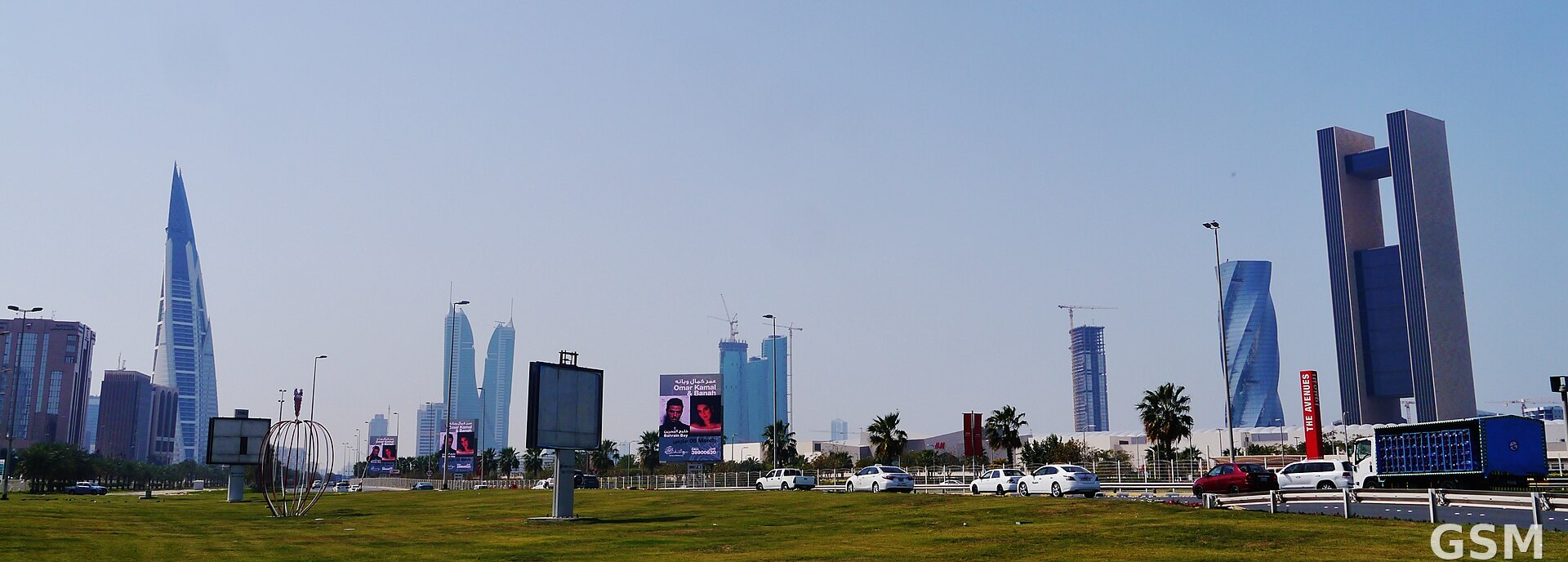
Photo: 图:巴林首都麦纳麦天际线。图片来源:Zairon/Wikimedia Commons,CC BY-SA 4.0。 / Photo: Skyline of Manama, Bahrain. Photo: Zairon / Wikimedia Commons, CC BY-SA 4.0.