
Ecology Paper: A Chilean Degu Population Withstood Nearly a Decade of Megadrought but Disappeared Locally After the Extreme Drought of 2019 — 12 Years of Records Show No Detections From 2020 and None in 2021 Follow-Up Surveys
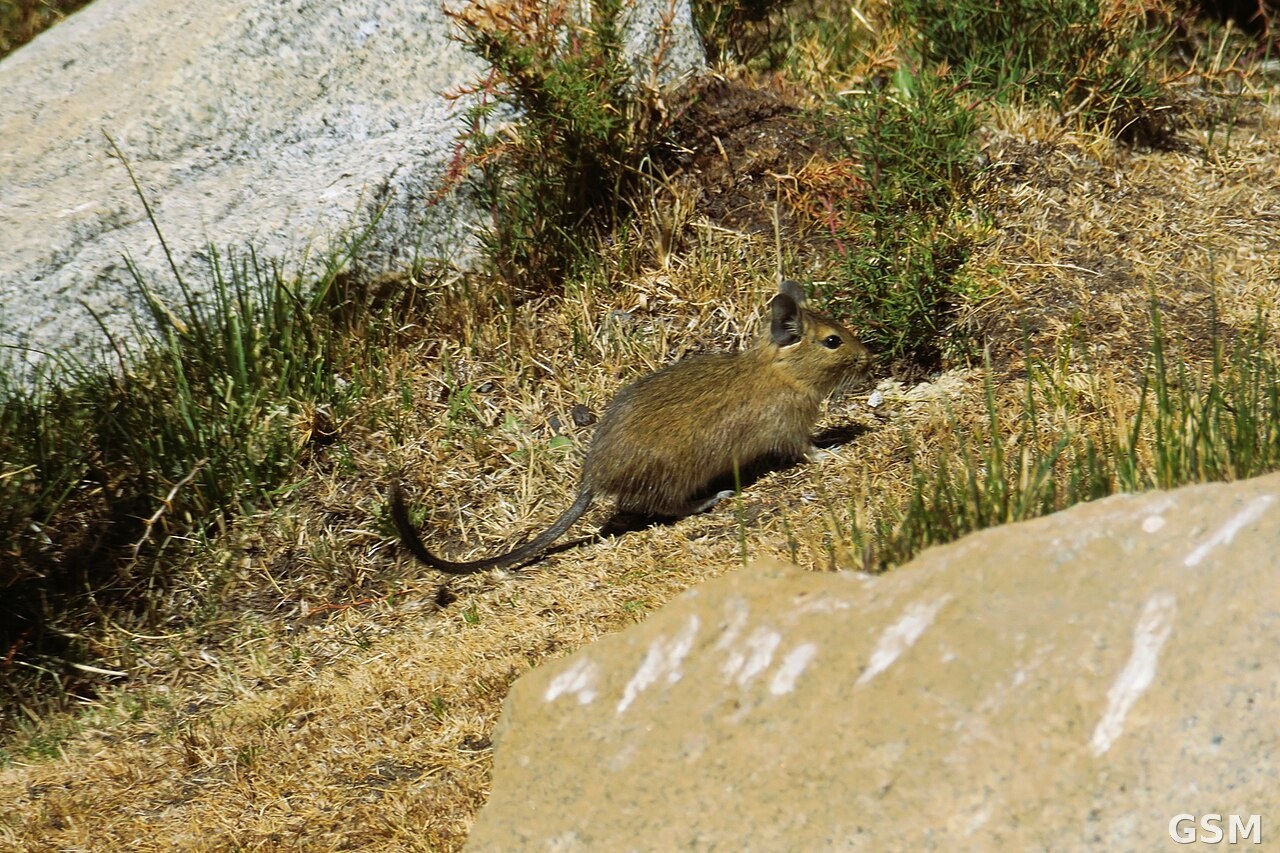
Research published in the journal Ecology analyzed 12 years of records from a population of degus in central Chile and found that the endemic rodents withstood nearly a decade of megadrought but disappeared locally following the extreme drought of 2019. The study involved Annemarie van der Marel, a postdoctoral researcher at the Institute of Ecology and Biodiversity (IEB).
At the study site in Rinconada de Maipú, in Chile's Metropolitan Region, the common degu (Octodon degus) population maintained positive growth through much of the megadrought despite declining rainfall and vegetation productivity. In 2019, however, rainfall was exceptionally scarce and vegetation production fell to critical levels; the lack of food affected both survival and the recruitment of new individuals. In 2020, researchers stopped recording degus at the site despite continued trapping efforts, and no individuals were detected in additional surveys in 2021.
The study, titled "The Effects of an Extreme Drought Led to the Local Extinction of a Social Rodent," analyzed capture-mark-recapture data collected between 2009 and 2020, drawing on 15 years of records at the Germán Greve Silva Experimental Station. It found the population did not decline gradually through the megadrought; it persisted for years under adverse conditions until the extreme drought of 2019 caused a critical reduction in available resources.
"What happened in 2019 was that there was virtually no rain throughout the entire year. Normally, even during the drought, there was some winter rainfall that allowed plants to grow and provided food for the degus. But that year, the plants didn't grow, and there was practically no food," van der Marel said. The study found gross primary productivity — an indicator of plant matter produced through photosynthesis — was the environmental factor that best explained variations in the species' survival and recruitment rates. Degus reproduce mainly during the austral winter, females have a gestation period of almost three months, and young are born between late August and early September, coinciding with peak vegetation; most adults do not survive into their second year, so constant recruitment is essential.
The researchers stressed that the local disappearance does not mean the species is extinct in Chile: the common degu is classified as least concern by the International Union for Conservation of Nature (IUCN), though the status of many of its Chilean populations remains unknown. After the disappearance, researchers identified another population less than 10 kilometers (6.2 miles) from the original site. One observed difference was the presence of trees and shrubs at the new site, whereas the location where the population disappeared had limited shrub cover, at approximately 14% — suggesting local ecosystem characteristics may have played a role, van der Marel said.
Source: Institute of Ecology and Biodiversity (IEB), Chile
Published by GSM · USA (original Chinese edition)
Photo: 智利八齿鼠(Wikimedia Commons)
 Tesla Unveils Revised SI Accelerator Roadmap: AI4, AI5 and AI6 Renamed SI4, SI5 and SI6, Sixth-Generation SI6 Inference Chip Targets 80 Times the Compute and Nine Times the Memory of the Current Chip, Dojo D3 Moves to Chiplets With Stacked HBM2026-11-08
 STMicroelectronics Adds Four Tools to ST Edge AI Suite: Model Explorer and Companions Consolidate Model Selection and On-Hardware Testing, With Over 400 Pre-Trained Models and More Than 260,000 Projects Supported, Tools Due in Late November2026-11-08