
PLOS Biology Paper of November 5: 80% of Ungulates That Went Extinct in the Past 100,000 Years Were Migratory, Versus 46% of Living Ungulates, While Migratory Lineages Produced New Species 2.8 Times per Million Years
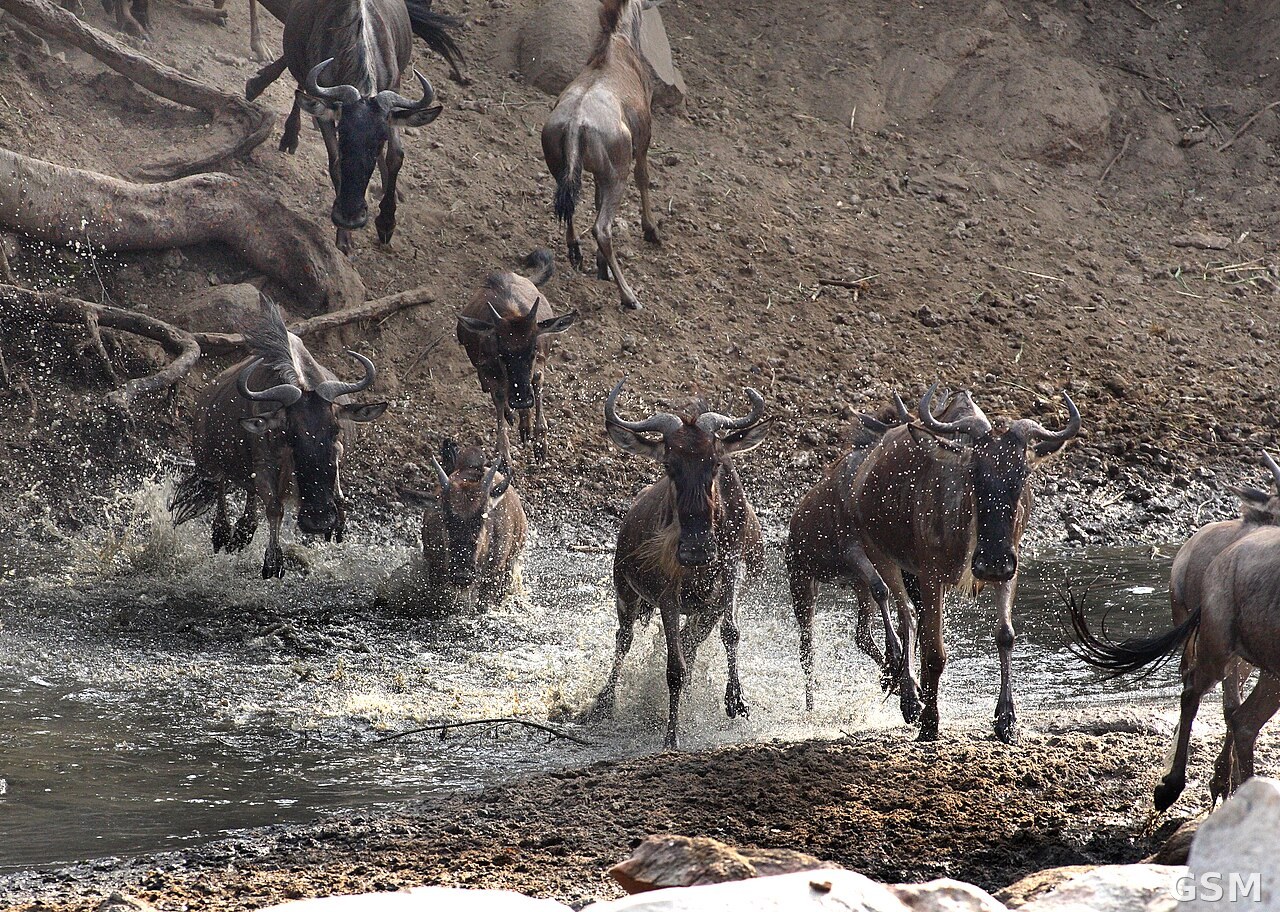
Over the past 100,000 years, hooved mammals that migrate have experienced a higher rate of extinction than nonmigratory species, according to a study published on November 5 in the journal PLOS Biology by Joel Abraham of Princeton University and colleagues.
Hooved mammals, known as ungulates, are known for large populations and long-distance migrations. To investigate the vulnerability of migratory ungulates, the researchers used fossil evidence and data from modern-day species to infer the migratory behaviour of 51 ungulates that went extinct in the last 100,000 years. They found that 80% of the ungulates that went extinct during this period were migratory, whereas only 46% of modern ungulates migrate — suggesting migratory ungulates have been at greater risk of extinction during recent geological epochs.
Statistical modeling also indicated that new migratory species evolved more frequently: the researchers estimated that migratory ungulate lineages produced a new species 2.8 times per million years, compared with 1.7 times per million years for nonmigratory lineages. Assessing trait combinations lost to extinction, the team found that in Africa, extinctions of migratory ungulates caused a 2.7% decline in functional diversity, while at a global level the effect was minimal.
The authors said the success of migration depends on animals' ability to accurately predict the timing and location of resources such as food and water, making migratory species vulnerable to past and present environmental change. With mounting pressures from urbanization, hunting and climate change — and human activity physically blocking routes with roads and fences — conservationists should prioritize migratory species, the authors said.
In their comments on the study, the authors said two lines of evidence link migration to elevated extinction rates: the inferred behaviour of extinct ungulates, which were much more likely to be migratory than present-day ungulates, and macroevolutionary parameter estimates associating migration with higher extinction rates. They added that they were intrigued to find migration also associated with elevated speciation rates in ungulates, a pattern previously shown in birds.
Source: Princeton University
Published by GSM · USA (original Chinese edition)
Photo: 塞伦盖蒂角马大迁徙(Wikimedia Commons)
 Tesla Unveils Revised SI Accelerator Roadmap: AI4, AI5 and AI6 Renamed SI4, SI5 and SI6, Sixth-Generation SI6 Inference Chip Targets 80 Times the Compute and Nine Times the Memory of the Current Chip, Dojo D3 Moves to Chiplets With Stacked HBM2026-11-08
 STMicroelectronics Adds Four Tools to ST Edge AI Suite: Model Explorer and Companions Consolidate Model Selection and On-Hardware Testing, With Over 400 Pre-Trained Models and More Than 260,000 Projects Supported, Tools Due in Late November2026-11-08