
Q.ANT and IONOS Launch Photonic Computing Pilot in Germany: Second-Generation Photonic Processor Runs in an IONOS Data Centre as Developers Test AI Models on Re
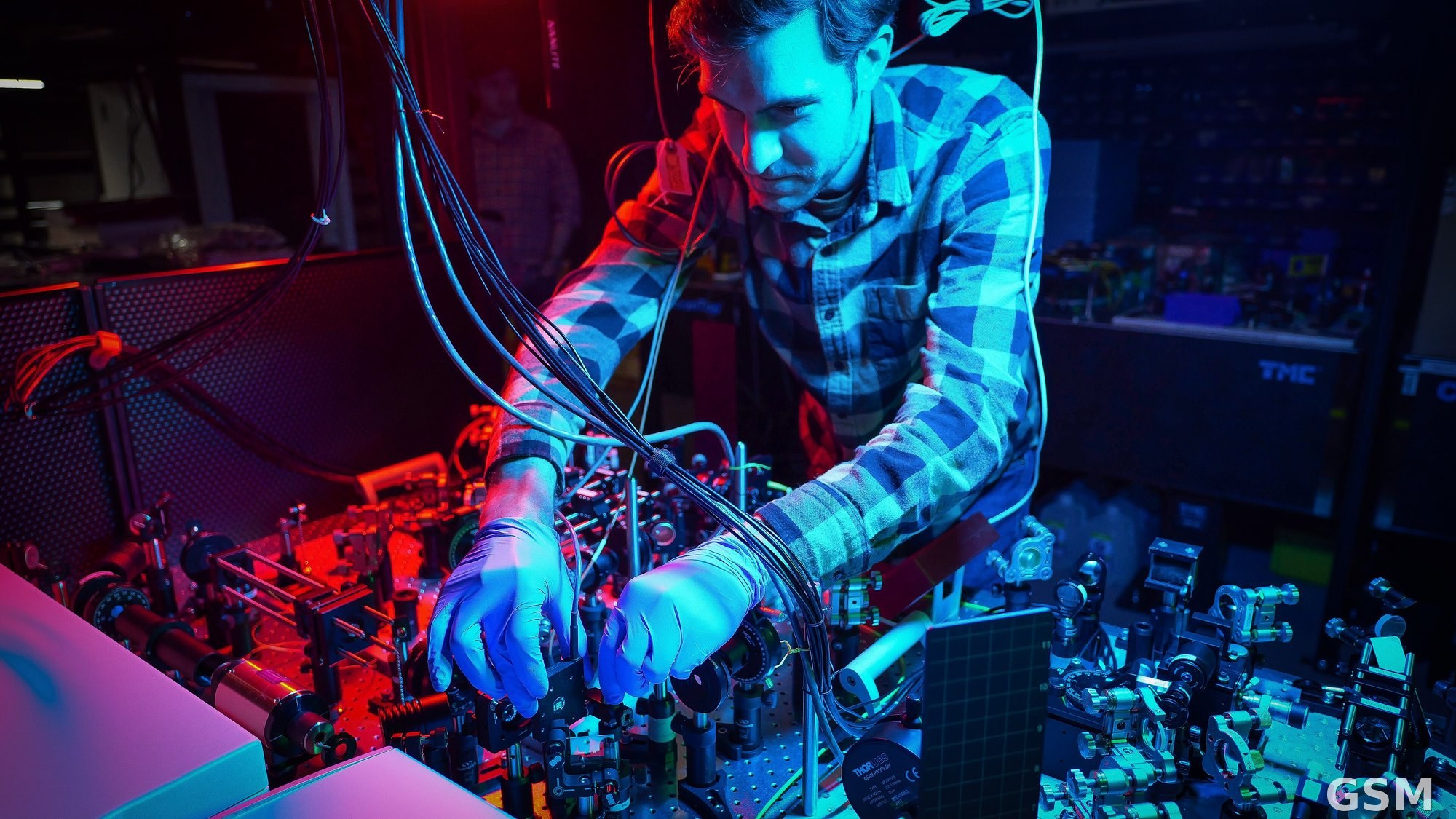
STUTTGART and KARLSRUHE, Germany — Photonic computing company Q.ANT and cloud provider IONOS announced on November 9 the launch of a joint pilot programme bringing photonic computing to commercial bare-metal server environments for the first time. Software developers can test and evaluate their AI models on real photonic processors running on dedicated hardware, rather than only simulating applications in a software development kit.
Under the announcement, approved applicants will gain access through the IONOS website to Q.ANT's second-generation Native Processing Unit (NPU) via a bare metal server in a German IONOS data centre. The NPU performs mathematical operations directly on thin-film lithium niobate (TFLN) photonic integrated circuits and is suited to operations such as matrix multiplication and complex nonlinear functions, which the companies said can be computed natively in light with fewer parameters and operations for comparable or better results. The pilot begins in November 2026 and is free of charge to a limited number of selected participants; applicants must submit a concrete use case through the IONOS website and have the expertise to administer a bare metal server independently. Industrial image processing, time-series prediction, scientific simulation and robotics were listed as particularly suitable evaluation areas, and participants will receive technical onboarding, project support and workload review, ending with a workshop to evaluate results.
IONOS Chief Executive Achim Weiss said in the release that in the pilot, Q.ANT's photonic processor runs in an IONOS data centre under German jurisdiction, and that results will feed directly into future development work. Q.ANT founder and Chief Executive Dr. Michael Förtsch said that after the company's open-source SDK launch in September, developers could build and simulate applications, and can now run those applications on the real processor. The release also said Q.ANT's photonic processor has been evaluated in operational high-performance computing environments: the Leibniz Supercomputing Centre (LRZ) received its second-generation processors for testing in March 2026, and Q.ANT systems are also operating at the Jülich Supercomputing Centre (JSC). Q.ANT was founded in 2018, is headquartered in Stuttgart, and has further offices in Munich and a U.S. office in Austin, Texas. IONOS said it serves about 7 million customers across 17 markets in Europe and North America.
—-
Source: Q.ANT and IONOS (company
Published by GSM · USA (original Chinese edition)
Photo: 量子计算实验室(资料图)。(Wikimedia Commons/公共领域)|A quantum computing laboratory (file photo). (Wikimedia Commons / public domain)
 Follow-Up: With the November 11 Reply Deadline Near, Nvidia Has Yet to Confirm Whether Jensen Huang Will Attend the Closed Congressional Briefing2026-11-09
 New Extinct Pygmy Sperm Whale From Peru's Pisco Formation, 6.3–5.6 Million Years Old: At About 2.7 Metres, Its Skull Shows the Most Extreme Asymmetry Known in A2026-11-09