
New Extinct Pygmy Sperm Whale From Peru's Pisco Formation, 6.3–5.6 Million Years Old: At About 2.7 Metres, Its Skull Shows the Most Extreme Asymmetry Known in A
An international research team has described a previously unknown extinct species of pygmy sperm whale in which skull asymmetry reached unprecedented levels. The study was published in Communications Biology and reported by Phys.org on November 9. The new species, Scaphokogia huachafo, is known from a fossil skull dating from between 6.3 and 5.6 million years ago in the Late Miocene; the animal was around 2.7 metres (8.9 feet) long, and its facial asymmetry is the most extreme known in any cetacean — and possibly in any mammal.
Toothed whales have asymmetrical skulls that accommodate specialized organs used for echolocation and sound production, but lead author Aldo Benites-Palomino said that in this species the asymmetry went far beyond the area around the blowhole: both bony nostrils are shifted entirely to the left side of the skull, the facial bones differ dramatically in size and position, and the skull looks completely crooked. The species name huachafo is a Peruvian Spanish term for something extravagant, bizarre or difficult to categorize; Benites-Palomino said that when the team looked at the proportions — the face strongly shifted to the left and an oversized, downward-curving snout — the name seemed perfect. The skull was found in the mid-1990s in the Pisco Formation of southern Peru, whose desert outcrops are known for exceptionally well-preserved marine fossils; Benites-Palomino first came across it in 2015 while working on his bachelor's thesis at the Museo de Historia Natural in Lima, studied it during doctoral research at the University of Zurich, and is now an assistant professor at Friedrich-Alexander-Universität Erlangen-Nürnberg. He said the sutures are fully closed and there are no fractures, pathologies or deformations elsewhere on the skull, so the asymmetry was genuine biology rather than a result of burial distortion.
The anatomy points to a specialized bottom-feeding lifestyle in shallow coastal environments, unlike living sperm whales, which hunt squid in deep waters. The snout formed a thick, tubular structure reinforced by dense bone and ossified cartilage that acted as natural ballast, shifting the centre of gravity forward and downward; the snout was angled downward by 31 degrees relative to the rest of the skull, and reconstructions of the neck joint show the head could bend downward by as much as 55 degrees. Co-author Gabriel Aguirre-Fernández of the University of Zurich said the entire cranio-cervical complex is modified to point the snout directly toward the bottom, letting the animal move directly above the seabed and feed close to the sediment. Because the species lacked the facial whiskers or visual specializations of other bottom-feeding marine mammals, the researchers suspect it used its asymmetrical biosonar system to scan soft coastal sediments for prey. That specialized seafloor-feeding niche disappeared as oceanic conditions changed at the end of the Miocene.
—-
Source: Communications Biology paper
Published by GSM · USA (original Chinese edition)
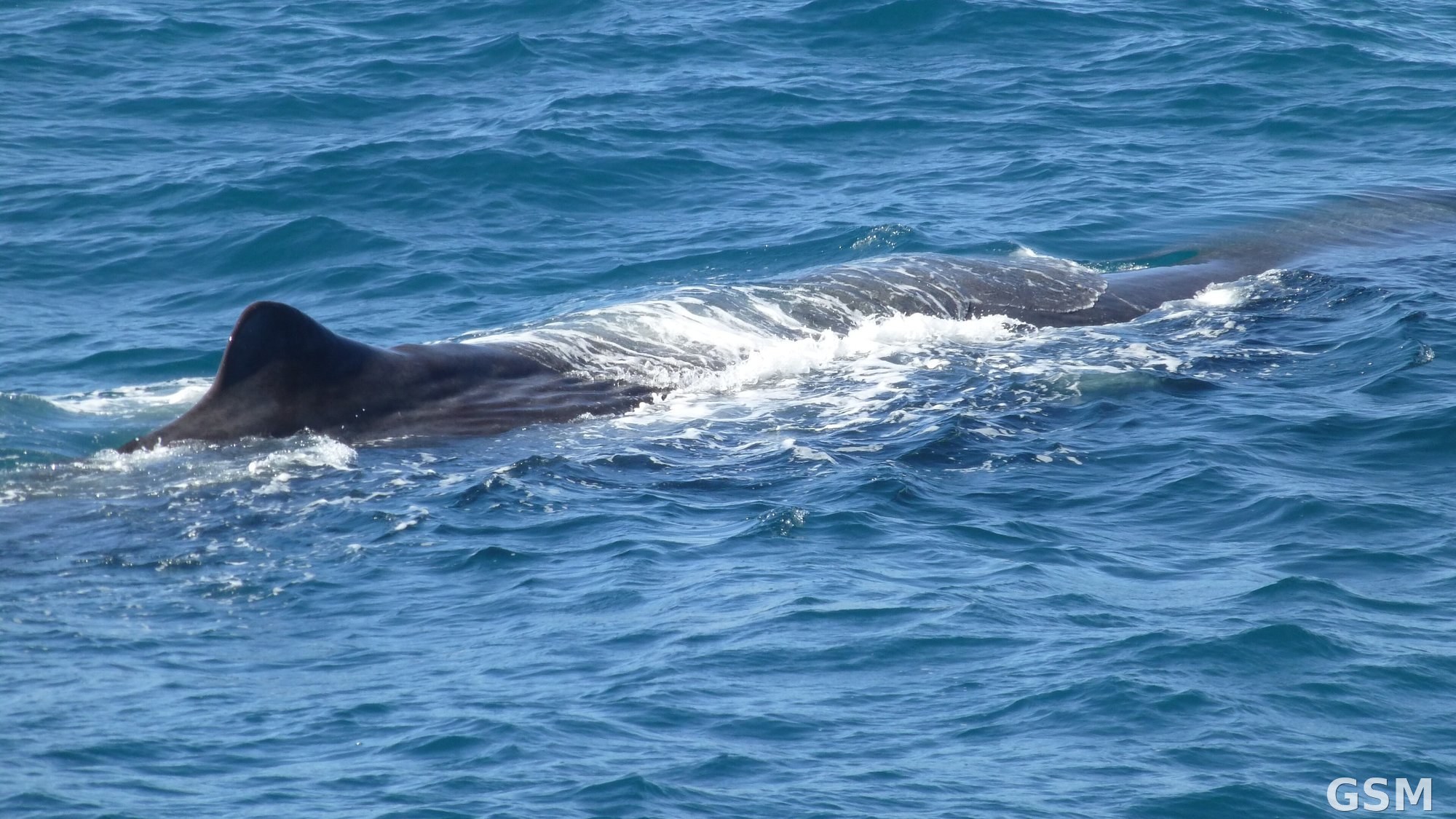
Photo: 抹香鲸(资料图;非本次报道的矮抹香鲸化石物种)。(Wikimedia Commons/CC0)|A sperm whale (file photo; not the fossil pygmy species in the story). (Wikimedia Commons / CC0)
 Science Advances Study: Embryos Protect the Vulnerable Y Chromosome With Finely Balanced Spindle Forces; Under Mild Stress, Y Errors Are 2.5 Times Less Likely t2026-11-09
 Nature Study: A PhyC–VRN1 Gene Pairing Underlies Barley Double Cropping; Across 505 Varieties and 80 Years of Breeding, Over 60% of Autumn-Sown Varieties Since2026-11-09