Science Paper: Cannabis Compounds Found in Hair From a 2,800-Year-Old Siberian Tomb Push Direct Evidence of Cannabis Use Back to About the Early Eighth Century B.C.E.
A study published on November 5, 2026, in the journal Science reported that researchers had found the earliest direct evidence yet of human cannabis use, in a tomb about 2,800 years old in southern Siberia.
The tomb, called Tunnug 1, was discovered by archaeologists in 2017 in Russia near the border with Mongolia and is associated with the Scythians, a nomadic, horse-riding culture that occupied the Eurasian steppe. It contained the remains of several high-status individuals. The research team found cannabis seed remains in the tomb and analysed preserved human hair from the burial, detecting cannabinol (CBN), a byproduct of tetrahydrocannabinol (THC), the primary psychoactive compound in cannabis, in the strands. Radiocarbon dating traced the seeds to the early eighth century B.C.E., around the same time the burial site is believed to have been constructed.
The paper's lead author is Gino Caspari, an archaeologist at the University of Bern in Switzerland and the Max Planck Institute of Geoanthropology in Germany. The researchers wrote that the study presents the earliest direct evidence of cannabis use: offerings of plant parts and chemical compounds in ancient human hair recovered from the monumental tomb. Before this discovery, the oldest evidence for cannabis consumption for psychoactive purposes was roughly 2,500 years old, from the Jirzankal Cemetery (about 500 B.C.E.) in the eastern Pamirs in western China.
https://www.smithsonianmag.com/smart-news/humans-may-have-been-getting-high-on-weed-2800-years-ago-cannabis-seeds-and-hair-with-traces-of-thc-were-found-in-an-ancient-tomb-180989829/ (《科学》2026年11月5日论文报道,含论文作者与期刊信息)
科学
—-
Published by GSM · USA (original Chinese edition)
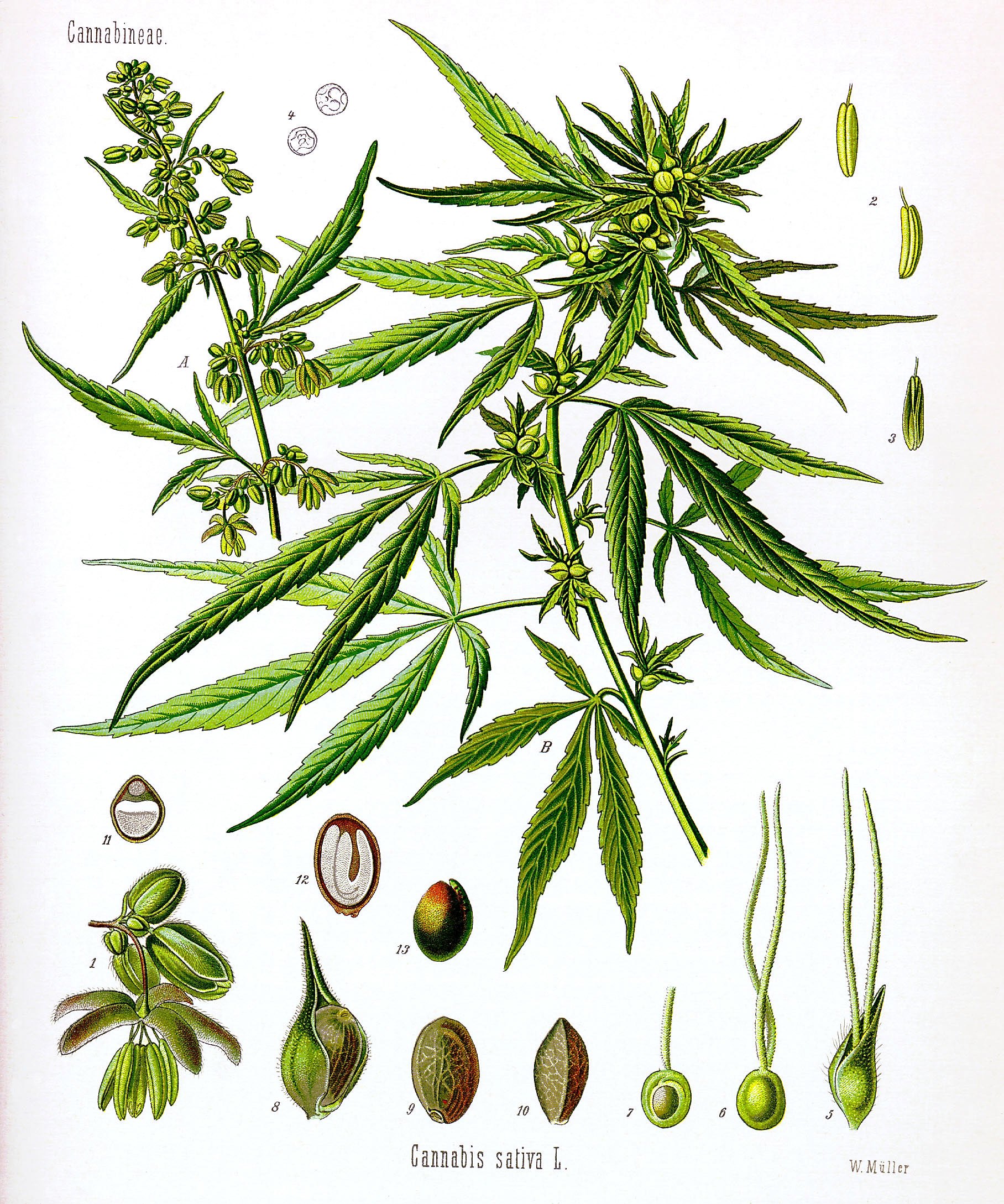
Photo: Wikipedia/Wikimedia Commons 词条主图:Cannabis