
University of Surrey Iron-Based Catalysts Advance Lithium-CO2 Batteries: Best Catalyst Delivers Nearly Four Times the Discharge Capacity, Recovers 93 Percent on Recharge and Completes 92 Cycles
A new class of iron-based catalysts could bring scientists a step closer to developing cheaper and more sustainable rechargeable batteries that use carbon dioxide, according to research from the University of Surrey reported on November 11. The study was published in the Journal of Power Sources.
Lithium-CO2 batteries are being explored as a promising alternative to lithium-ion batteries because, in theory, they could store substantially more energy for the same weight, the report said. The technology is still in the early stages of development, with commercial lithium-ion batteries currently outperforming them in areas such as reliability and lifespan.
One of the biggest challenges is finding catalysts that help the batteries charge and discharge efficiently. Many of the most effective catalysts rely on expensive and scarce precious metals such as platinum, ruthenium and iridium, raising concerns about cost and suitability for large-scale production.
Surrey researchers have shown that catalysts made using more widely available metals, including iron and molybdenum, can perform in a way that is comparable to, and in some measures better than, previously reported catalysts containing expensive precious metals.
In tests, the team best-performing catalyst delivered nearly four times the discharge capacity of an unmodified reference material. It also recovered 93 percent of the electrical charge during recharging and completed 92 charge-discharge cycles in the laboratory, where the amount of charge released during each cycle was deliberately limited.
To develop the catalysts, the team introduced iron into a molybdenum-based compound before heating it to different temperatures. Heating the material to 500 degrees Celsius produced the best results, creating a combination of molybdenum oxide and iron phosphate that helped the charging and discharging reactions take place more efficiently.
Corresponding author Dr. Siddharth Gadkari, senior lecturer in chemical engineering at the University of Surrey, said the research tackles one of the key barriers preventing these batteries from reaching their potential, showing that strong performance is possible without relying on expensive precious metals. Corresponding author Dr. Daniel Commanduer said there is still a long way to go before lithium-CO2 batteries appear in everyday devices, and that the next challenge is delivering the performance consistently over much longer periods.
The team now hopes to improve the performance and durability of the catalysts, while also exploring whether they could be used in other technologies that convert carbon dioxide.
Published by GSM · USA (original Chinese edition)
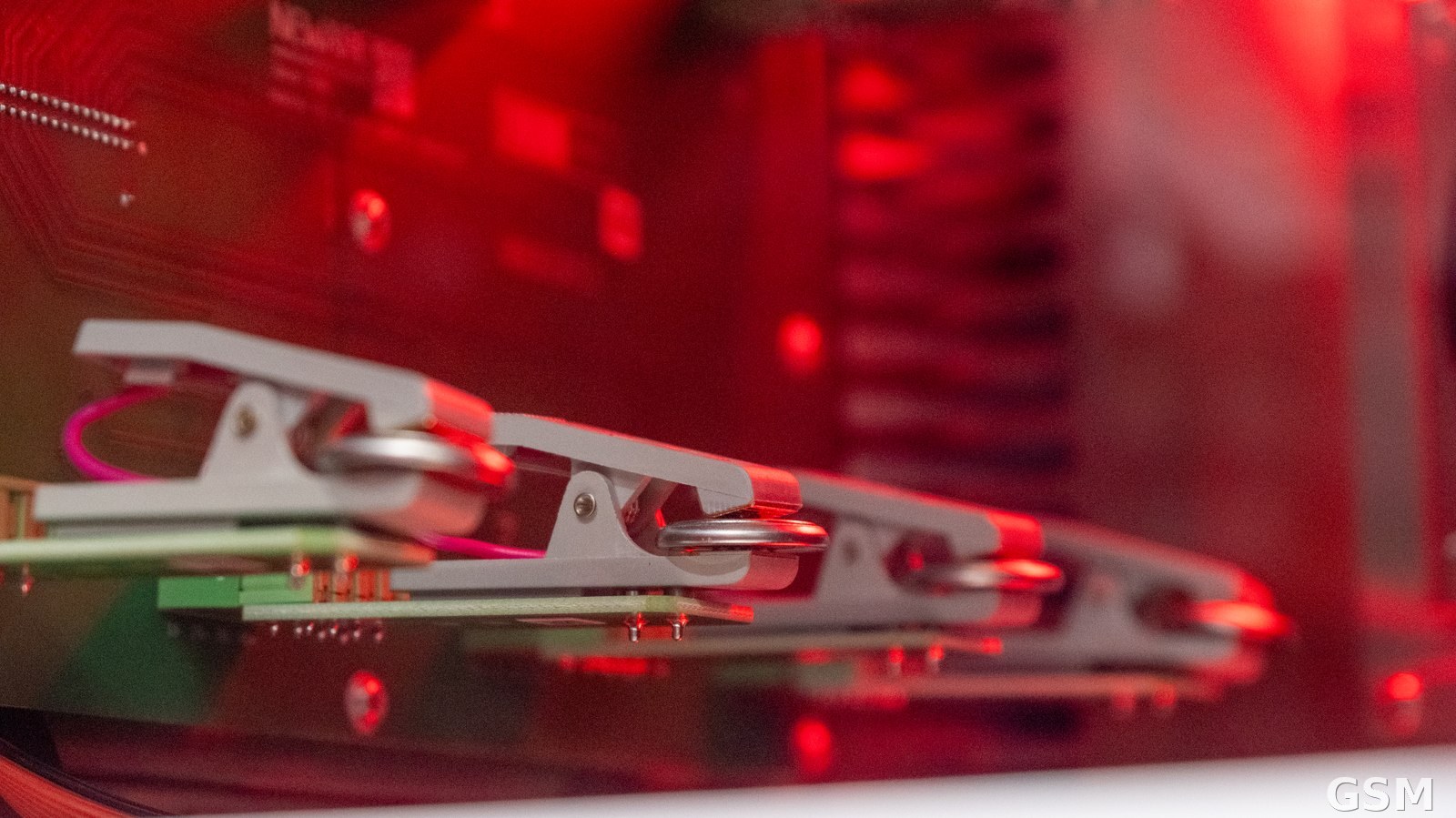
Photo: 图:实验室测试夹具中的多枚锂离子纽扣电池,连接着测试线缆。Chingo K 摄,CC BY 4.0,经 Wikimedia Commons / Photo: Lithium-ion coin cell batteries in laboratory testing fixture. By Chingo K, CC BY 4.0, via Wikimedia Commons
 Penn State Photochemical Method Converts Sulfonamides to Anilines Without Added Catalysts: GSK Calculations Suggest More Than 90 Percent of Commercial Sulfonamides Could Be Modified2026-11-11
 University of the Witwatersrand Demonstrates Transverse Faraday Effect in Multimode Fiber: Speckle Similarity Falls to About 84 Percent at 0.24 Tesla, Published in Optics Letters2026-11-11