
University of the Witwatersrand Demonstrates Transverse Faraday Effect in Multimode Fiber: Speckle Similarity Falls to About 84 Percent at 0.24 Tesla, Published in Optics Letters
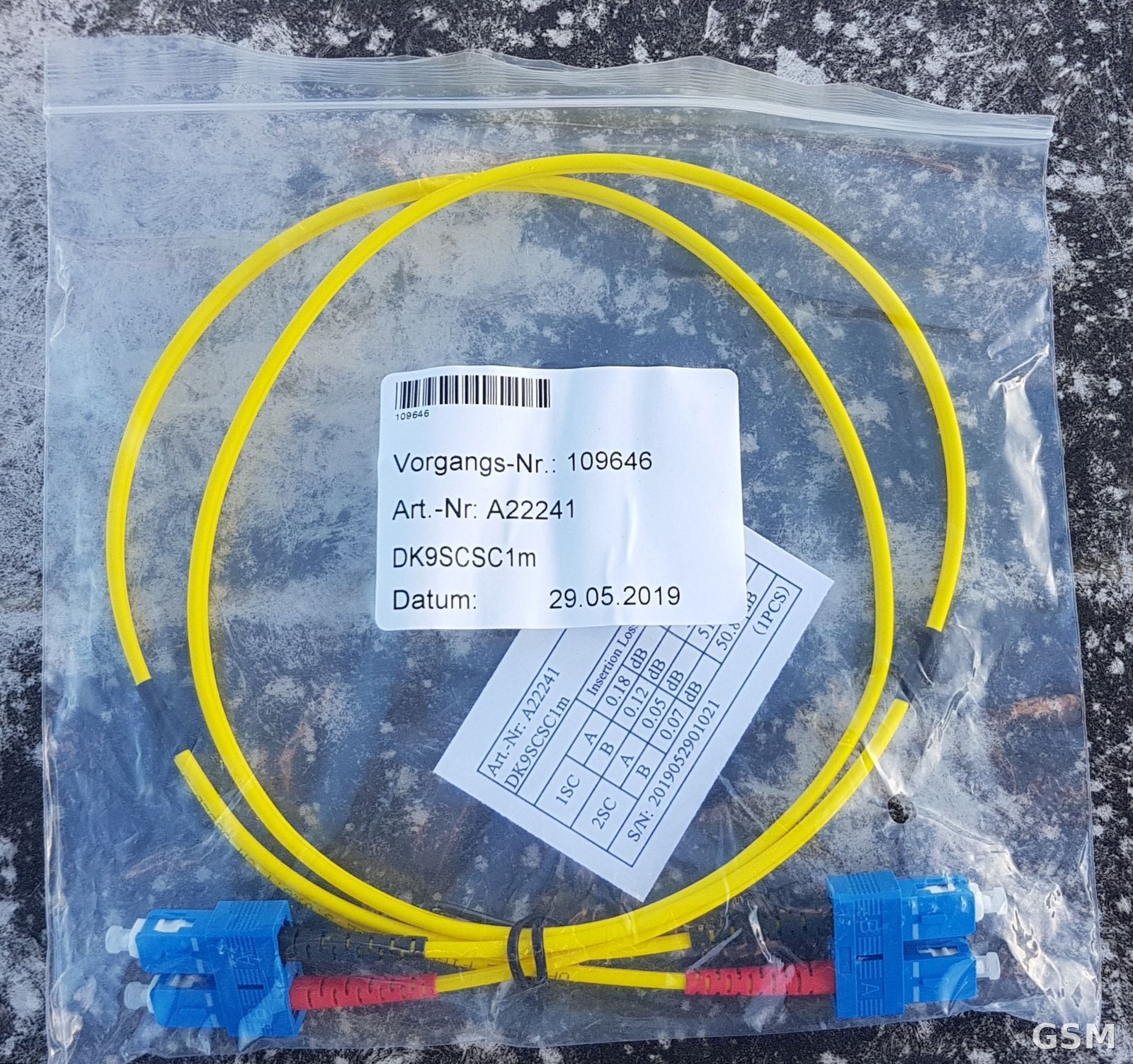
Engineers at the University of the Witwatersrand in Johannesburg, South Africa, have shown that a convenient shortcut used for more than 50 years hides a small but real effect in ordinary glass fiber, the university reported on November 11. A magnet placed beside a multimode fiber, rather than along it, can change the light traveling inside. The research was published in the journal Optics Letters.
Optical fibers also act as sensors and have been used for decades to measure magnetic fields, including those produced by electrical currents in power lines and substations. Such sensors rely on the Faraday effect, in which a magnetic field pointing along a fiber slightly twists the polarization of the light. A magnetic field pointing across the fiber was not expected to produce a Faraday effect.
MSc student Mohammed Raiyan Sharif and professor Mitchell Cox at the Wits Optical Communication Lab demonstrated this transverse Faraday effect in multimode fiber. They watched the speckle pattern at the far end of the fiber with a camera while rearranging strong magnets beside the stationary fiber, and the pattern changed.
Explaining the observation took the researchers back to first principles. The electric field of light in a fiber oscillates almost entirely across the fiber, but a tiny part oscillates along it. The standard weak-guidance approximation ignores this longitudinal component. In step-index fibers, where the refractive index changes in a single sharp step at the edge of the core, that component becomes significant near the edge of the core, and a sideways field acts on it.
The researchers separated the new effect from the Cotton-Mouton effect, which grows with the square of the field strength, whereas the transverse Faraday effect grows in direct proportion to the field. By measuring how much the speckle pattern changed, they isolated the proportional signal and confirmed four predictions of their theory.
Under a field of 0.24 tesla, light polarized across the field changed the pattern clearly, leaving it only about 84 percent similar to the original, according to the report. Existing Faraday sensors must be wrapped around the conductor carrying the current, while a transverse sensor could in principle sit beside the source of the field, although how sensitive a practical sensor could be remains to be established, the researchers said.
Cox said it is surprising to find an overlooked, useful interaction in such a familiar technology. The lab is also studying whether the effect could one day be controlled electrically with a current-carrying coil, with implications for optical computing, according to the report.
Published by GSM · USA (original Chinese edition)
Photo: 图:数条黄色护套的光纤跳线及其连接器特写。Asurnipal 摄,CC BY-SA 4.0,经 Wikimedia Commons / Photo: Optical fiber connectors-optical patch cable-01ASD. By Asurnipal, CC BY-SA 4.0, via Wikimedia Commons
 Penn State Photochemical Method Converts Sulfonamides to Anilines Without Added Catalysts: GSK Calculations Suggest More Than 90 Percent of Commercial Sulfonamides Could Be Modified2026-11-11
 University of Surrey Iron-Based Catalysts Advance Lithium-CO2 Batteries: Best Catalyst Delivers Nearly Four Times the Discharge Capacity, Recovers 93 Percent on Recharge and Completes 92 Cycles2026-11-11